- English
- French
- German
- Portuguese
- Spanish
- Russian
- Japanese
- Korean
- Arabic
- Greek
- German
- Turkish
- Italian
- Danish
- Romanian
- Indonesian
- Czech
- Afrikaans
- Swedish
- Polish
- Basque
- Catalan
- Esperanto
- Hindi
- Lao
- Albanian
- Amharic
- Armenian
- Azerbaijani
- Belarusian
- Bengali
- Bosnian
- Bulgarian
- Cebuano
- Chichewa
- Corsican
- Croatian
- Dutch
- Estonian
- Filipino
- Finnish
- Frisian
- Galician
- Georgian
- Gujarati
- Haitian
- Hausa
- Hawaiian
- Hebrew
- Hmong
- Hungarian
- Icelandic
- Igbo
- Javanese
- Kannada
- Kazakh
- Khmer
- Kurdish
- Kyrgyz
- Latin
- Latvian
- Lithuanian
- Luxembou..
- Macedonian
- Malagasy
- Malay
- Malayalam
- Maltese
- Maori
- Marathi
- Mongolian
- Burmese
- Nepali
- Norwegian
- Pashto
- Persian
- Punjabi
- Serbian
- Sesotho
- Sinhala
- Slovak
- Slovenian
- Somali
- Samoan
- Scots Gaelic
- Shona
- Sindhi
- Sundanese
- Swahili
- Tajik
- Tamil
- Telugu
- Thai
- Ukrainian
- Urdu
- Uzbek
- Vietnamese
- Welsh
- Xhosa
- Yiddish
- Yoruba
- Zulu
Titanium Underwater Housings for Deep-Sea Cameras and Subsea Equipment
To explore the deepest parts of the ocean, engineers have to solve very difficult problems. If you put equipment thousands of meters below the ocean's surface, it has to be able to handle high hydrostatic pressure, seawater corrosion, and being out in the elements for a long time. As underwater technology improves, it becomes more important to protect sensitive devices in a safe way. This piece talks about why titanium underwater housing is often used for deep-sea equipment and what makers should think about when making these pressure-resistant cases.
Introduction
Deep sea settings are some of the toughest places for technical tools to work. When electronics, cameras, and sensors are put into place thousands of meters below the ocean's surface, their housings have to be able to handle high pressure from the outside, corrosion from seawater, and being in place for a long time with limited access for maintenance. When materials and structures are built in the abyssal zone, they have to meet strict requirements because of chemical and mechanical stresses.
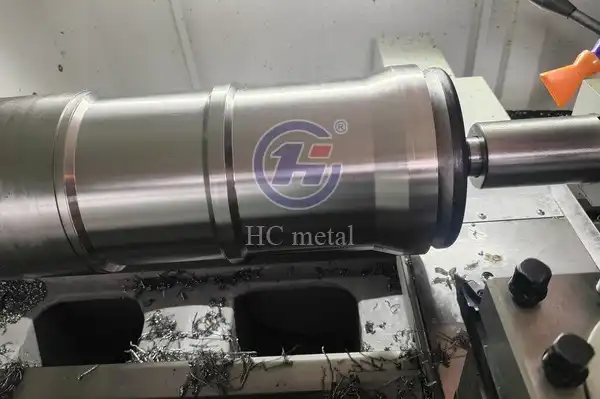
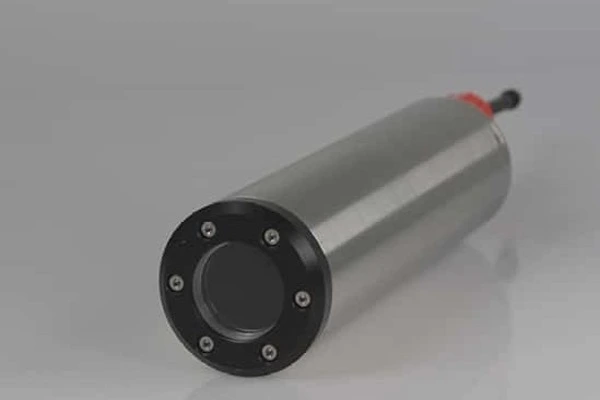
Because of these conditions, titanium underwater housing is a strong material option for protecting sensitive subsea equipment. Its high strength, low density, and corrosion resistance make titanium suitable for applications such as:
Housings for high-resolution underwater cameras.
- Pressure housings for ROVs and AUVs that protect onboard electronics and control systems.
- Underwater tracking equipment for long-term data logging.
- Inspection tools for offshore oil and gas infrastructure.
- Oceanographic instruments used for deep-sea research.
Why Titanium Is Ideal for Underwater Pressure Housings?
Superior Corrosion Resistance in Seawater
Titanium is known to be very resistant to corrosion in salt water. Titanium makes a thin, steady titanium dioxide (TiO₂) passive film when it comes in contact with oxygen. This layer of protection stops further corrosion processes and can quickly grow back after small damage to the surface.
Titanium has clear benefits over other materials that are widely used. Under the right conditions, some types of stainless steel can experience localised corrosion. On the other hand, aluminium alloys may need extra surface protection depending on the job. So, titanium is a good choice for long-term uses below the sea where corrosion resistance and dependability are important.
Withstanding Extreme Hydrostatic Pressure
For every 10 meters of seawater depth, the hydrostatic pressure rises by about 0.1 MPa, reaching about 60 MPa at 6000 meters. This is before changes in the density of the water and the atmospheric pressure are taken into account. Such external pressure requires careful control of housing geometry, wall thickness, material condition, and sealing design.
Ti-6Al-4V has a density of approximately 4.43 g/cm³ and can provide high mechanical strength when supplied and processed according to the required material specification. Its combination of strength and relatively low density allows engineers to design robust pressure housings while controlling overall system weight. Actual pressure capacity must be established through structural analysis and appropriate physical testing rather than material strength alone.
Precision Sealing Design for Subsea Equipment
Reliable sealing is essential for underwater cameras, sensors, and electronic systems. A sealing failure can allow seawater to reach sensitive internal components and result in equipment damage. Titanium underwater housing components therefore require accurately machined sealing surfaces and properly designed sealing interfaces.
Depending on the pressure, temperature, and application, manufacturers may use FKM elastomers and multiple O-ring configurations. Seal material, groove geometry, compression, surface finish, and extrusion clearance should be selected according to the actual operating conditions. For specified sealing interfaces, surface roughness can be controlled according to the seal manufacturer's requirements.
Before deep-sea deployment, pressure housings should be validated using appropriate pressure and leak-testing procedures. Helium leak testing may be used where required, while pressure-chamber testing can verify structural and sealing performance at the specified test conditions. These validation steps provide evidence that the housing can protect internal equipment under its intended operating environment.
Engineering Design and Structural Analysis
During the design stage, engineers can use Finite Element Analysis (FEA) to evaluate stress distribution, deformation, and potential stress concentrations under external hydrostatic pressure. FEA is useful for comparing housing geometries, optimizing wall thickness, and identifying areas that require additional structural support.
However, numerical analysis should support rather than replace physical validation. For deep-sea pressure housings, the final design should be evaluated through appropriate pressure testing based on the required operating and test conditions. Combining material selection, structural analysis, precision machining, and physical testing provides a more reliable basis for subsea equipment design.
Applications of Titanium Underwater Housings
Titanium underwater housings are used in applications where corrosion resistance, structural strength, and long-term reliability are important. Oceanographic research uses them to protect cameras, sensors, and other instruments for deep-sea observation. In ROV and AUV systems, they can protect electronic, navigation, and control equipment. Offshore oil and gas operations may use titanium housings for inspection and monitoring equipment exposed to demanding marine environments. Marine monitoring systems can also use them for environmental sensors and data-recording instruments. Because maintenance at extreme depths is difficult and costly, housing design must account carefully for pressure, sealing, corrosion, and service requirements.
Custom Titanium Underwater Housings Manufacturer
Baoji Huacan New Metal Materials Co., Ltd. (HC-Titanium) specializes in precision CNC machining of titanium components for demanding subsea and marine applications. Our manufacturing capabilities include:
- Titanium alloys: Ti-6Al-4V, TA1, TA2
- Outer diameter: 50 mm – 500 mm
- Length: 100 mm – 600 mm
- Forged titanium billets or seamless tubes
- High-precision CNC machining
- Dimensional inspection and sealing surface control
Our titanium housings are suitable for:
- Underwater camera systems
- Subsea monitoring equipment
- Deep-sea sensors
- Marine engineering instruments
For custom projects, manufacturing requirements can be reviewed from customer CAD drawings or technical specifications. Material grade, dimensions, tolerances, sealing interfaces, quantity, and intended operating conditions should be defined before production.
Partner With Us for Reliable Subsea Solutions
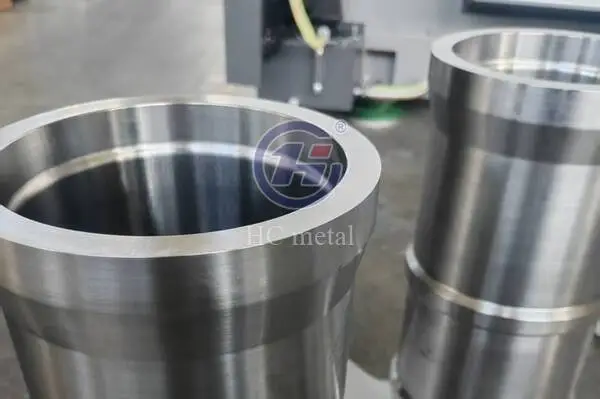
For deep-sea projects, manufacturing accuracy and material consistency are important considerations when selecting a supplier. Baoji Huacan New Metal Materials Co., Ltd. provides CNC machining, dimensional inspection, and custom titanium component manufacturing for demanding applications. Our experience across aerospace, marine, and energy-related components supports projects that require controlled dimensions, repeatable production, and application-specific designs.
We support custom titanium underwater housing projects from drawing review through machining and inspection. Customers can provide housing dimensions, target depth, pressure requirements, material specifications, sealing design, and quantity for engineering evaluation and quotation. Contact our team at joy@hc-titanium.com to discuss your project requirements.
FAQ
What titanium alloy is commonly used for underwater pressure housings?
Ti-6Al-4V is widely used when a combination of high strength, relatively low density, and corrosion resistance is required. The appropriate grade should be selected according to the pressure, geometry, manufacturing process, and applicable material specification.
How are titanium underwater housings tested before deployment?
Testing depends on the application and specified operating conditions. Pressure-chamber testing can evaluate structural and sealing performance, while leak-testing methods such as helium detection may be used when a high level of leak sensitivity is required.
What information should I provide when requesting a custom titanium underwater housing?
Provide the CAD drawing or technical specification, target operating depth, pressure requirements, dimensions, titanium grade, sealing configuration, tolerances, quantity, and intended application. These details allow the manufacturer to evaluate machining and testing requirements accurately.
_1755765655365.jpg)
_1760074542988.jpg)


Learn about our latest products and discounts through SMS or email