- English
- French
- German
- Portuguese
- Spanish
- Russian
- Japanese
- Korean
- Arabic
- Greek
- German
- Turkish
- Italian
- Danish
- Romanian
- Indonesian
- Czech
- Afrikaans
- Swedish
- Polish
- Basque
- Catalan
- Esperanto
- Hindi
- Lao
- Albanian
- Amharic
- Armenian
- Azerbaijani
- Belarusian
- Bengali
- Bosnian
- Bulgarian
- Cebuano
- Chichewa
- Corsican
- Croatian
- Dutch
- Estonian
- Filipino
- Finnish
- Frisian
- Galician
- Georgian
- Gujarati
- Haitian
- Hausa
- Hawaiian
- Hebrew
- Hmong
- Hungarian
- Icelandic
- Igbo
- Javanese
- Kannada
- Kazakh
- Khmer
- Kurdish
- Kyrgyz
- Latin
- Latvian
- Lithuanian
- Luxembou..
- Macedonian
- Malagasy
- Malay
- Malayalam
- Maltese
- Maori
- Marathi
- Mongolian
- Burmese
- Nepali
- Norwegian
- Pashto
- Persian
- Punjabi
- Serbian
- Sesotho
- Sinhala
- Slovak
- Slovenian
- Somali
- Samoan
- Scots Gaelic
- Shona
- Sindhi
- Sundanese
- Swahili
- Tajik
- Tamil
- Telugu
- Thai
- Ukrainian
- Urdu
- Uzbek
- Vietnamese
- Welsh
- Xhosa
- Yiddish
- Yoruba
- Zulu
Flat flange low density water heater element titanium
OD 120mm
Class 150
Annealed Condition
Low Density 4.51g/cm³
Heat Resistant
Industrial Use
OEM Sizes
Product Introduction
Flat Flange Low Density Water Heater Element Titanium — Industrial-Grade Corrosion-Resistant Heating Solution
The flat flange low density water heater element titanium is a precision-engineered industrial immersion heater built for aggressive fluid environments where standard copper or stainless steel elements fail quickly. Manufactured from Grade 2 Titanium (ASTM B338), this element features a low watt density design — spreading heat across a larger surface area to prevent limescale buildup and localized overheating. With an OD of 120mm, Class 150 pressure rating, and a material density of just 4.51 g/cm³, it delivers long-term performance in corrosive, high-mineral, or saline conditions.
Product Specification & OEM Customization
| Parameter | Specification |
|---|---|
| Material Grade | Grade 2 Titanium (ASTM B338) |
| Flange Type | Flat Flange |
| Outer Diameter (OD) | 120 mm |
| Pressure Class | Class 150 |
| Material Condition | Annealed |
| Sheath Density | 4.51 g/cm³ |
| Surface Watt Density | 30–50 W/in² |
| Internal Insulation | Compacted MgO (Purity >99%) |
| Resistance Wire | NiCr 80/20 |
| Length & Wattage | Customized to Requirements |
| Flange Dimensions | Custom / OEM Available |
| Surface Finish | Natural Titanium / Polished |
| Available Titanium Grades | Grades 2, 5, 7, 9 and 23 |
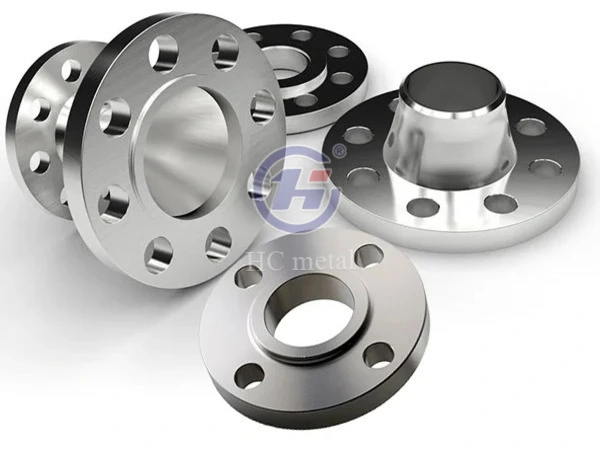
Product Application
Solutions One
01
Solutions One
02
Solutions One
03
Solutions One
04
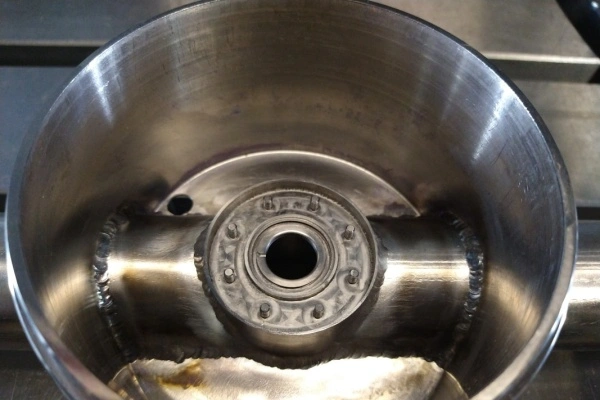
Commercial Aquaculture & Marine Systems — Saltwater tanks and large aquariums demand contaminant-free heating. Titanium eliminates heavy metal leaching, keeping marine life safe while resisting constant saline exposure.
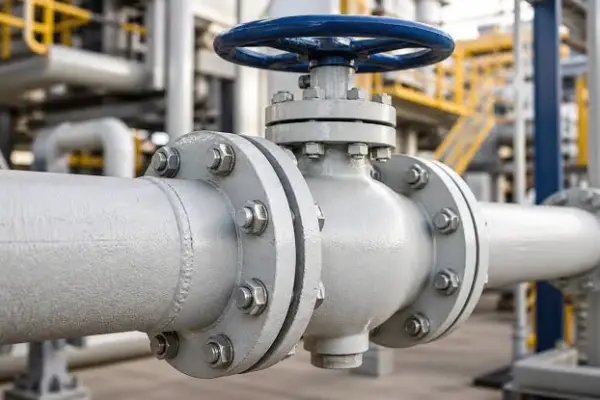
Industrial Electroplating & Anodizing Tanks — Chemical processing facilities use these elements to heat acidic and alkaline electrolyte solutions. The flat flange delivers a leak-proof seal on high-value chemical vessels where any leakage is unacceptable.
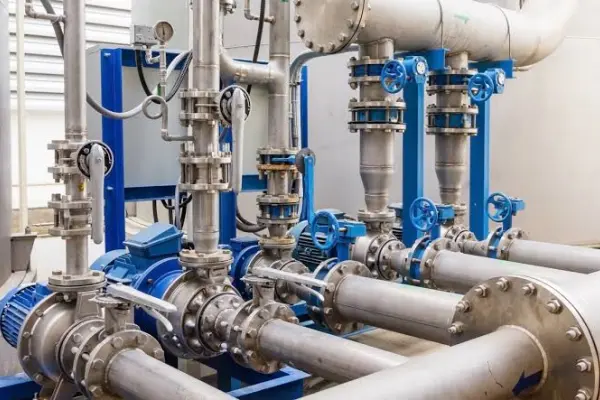
Geothermal & Hard Water Heating — In high-mineral-content water regions, standard elements scale over within months. The low watt density design prevents rapid mineral baking, making this the preferred solution for commercial boilers in hard-water municipalities.
Swimming Pools & Spas — High chloride concentrations destroy standard elements. Titanium's chemical inertness makes it the only reliable long-term solution.
Why Choose Us
Why Choose Our Titanium Flat Flange Water Heater Element
Standard elements suffer from galvanic corrosion, scale burnout, and flange leakage in demanding environments. Our titanium element solves all three.
· Chloride immunity — Grade 2 titanium resists stress corrosion cracking in saltwater and chemical baths
· Anti-scaling performance — Low watt density (30–50 W/in²) reduces calcium carbonate adhesion by up to 300% vs. high-density elements
· Robust sealing — Flat flange design supports pressure ratings at Class 150, superior to screw-plug alternatives
· Lightweight — At 4.51 g/cm³, it's roughly 60% the weight of steel, reducing system load
 |
 |
 |
Manufacturing Process
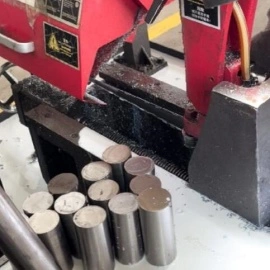
Each element starts with verified Grade 2 titanium bar stock, checked against ASTM B338 through spectrometric composition analysis.
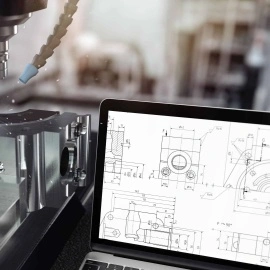
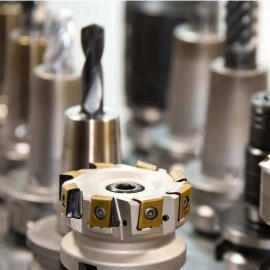
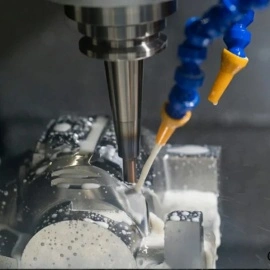
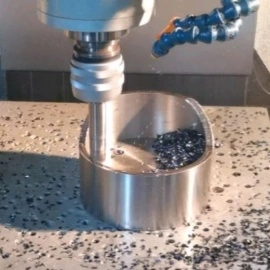
The titanium sheath is precision-CNC-machined using our fleet of 40+ CNC lathes and machining centers, ensuring tight dimensional tolerances on every unit. The internal NiCr resistance coil is carefully centered inside the sheath — off-center coils create hot spots that cause premature failure.
Compacted MgO insulation (>99% purity) is packed uniformly around the coil to maximize dielectric strength. The flat flange is machined from solid titanium or titanium-clad material to eliminate galvanic coupling at the weld interface.
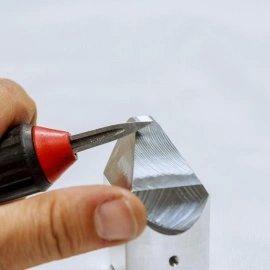
Post-machining, all welds undergo penetrant testing (PT) to detect micro-cracks invisible to the naked eye before final assembly.
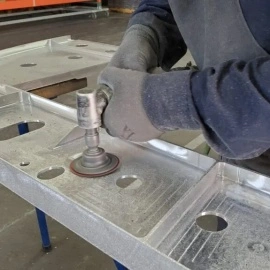
Manufacturing Capability
Baoji Huacan operates from China's "Titanium Valley" in Baoji, Shaanxi — the heart of China's titanium industry. Our production infrastructure includes:
· 40+ CNC lathes and machining centers, including gantry systems
· 4,000-ton hydraulic press for precision forging of flanges and structural parts
· Annual production capacity exceeding 1,000 tons of finished titanium components
· 10+ years of specialized titanium machining experience
· Support for small batch through mass production
Our annual melting capacity exceeds 5,000 tons, and forging capacity exceeds 3,000 tons, ensuring consistent supply for both standard and custom orders.
 |
 |
 |
 |
 |
| melting | melting | forging | forging | rolling |
Quality Control

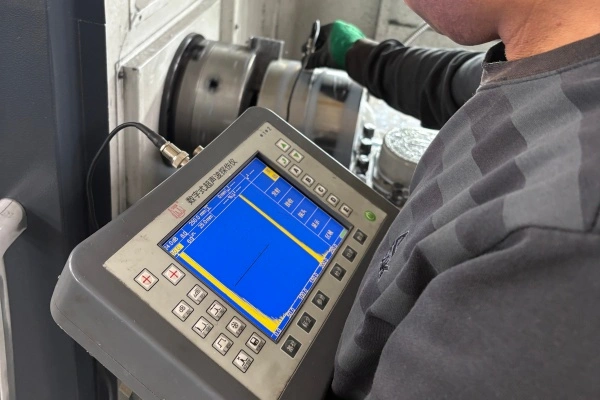
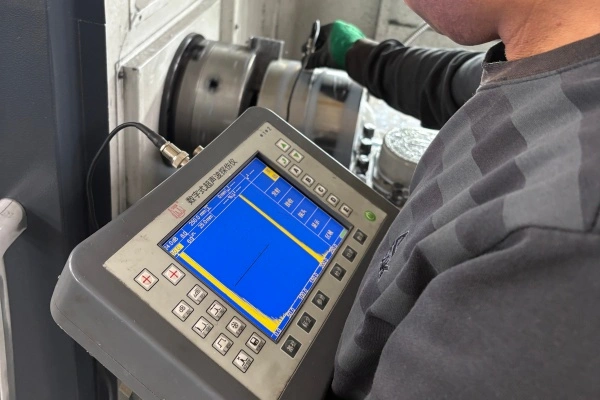
Every incoming titanium alloy undergoes spectrometer analysis verifying chemical composition. In-process dimensional checks occur at 5-stage intervals. Ultrasonic testing detects subsurface defects non-destructively.
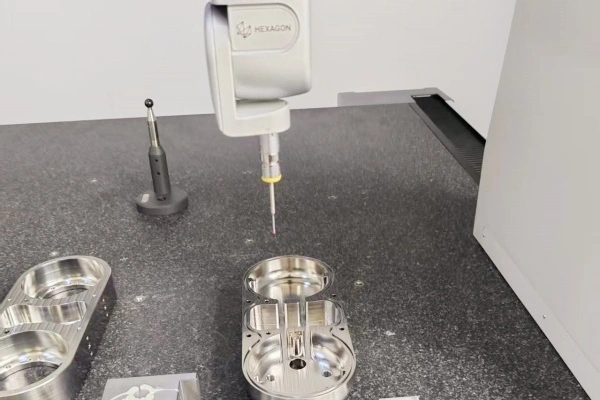
Coordinate measuring machines verify thread pitch accuracy to ISO standards. Tensile testing confirms mechanical properties meet specification minimums. Salt spray chambers validate corrosion resistance claims through 720-hour exposure cycles.

Surface roughness measurements ensure consistent finish quality. Final inspection includes torque testing and visual examination under magnification. Complete documentation packages accompany each shipment with material certificates.
Quality Control
Our inspection protocol covers every stage of production:
Raw Material Verification — Incoming titanium is spectrometrically analyzed for chemical composition and checked against ASTM B338 certificates before entering production.
Hydrostatic Pressure Testing — Every flange-to-sheath weld is pressure-tested at 1.5× operating pressure to confirm leak-free integrity at the critical integration point.
Hi-Pot Dielectric Test — 1,500V+ is applied for one second to verify MgO insulation sufficiency and confirm no arcing between the resistance coil and sheath.
Wattage & Resistance Verification — Actual wattage is verified within +5%/−10% of rated specifications, ensuring the element remains truly low density in operation.
X-Ray Examination — Random batch samples are X-rayed to confirm the internal resistance coil is perfectly centered, eliminating hot-spot risk.
Penetrant Testing (PT) — Applied to all titanium flange welds to detect micro-cracks before shipment.
CMM Dimensional Inspection — All finished components are measured using coordinate measuring machines to confirm dimensional conformance with customer drawings.
Certifications
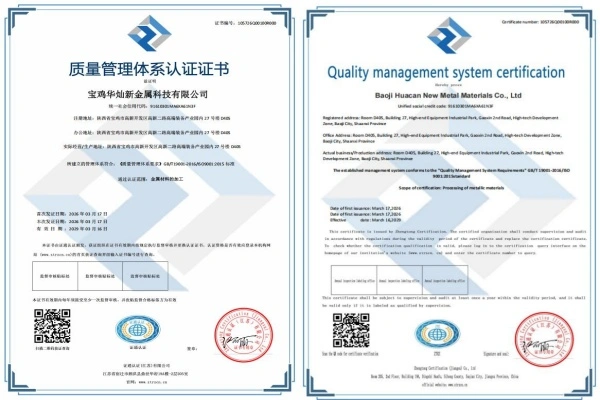
Baoji Huacan New Metal Materials Co., Ltd. holds ISO 9001 quality management system certification, covering all stages from raw material sourcing to final inspection and shipment documentation.
Material traceability documentation, including MTC and EN 10204 3.1 certificates, is available upon request. Each shipment is accompanied by full inspection reports and product certificates for transparent quality tracking.
Mechanical Properties Testing
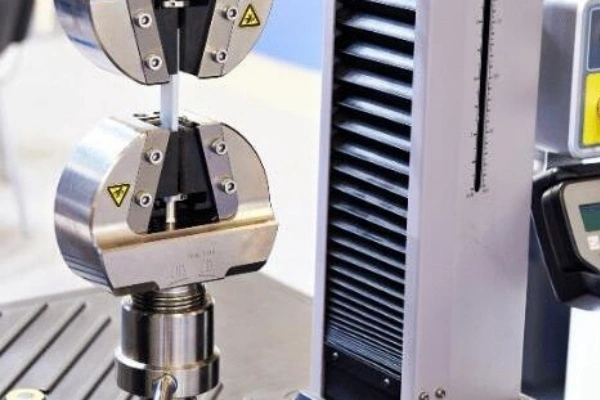
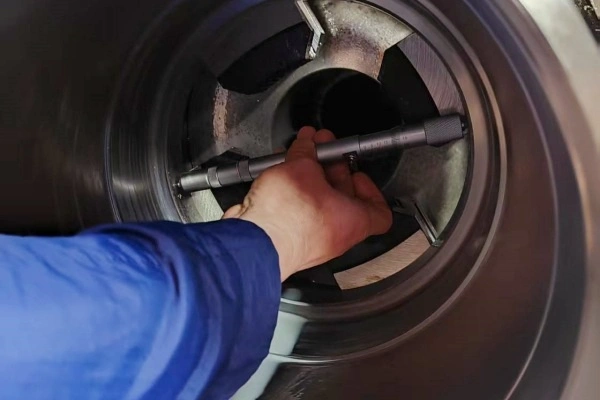
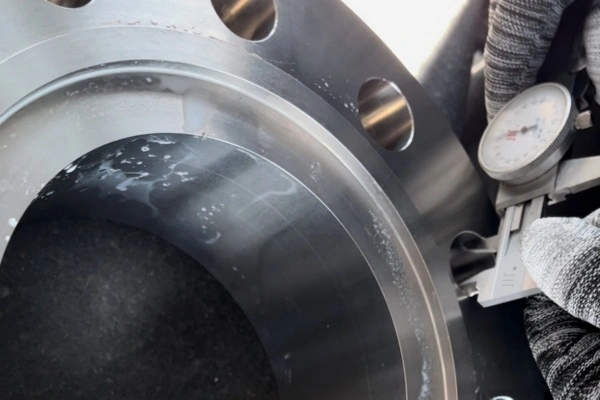
Inner Diameter Measurement
Ultrasonic Testing
CMM Dimensional
Mounting Hole Diameter Measurement
Quality Management System Certification
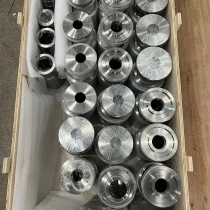
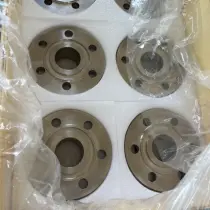
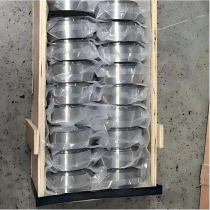
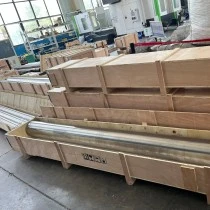
Packaging & Shipping
Each element is packaged to prevent damage and moisture ingress during international transit:
· Custom foam inserts protect precision machined surfaces
· Vacuum-sealed bags with desiccants prevent oxidation and moisture exposure
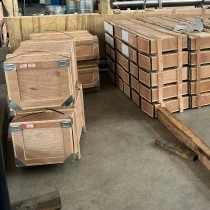
· Sturdy wooden crates for bulk shipments
· Detailed labeling and documentation for easy customs clearance and traceability
We offer air freight for urgent orders and sea freight for cost-effective bulk shipments worldwide.
FAQ
Q: Why choose titanium over Incoloy for corrosive applications?
A:Incoloy performs well under heat, but titanium is effectively immune to chloride stress corrosion cracking. For saltwater, pool water, or aggressive chemical environments, titanium is the only material that reliably prevents premature failure.
Q: Does low density mean slower heating?
A:No. A 4kW low density element produces identical total heat energy to a 4kW high density element. The difference is physical size — a larger surface area spreads heat out, preventing surface boiling and scale accumulation.
Q: What gasket material should I use with the flat flange?
A:Use a gasket compatible with your process fluid — PTFE, Viton, or EPDM are recommended. Standard rubber gaskets may degrade faster than the element itself in chemical environments.
Q: Can this element operate dry?
A:No. Despite the low watt density, titanium has lower thermal conductivity than copper. Dry firing causes rapid internal overheating. Always use liquid level sensors to prevent dry-run conditions.
Q: How do I detect a failing element?
A:Monitor insulation resistance regularly using a Megohm meter. A reading below 1 MΩ indicates moisture ingress or sheath breach — replace the element before electrical failure occurs.
Contact Us
Ready to source a reliable flat flange low density water heater element titanium for your project? Contact us at sherry@hc-titanium.com for custom quotes.



Learn about our latest products and discounts through SMS or email