- English
- French
- German
- Portuguese
- Spanish
- Russian
- Japanese
- Korean
- Arabic
- Greek
- German
- Turkish
- Italian
- Danish
- Romanian
- Indonesian
- Czech
- Afrikaans
- Swedish
- Polish
- Basque
- Catalan
- Esperanto
- Hindi
- Lao
- Albanian
- Amharic
- Armenian
- Azerbaijani
- Belarusian
- Bengali
- Bosnian
- Bulgarian
- Cebuano
- Chichewa
- Corsican
- Croatian
- Dutch
- Estonian
- Filipino
- Finnish
- Frisian
- Galician
- Georgian
- Gujarati
- Haitian
- Hausa
- Hawaiian
- Hebrew
- Hmong
- Hungarian
- Icelandic
- Igbo
- Javanese
- Kannada
- Kazakh
- Khmer
- Kurdish
- Kyrgyz
- Latin
- Latvian
- Lithuanian
- Luxembou..
- Macedonian
- Malagasy
- Malay
- Malayalam
- Maltese
- Maori
- Marathi
- Mongolian
- Burmese
- Nepali
- Norwegian
- Pashto
- Persian
- Punjabi
- Serbian
- Sesotho
- Sinhala
- Slovak
- Slovenian
- Somali
- Samoan
- Scots Gaelic
- Shona
- Sindhi
- Sundanese
- Swahili
- Tajik
- Tamil
- Telugu
- Thai
- Ukrainian
- Urdu
- Uzbek
- Vietnamese
- Welsh
- Xhosa
- Yiddish
- Yoruba
- Zulu
CNC machined titanium propeller
2. Diameter 200–1200mm, tolerance ±0.02mm.
3. Dynamic balance verified with precision instruments.
4. 3D CAD/CAM simulation ensures flow optimization.
5. Application: ships, yachts, ROV/AUV propulsion.
Product Introduction
CNC Machined Titanium Propeller — Custom Marine & Aerospace Propulsion Component with Zero Cavitation Erosion
A CNC machined Titanium propeller is the ultimate in marine and aeronautical propulsion engineering. Each propeller is machined from a solid titanium billet utilising 5-axis CNC technology and is available in diameters from 200mm to 1200mm with tolerance of up to ±0.02mm. Dynamic balance is tested with precise instruments and 3D CAD/CAM modelling assures an optimised hydrodynamic flow. If you require a propeller for a superyacht, ROV or high-performance racing vessel, we custom manufacture in Grade 2 through Grade 23 titanium.
Product Specification & OEM Customization
| Parameter | Details |
|---|---|
| Material Grade | Grade 2, Grade 5 (Ti-6Al-4V), Grade 7, Grade 9, Grade 23 |
| Material Standards | ASTM, AMS, ASME, DIN, or customer-specified standards |
| Propeller Diameter | 200–1200 mm, custom sizes available |
| Blade Configuration | 2–6 blades, customized according to design |
| Dimensional Tolerance | As per drawing; down to ±0.02 mm for selected machined features |
| Propeller Type | Fixed-pitch or custom-designed propellers |
| Machining Process | CNC turning, 3/4/5-axis milling, precision machining, finishing and balancing |
| Surface Finish | Machined, polished, sandblasted, pickled or anodized |
| Inspection & Balance | Dimensional inspection, surface inspection and dynamic/static balancing available |
| Design Input & Customization | 2D drawings, 3D CAD models or samples; OEM/ODM available |

Product Features

· Zero casting defects — machined from solid forged billet, no porosity or inclusions
· High fatigue resistance — withstands cyclical loads at 6,000+ RPM without blade deformation
· Non-magnetic — critical for ROV/AUV navigational instrument compatibility
· Corrosion-proof — passive oxide film resists saltwater and aggressive chemical environments
· Lightweight strength — 40–45% lighter than stainless steel without sacrificing stiffness
· Thinner blade profiles — reduce drag and improve hydrodynamic efficiency
Product Application
Subsea & Marine Propulsion Equipment

01
Underwater Drones & Inspection Systems

02
ROV & AUV Propulsion

03
Marine Vessels & Yachts — Superyachts and luxury vessels benefit from titanium's corrosion resistance and weight reduction. Thinner blade sections improve acceleration and top speed compared to standard aluminum OEM propellers.
ROV & AUV Propulsion — Deep-sea autonomous vehicles require non-magnetic, corrosion-resistant propulsion that survives months-long saltwater deployments. Titanium meets all these requirements simultaneously.
Offshore Racing Powerboats — Class 1 offshore racing demands propellers that survive extreme RPMs and surface-piercing forces. Titanium's high fatigue limit prevents blade deformation under these severe cyclical loads.
Aerospace & Defense — Propulsion components for specialized aerospace platforms where weight and structural integrity are non-negotiable.
Why Choose Us
Unlike cast stainless steel propellers, our titanium propellers are machined from dense, pore-free forged billets. This eliminates internal voids and casting defects that cause blade fracture under load.
Titanium’s passive oxide coating renders it completely resistant to seawater corrosion and cavitation erosion. At high RPMs water vapour bubbles bursting produce tiny pitting on stainless steel -- titanium resists this entirely.
Titanium is around 40 to 45 percent lighter than stainless steel giving us less rotating mass and a better engine throttle response. You gain quicker spool-up, higher fuel economy and longer component life.
 |
 |
 |
Manufacturing Capability
Baoji Huacan operates 40+ CNC lathes, machining centers, and gantry systems from Baoji — China's "Titanium Valley." Annual production capacity exceeds 1,000 tons of machined components, supported by over 10 years of titanium machining experience.
Forging capability includes a 4,000-ton hydraulic press for billet preparation, ensuring dense, defect-free raw material before machining begins.
 |
 |
 |
 |
 |
| melting | melting | forging | forging | rolling |
Quality Control
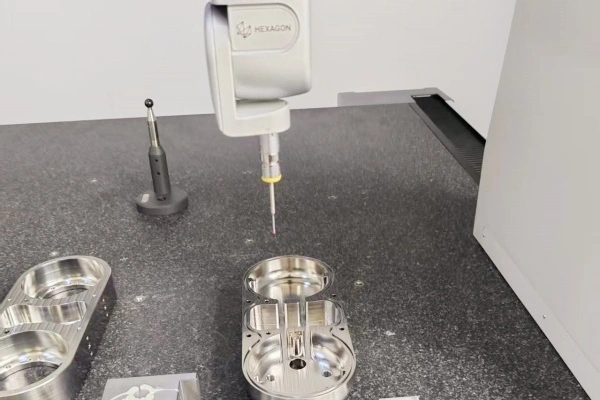
Each CNC machined titanium propeller passes a multi-stage inspection protocol. CMM 3D scanning verifies blade pitch, rake angles, and skew against CAD models per ISO 484 Class S tolerances.
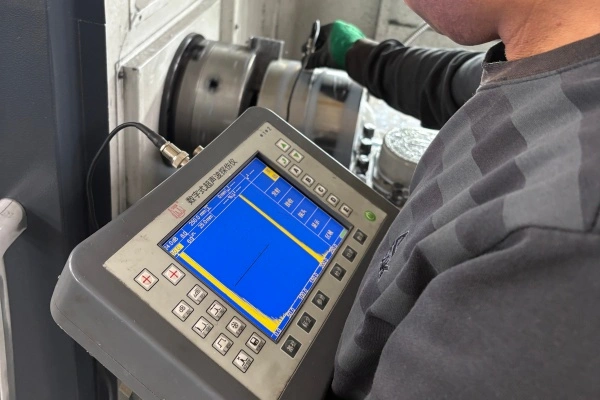
Dynamic balance testing follows ISO 1940-1 Grade G2.5 or G1.0 standards. NDT includes dye penetrant inspection for surface micro-cracks and ultrasonic testing to confirm billet integrity. Mill Test Certificates verify ASTM Grade 5 chemical composition before production.
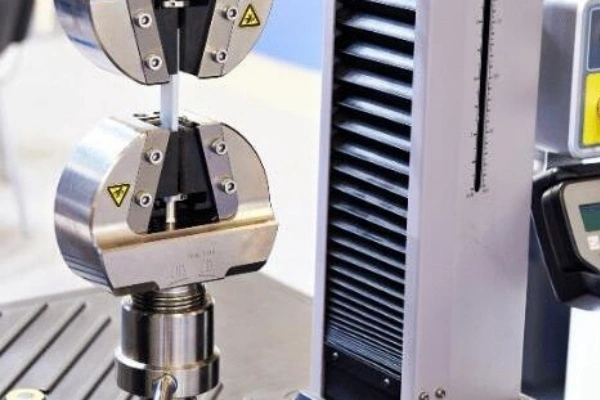
Mechanical Properties Testing
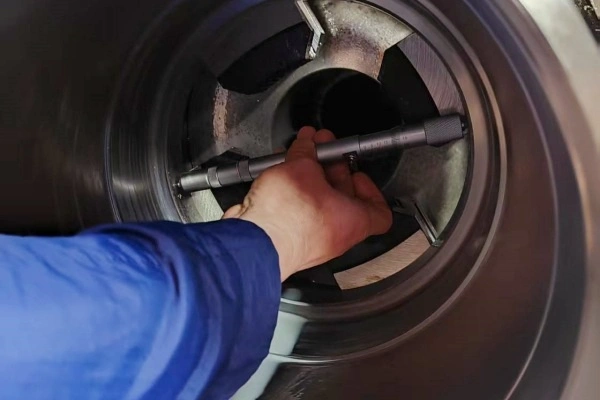
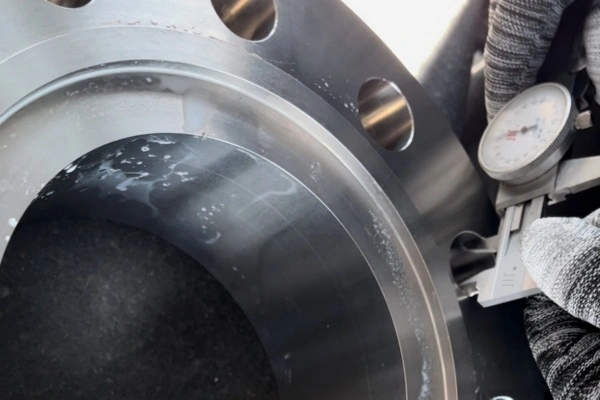
Inner Diameter Measurement
Ultrasonic Testing
CMM Dimensional
Mounting Hole Diameter Measurement
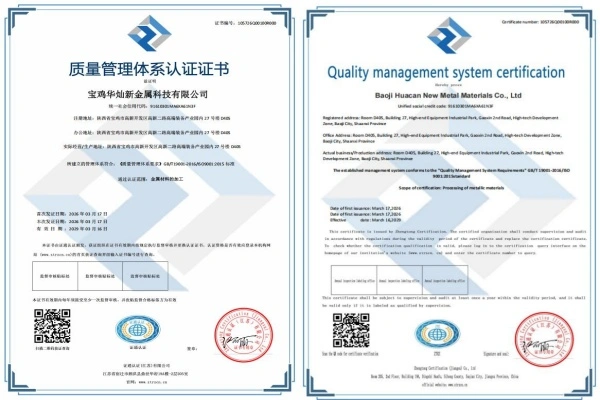
Quality Management System Certification
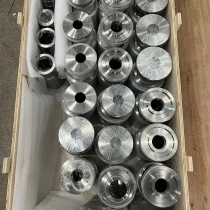
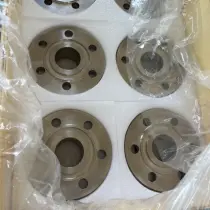
Packaging & Shipping
| Method | Purpose |
|---|---|
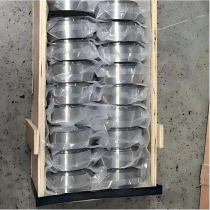
| Custom Foam Inserts | Secure precision blades and protect critical surfaces from impact or abrasion |
| Vacuum-Sealed Bags with Desiccants | Prevent moisture and oxidation risks during international transportation |
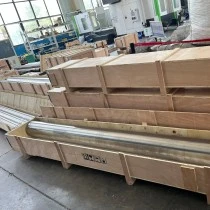
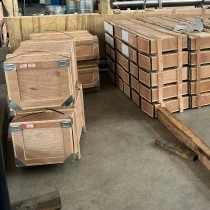
| Reinforced Wooden Crates | Provide additional protection for bulk quantities and heavy components |
| Product Labeling & Documentation | Ensure full traceability and support efficient inspection and customs clearance |
We also provide airfreight for urgent orders. Sea freight deals with low-cost bulk shipping.
FAQ
Q: Are grade 5 propellers better than grade 2?
A: Yes. Grade 5 (Ti-6Al-4V) is the industry standard. Grade 2 is overly soft under load and flexes the blade, reducing efficiency.
Q: Are titanium propellers repairable?
A: Yes, however the TIG welding must be done in an inert atmosphere devoid of oxygen to avoid embrittlement.
Q: How long does a titanium propeller last?
A:Under normal conditions without physical impact, lifespan is virtually indefinite due to corrosion and cavitation immunity.
Q: Do you support small-batch orders?
A:Yes. We support prototypes, small batches, and long-term OEM supply.
Contact Us
Ready to order your custom CNC machined titanium propeller? Email sherry@hc-titanium.com for specifications, pricing, and lead times.



Learn about our latest products and discounts through SMS or email