- English
- French
- German
- Portuguese
- Spanish
- Russian
- Japanese
- Korean
- Arabic
- Greek
- German
- Turkish
- Italian
- Danish
- Romanian
- Indonesian
- Czech
- Afrikaans
- Swedish
- Polish
- Basque
- Catalan
- Esperanto
- Hindi
- Lao
- Albanian
- Amharic
- Armenian
- Azerbaijani
- Belarusian
- Bengali
- Bosnian
- Bulgarian
- Cebuano
- Chichewa
- Corsican
- Croatian
- Dutch
- Estonian
- Filipino
- Finnish
- Frisian
- Galician
- Georgian
- Gujarati
- Haitian
- Hausa
- Hawaiian
- Hebrew
- Hmong
- Hungarian
- Icelandic
- Igbo
- Javanese
- Kannada
- Kazakh
- Khmer
- Kurdish
- Kyrgyz
- Latin
- Latvian
- Lithuanian
- Luxembou..
- Macedonian
- Malagasy
- Malay
- Malayalam
- Maltese
- Maori
- Marathi
- Mongolian
- Burmese
- Nepali
- Norwegian
- Pashto
- Persian
- Punjabi
- Serbian
- Sesotho
- Sinhala
- Slovak
- Slovenian
- Somali
- Samoan
- Scots Gaelic
- Shona
- Sindhi
- Sundanese
- Swahili
- Tajik
- Tamil
- Telugu
- Thai
- Ukrainian
- Urdu
- Uzbek
- Vietnamese
- Welsh
- Xhosa
- Yiddish
- Yoruba
- Zulu
What Are the Mechanical Properties of Titanium Rod?
Titanium rod is now used in many high-performance areas due to its excellent engineering qualities. Strong, light, and very resistant to corrosion, this metal can be used in a lot of different ways. It is used a lot in the medical, marine, and aerospace fields.
Tensile Strength Ranges by Alloy Grade
Depending on the alloy grade and the state of the material, titanium rod has tensile strength varies significantly. Most of the time, alloyed grades of titanium are stronger than commercially pure titanium grades like Grade 1 (TA1). Take Grade 5 Ti-6Al-4V titanium rod as an example. Its tensile strength can range from 895 to 1200 MPa, based on the state of the material and the applicable specification requirements.
Comparing Titanium Rod Grades
Different titanium rod grades provide different mechanical properties:
• Grade 2 (TA2) titanium rod has moderate tensile strength and excellent corrosion resistance, making it suitable for chemical processing equipment.
• Grade 4 titanium rod provides higher strength than lower commercially pure grades and can be used in demanding marine and industrial applications.
• Grade 23 titanium rod (Ti-6Al-4V ELI) combines high strength, ductility, fracture toughness, and biocompatibility, making it suitable for certain medical and implant-related applications.
Engineers can select a titanium rod grade according to specific load-bearing requirements, operating conditions, and applicable material specifications. This helps ensure that the material meets the mechanical requirements of the application.
Yield Strength Considerations
Another important property of titanium rod is its yield strength, which represents the stress level at which permanent plastic deformation begins. In general, Grade 2 titanium rod has a yield strength that depends on its material condition and applicable specification. Ti-6Al-4V can provide substantially higher yield strength than commercially pure titanium. Its high strength-to-weight ratio makes titanium rod suitable for applications that require both weight reduction and structural performance.

Fatigue Behaviour and Corrosion Resistance
Titanium rod is often used in demanding environments because appropriate titanium grades can provide good fatigue performance and corrosion resistance under suitable service conditions.
Fatigue Performance of Titanium Rod
Titanium rod can provide good fatigue performance under cyclic loading, which is important for components subjected to repeated stresses. Ti-6Al-4V titanium rod can provide fatigue strength in the several-hundred-MPa range under specific high-cycle testing conditions. Actual fatigue performance depends on stress ratio, surface condition, microstructure, heat treatment, and testing method. These factors are important for components such as aircraft landing gear and engine parts.
• Surface condition: Smooth, properly finished surfaces can improve fatigue resistance by reducing surface defects and crack-initiation sites.
• Microstructure: Grain structure and microstructural condition can affect fatigue strength, crack initiation, and crack propagation.
• Heat treatment: Appropriate heat treatment can modify microstructure and mechanical properties, which may affect fatigue performance.
Corrosion Resistance Properties
One of the important properties of titanium rod is its excellent corrosion resistance. This is mainly related to the stable, adherent passive oxide film that forms on the surface. Titanium rod is useful in:
• Marine settings: Excellent resistance to seawater corrosion under many service conditions.
• Chemical processing: Good resistance to many corrosive process media, depending on concentration and temperature.
• Biomedical uses: Good biocompatibility for grades and conditions suitable for medical applications.
While titanium rod usually has good corrosion resistance, this depends on the alloy grade, temperature, chemical makeup, flow conditions, surface condition, and whether it comes into contact with other metals. For this reason, material suitability should be checked for tough jobs instead of thinking that titanium can handle all acidic conditions.

Hardness, Machinability, and Heat-Treat Effects
Strength, machinability, hardness, and response to heat treatment are all important factors to take into account when making and using titanium rod.
Hardness Characteristics of Titanium Rod
Titanium rod's hardness is based on the type of alloy, how it was processed, and heat-treatment condition. Most of the time, Grade 2 titanium rod is not as hard as Ti-6Al-4V. Hardness numbers should be judged based on the material condition and the measuring standard that applies.
• Grade 2 titanium rod commonly has an HRB hardness range that depends on its material condition. Ti-6Al-4V titanium rod can be evaluated using HRC when the hardness falls within the appropriate measurement range.
• In applications such as medical components and aerospace parts, hardness can affect machinability, surface durability, and resistance to localized deformation.
Machinability Considerations
The high strength, low thermal conductivity, and chemical affinity of titanium rod with cutting tools can make it difficult to machine. However, titanium rod can be machined effectively when appropriate methods and tools are used:
• Use sharp carbide tools with cutting-edge geometry suitable for titanium machining.
• Use conservative cutting speeds and appropriate feed rates based on the titanium grade, operation, tooling, and machine capability.
• Provide sufficient coolant delivery to control cutting temperature and reduce excessive tool wear and work hardening.
High-speed milling and electrical discharge machining (EDM) are examples of advanced methods that can be used for selected titanium machining operations and complex features.

Effects of Heat Treatment on Titanium Rod
The mechanical properties of titanium rod can be modified through appropriate heat treatment. Common heat-treatment processes include:
• Annealing: Can reduce residual stresses and modify strength, ductility, and machinability depending on the alloy and treatment condition.
• Solution treatment and aging: Can increase strength and hardness in selected alpha-beta titanium alloys, particularly Ti-6Al-4V, when appropriate parameters are used.
• Stress relieving: Reduces residual stresses while generally minimizing changes in overall mechanical properties.
For example, solution treatment and aging of Ti-6Al-4V titanium rod can increase strength and hardness when an appropriate heat-treatment schedule is applied. The final mechanical properties depend on the initial material condition, treatment parameters, cooling rate, and applicable specification.
Conclusion
Due to its high strength-to-weight ratio, corrosion resistance, fatigue performance, and adaptability, titanium rod is an important engineering material. Its success relies on alloy grade, the condition of the material, manufacturing process, the state of the surface, and the area where it will be used. When engineers and manufacturers choose titanium rod for use in aerospace, medicine, the marine industry, chemical processing, and other fields, they should keep these things in mind.
Baoji Huacan New Metal Materials Co., Ltd. can help people who need titanium rod goods made in China. Our production sites are ISO 9001-certified, and our expert team helps with picking out materials, machining, fabrication, and inspection. We offer titanium products that meet certain quality standards, specifications, requirements for grades and sizes, and material condition.
FAQ
There are many times when titanium rod is better than steel rod.
Titanium rod may be better than steel when corrosion resistance, low density, and a high strength-to-weight ratio are important. Steel may still be better in terms of cost, hardness, availability, and ability to be machined, so the choice of material should be based on the needs of the application.
Is it simple to join titanium rods together?
Titanium rod can be joined using techniques like TIG welding, but it needs to be carefully shielded and cleaned up afterward. High-purity inert gas protection helps keep oxygen, nitrogen, and other contaminants from getting into hot titanium while it is being welded.
How does the cost of titanium rod compare to other metals?
Most of the time, titanium rod costs more than steel or aluminium rod. In applications where these characteristics are crucial, however, its corrosion resistance, low density, and service performance can offer long-term benefits. The real economic gain rests on the use and conditions of operation.
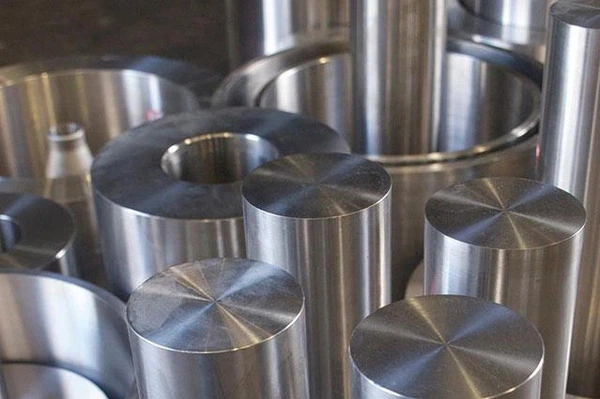
Titanium Rod: Powering Innovation Across Industries
From aerospace to medical technology, titanium rod provides a useful combination of strength, low density, and corrosion resistance. We manufacture titanium rods according to specified material grades, dimensions, and quality requirements at Baoji Huacan New Metal Materials Co., Ltd. Our manufacturing processes are supported by ISO 9001-certified quality management to maintain consistent production and inspection procedures. Our technical team can support projects requiring standard titanium materials or customized titanium components. You can email us at Joy@hc-titanium.com or Sherry@hc-titanium.com with your titanium rod grade, dimensions, quantity, specification, and inspection requirements.
References
1. Leyens, C., & Peters, M. (2003). Titanium and Titanium Alloys: Fundamentals and Applications. Wiley-VCH.
2. Boyer, R., Welsch, G., & Collings, E. W. (1994). Materials Properties Handbook: Titanium Alloys. ASM International.
3. Donachie, M. J. (2000). Titanium: A Technical Guide. ASM International.
4. Peters, M., Kumpfert, J., Ward, C. H., & Leyens, C. (2003). Titanium Alloys for Aerospace Applications. Advanced Engineering Materials, 5(6), 419-427.
5. Rack, H. J., & Qazi, J. I. (2006). Titanium alloys for biomedical applications. Materials Science and Engineering: C, 26(8), 1269-1277.
_1755850000596.jpg)


Learn about our latest products and discounts through SMS or email