- English
- French
- German
- Portuguese
- Spanish
- Russian
- Japanese
- Korean
- Arabic
- Greek
- German
- Turkish
- Italian
- Danish
- Romanian
- Indonesian
- Czech
- Afrikaans
- Swedish
- Polish
- Basque
- Catalan
- Esperanto
- Hindi
- Lao
- Albanian
- Amharic
- Armenian
- Azerbaijani
- Belarusian
- Bengali
- Bosnian
- Bulgarian
- Cebuano
- Chichewa
- Corsican
- Croatian
- Dutch
- Estonian
- Filipino
- Finnish
- Frisian
- Galician
- Georgian
- Gujarati
- Haitian
- Hausa
- Hawaiian
- Hebrew
- Hmong
- Hungarian
- Icelandic
- Igbo
- Javanese
- Kannada
- Kazakh
- Khmer
- Kurdish
- Kyrgyz
- Latin
- Latvian
- Lithuanian
- Luxembou..
- Macedonian
- Malagasy
- Malay
- Malayalam
- Maltese
- Maori
- Marathi
- Mongolian
- Burmese
- Nepali
- Norwegian
- Pashto
- Persian
- Punjabi
- Serbian
- Sesotho
- Sinhala
- Slovak
- Slovenian
- Somali
- Samoan
- Scots Gaelic
- Shona
- Sindhi
- Sundanese
- Swahili
- Tajik
- Tamil
- Telugu
- Thai
- Ukrainian
- Urdu
- Uzbek
- Vietnamese
- Welsh
- Xhosa
- Yiddish
- Yoruba
- Zulu
Titanium Flanges for Deep-Sea Pipelines: Key Specs Explained
Deep-sea environments are highly demanding, and titanium flange parts are a big part of keeping the stability and service life of underwater piping systems. They are great for places where long-term dependability and easy upkeep are important because they are low in density, have a high strength-to-weight ratio, and provide excellent resistance to seawater corrosion. This article talks about the most important rules for titanium flanges used in deep sea applications. These rules include choosing the right material, allowing corrosion, the required pressure, resistance to fatigue, bolting, and sealing.
Corrosion Allowance and Material Grade Selection
Corrosion resistance, mechanical loading, material compatibility, and design life must all be carefully thought through for deep-sea service. It is important to choose the right titanium grade so that the flange continues to work well for as long as it is supposed to.
Optimal Titanium Alloys for Deep-Sea Flanges
For different needs in the ocean, companies that make titanium flanges usually look at Grade 2 titanium and Grade 5 titanium (Ti-6Al-4V). Grade 2 is good at resisting corrosion from seawater and is also flexible and easy to weld. This makes it a good choice for subsea pipe systems that only need moderate mechanical strength.
Grade 5 titanium has much higher tensile and yield strengths than commercially pure titanium. It also has good fatigue performance when it is developed and made correctly. Because of this, it can be thought about for sites in deep water that are subject to higher mechanical loads. When choosing a material, it's important to think about how deep it will be installed, how hot it will be, the chemistry of the seawater, the amount of dissolved oxygen, and any potentially corrosive species like chlorides and sulphides.
To lower the risk of galvanic corrosion, you should also check to see if the material is compatible with nearby materials and fixing systems. The titanium flange factory can make parts that meet the mechanical and environmental needs of certain subsea applications by choosing the right alloys and doing an engineering assessment.
Corrosion Allowance Considerations
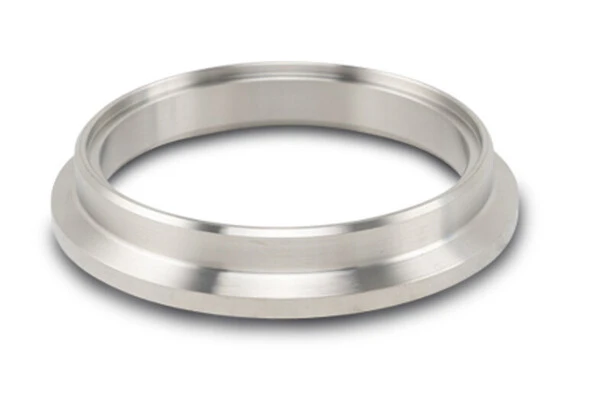
Titanium is very resistant to corrosion by seawater, so a fixed corrosion allowance shouldn't be used for all deep-sea uses. Any additional thickness should be chosen based on the type of material, the service climate, the design life, the project requirements, and any relevant standards.
Deep-sea service may involve biofouling, sediment abrasion, crevice conditions, contact with dissimilar metals, and localized surface damage during installation. These factors should be considered when evaluating long-term corrosion behavior. Where a project requires additional material thickness, the titanium flange factory can incorporate the specified allowance into the flange design and machining requirements.
This approach is particularly important for critical subsea systems where inspection, maintenance, and replacement are difficult and costly. Proper corrosion assessment helps maintain the required structural thickness while avoiding unnecessary material consumption and component weight.
Surface Treatment for Enhanced Protection
Titanium naturally forms a stable passive oxide film that provides strong resistance to seawater corrosion. Surface treatment may nevertheless be considered when an application requires improved surface hardness, wear resistance, friction behavior, or resistance to mechanical damage.
Processes such as anodizing can modify the oxide layer for specific surface-property requirements, while nitriding can increase surface hardness and wear resistance. Nitriding may be useful for contact areas exposed to repeated loading, sliding, or mechanical damage. The selected treatment should be matched to the flange function and service conditions rather than applied as a general requirement.
For sealing surfaces, controlled machining and suitable surface finish are particularly important. Gasket contact areas should meet the specified dimensional and surface-finish requirements to achieve uniform contact. Depending on the application, additional finishing may include polishing or controlled surface preparation.
By combining suitable material selection, surface treatment, and machining control, titanium flange manufacturers can support reliable service in deep-sea oil, gas, offshore energy, and other subsea applications.
Wall Thickness and Pressure Class Requirements
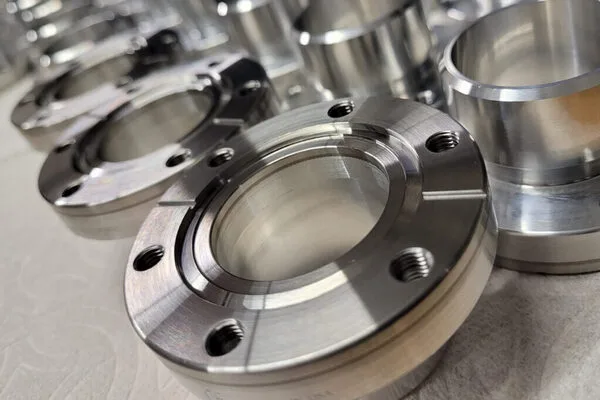
Deep-sea applications expose flange assemblies to substantial hydrostatic pressure and mechanical loading. Wall thickness and pressure class therefore need to be evaluated together with flange geometry, material properties, internal pressure, external pressure, and temperature.
Determining Appropriate Wall Thickness
Wall thickness calculations for deep-sea titanium flanges are an important part of subsea engineering because the assembly may experience both internal and external pressure. Designers should consider external hydrostatic pressure, internal pipeline pressure, pressure differentials, thermal effects, installation loads, and transient conditions during operation.
At substantial water depths, external pressure can become a governing design condition and increase the risk of local deformation or buckling. Finite element analysis (FEA) can be used to evaluate stress distribution, deformation, and local structural response under defined loading conditions.
Final wall thickness should be established according to engineering calculations, applicable standards, material properties, flange dimensions, and project requirements. Proper optimization helps balance structural performance with material consumption, component weight, machining requirements, and installation costs.
Pressure Class Selection for Deep-Sea Applications
Pressure class selection is important for ensuring that titanium flanges remain suitable for the intended piping service. Ratings such as ASME Class 900, 1500, or 2500 should be selected according to the applicable standard, material, design pressure, design temperature, and piping specification rather than installation depth alone.
For subsea applications, internal design pressure and external hydrostatic pressure should be assessed separately. Maximum allowable working pressure (MAWP), operating temperature, fluid properties, pressure cycling, and external pressure should all be considered. Where external pressure is critical, additional structural analysis may be required to evaluate collapse and buckling resistance.
Because subsea systems are difficult and expensive to access, pressure class and design margins should be selected carefully within the requirements of applicable standards. Proper matching of flange rating, material, dimensions, and operating conditions supports structural reliability and sealing performance.
Fatigue Resistance in Cyclic Loading Conditions
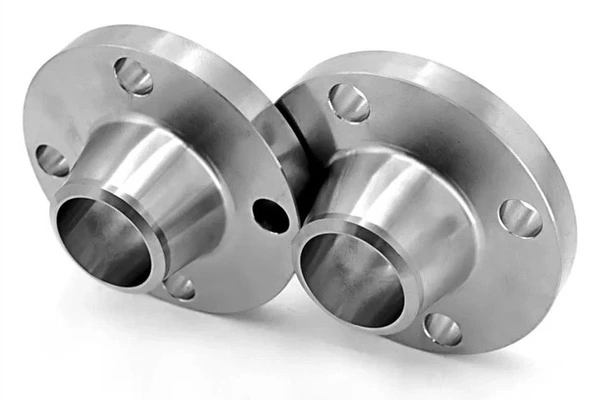
Titanium flange manufacturers must consider fatigue resistance when designing components exposed to repeated loading. Subsea pipelines may experience cyclic stresses caused by pressure fluctuations, vibration, thermal changes, wave action, installation loads, and underwater currents.
Flange geometry, bolt preload, material condition, surface finish, and machining quality can all affect fatigue performance. For critical applications, fatigue assessment may include stress analysis and FEA based on the expected loading conditions. Proper control of machining defects and surface damage is also important because localized stress concentrations can reduce fatigue life.
Bolt, Gasket, and Sealing Choices for Seawater
Reliable sealing depends on the complete flange assembly rather than the titanium flange alone. Bolt material, gasket selection, preload, flange-face condition, dimensional accuracy, and seawater exposure should be considered together.
Bolt Material Selection for Underwater Use
Bolt material selection is important for deep-sea titanium flange assemblies because fasteners are exposed to seawater while carrying mechanical loads. Alloys such as Inconel 718 and Monel K-500 may be considered where high strength and marine corrosion resistance are required. Their suitability should be verified according to temperature, load, seawater exposure, and project requirements.
Galvanic compatibility between the bolts and titanium flange should also be evaluated. Poor material combinations can increase the risk of galvanic corrosion, particularly where electrical contact and seawater exposure are sustained. Suitable washers, sleeves, or other electrical isolation methods may be used where required.
Controlled bolt installation is equally important. The engineering specification should be followed for the tightening torque, preload, lubrication condition, thread condition, and installation order. These settings help keep the tightening force constant and lower the chance of leaks or uneven gasket loading.
Gasket Materials for Reliable Sealing
How well deep-sea titanium flange systems seal depends a lot on the gaskets that are used. The seal has to work with the process fluid, ocean, temperature, pressure, shape of the flange-face, and required service life.
PTFE-based gasket materials provide excellent chemical resistance, and flexible graphite could be used where thermal stability and compressibility are needed. Gasket characteristics like creep resistance, recovery, chemical compatibility, compressibility, and temperature capability should be evaluated by the titanium flange manufacturer.
The thickness and hardness of the gasket should be chosen based on the design of the flange and the sealing needs. Controlling the bolt preload and making sure the flange face is in the right condition are also needed to spread the gasket load evenly and keep the seal's integrity during pressure cycling.
Sealing Technologies for Extreme Depths
At very deep depths below the surface, standard gasket arrangements might not work for all situations. Metal-to-metal seals or pressure-energized sealing systems may be used, depending on the difference in pressure, the temperature, the need for upkeep, and the form of the link.
Controlling the contact shape and surface finish is important for metal-to-metal seals to stay sealed even when pressure is high. Their performance is based on how well they are machined, how much contact stress there is, the choice of material, and how well they are installed. Pressure-energized seals use the pressure in the system to increase the closing force. These seals may be used in situations where there are big differences in pressure.
Manufacturers can support reliable, leak-resistant connections for demanding underwater uses by combining the right sealing technologies with precisely made titanium flange parts.
Conclusion
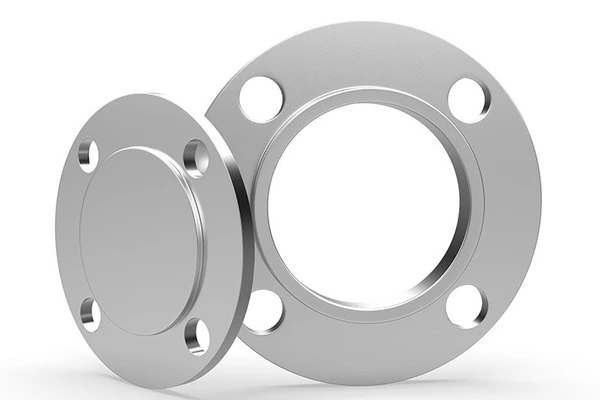
Titanium flanges can work well for deep-sea pipeline systems that need to be resistant to corrosion by seawater, have a high specific strength, and be reliable over time. It depends on the type of material, the shape of the flange, the thickness of the wall, the design pressure, the cyclic loading, the bolting, the choice of gasket, the surface state, and the design of the seal.
For deep-sea uses, the internal pressure and the external hydrostatic pressure should be looked at separately during the design phase and then together as part of the overall engineering assessment. Choosing the right material, making sure the dimensions are correct, inspecting, and trying the titanium flange for its specific use can help it work reliably in harsh marine and marine and subsea environments.
FAQ
Why are titanium flanges preferred for deep-sea pipelines?
Titanium flanges are often selected because of their excellent resistance to seawater corrosion, high strength-to-weight ratio, and good mechanical stability. Grade selection and flange design must still match the required pressure, temperature, loading conditions, and applicable standards.
What are the common titanium grades used for deep-sea flanges?
Grade 2 commercially pure titanium and Grade 5 titanium (Ti-6Al-4V) are common options for different requirements. Grade 2 provides excellent corrosion resistance and good weldability, while Grade 5 provides substantially higher mechanical strength.
How is the pressure class for deep-sea titanium flanges determined?
Pressure class is determined according to the applicable flange standard, material, design pressure, design temperature, and piping specification. For deep-sea service, external hydrostatic pressure, pressure cycling, flange geometry, and sealing requirements should also be assessed.
Expert Titanium Flange Manufacturing Solutions
At Baoji Huacan New Metal Materials Co., Ltd., we specialize in manufacturing titanium flanges for demanding industrial and subsea applications. Our titanium flange factory supports material selection, CNC machining, dimensional inspection, and material traceability according to customer drawings and specified requirements.
Grade 2 and Grade 5 titanium can be considered according to application, mechanical loading, corrosion conditions, and applicable standards. For OEM projects, customers can provide flange drawings, dimensions, titanium grade, pressure requirements, gasket configuration, quantity, and applicable standards for technical evaluation and quotation. Contact Joy@hc-titanium.com or Sherry@hc-titanium.com to discuss your titanium flange requirements and obtain a project-specific quotation.
References
1. Smith, J.R. (2020). "Titanium Alloys in Offshore Applications: A Comprehensive Review." Journal of Marine Engineering and Technology, 15(3), 245-260.
2. Johnson, A.B., & Thompson, C.L. (2019). "Corrosion Resistance of Titanium Flanges in Deep-Sea Environments." Corrosion Science and Technology, 54(2), 178-195.
3. Lee, S.H., et al. (2021). "Design Considerations for High-Pressure Titanium Flanges in Subsea Systems." Ocean Engineering, 218, 108153.
4. Williams, R.T., & Davis, E.M. (2018). "Advanced Sealing Technologies for Deep-Sea Pipeline Connections." Offshore Technology Conference Proceedings, OTC-28964-MS.
5. Brown, K.L. (2022). "Material Selection for Critical Components in Underwater Pipeline Systems." Materials Performance in Extreme Environments, 7(4), 412-428.
_1759973657622.jpg)


Learn about our latest products and discounts through SMS or email