- English
- French
- German
- Portuguese
- Spanish
- Russian
- Japanese
- Korean
- Arabic
- Greek
- German
- Turkish
- Italian
- Danish
- Romanian
- Indonesian
- Czech
- Afrikaans
- Swedish
- Polish
- Basque
- Catalan
- Esperanto
- Hindi
- Lao
- Albanian
- Amharic
- Armenian
- Azerbaijani
- Belarusian
- Bengali
- Bosnian
- Bulgarian
- Cebuano
- Chichewa
- Corsican
- Croatian
- Dutch
- Estonian
- Filipino
- Finnish
- Frisian
- Galician
- Georgian
- Gujarati
- Haitian
- Hausa
- Hawaiian
- Hebrew
- Hmong
- Hungarian
- Icelandic
- Igbo
- Javanese
- Kannada
- Kazakh
- Khmer
- Kurdish
- Kyrgyz
- Latin
- Latvian
- Lithuanian
- Luxembou..
- Macedonian
- Malagasy
- Malay
- Malayalam
- Maltese
- Maori
- Marathi
- Mongolian
- Burmese
- Nepali
- Norwegian
- Pashto
- Persian
- Punjabi
- Serbian
- Sesotho
- Sinhala
- Slovak
- Slovenian
- Somali
- Samoan
- Scots Gaelic
- Shona
- Sindhi
- Sundanese
- Swahili
- Tajik
- Tamil
- Telugu
- Thai
- Ukrainian
- Urdu
- Uzbek
- Vietnamese
- Welsh
- Xhosa
- Yiddish
- Yoruba
- Zulu
Why Middle East Offshore Operators Prefer Titanium Flanges?
Titanium flange parts are being thought of more and more for important connections in the harsh offshore environment of the Middle East. Because they are resistant to corrosion, have a low density, and have a high specific strength, they can be used in some oil and gas uses that are exposed to seawater and other harsh service environments. But when choosing a material, you should always think about the temperature, pressure, joint design, and service area. This article talks about why offshore operators in the Middle East are becoming more interested in titanium flanges.
Superior Seawater Corrosion Resistance
Titanium flange goods have a strong resistance to corrosion in seawater, which is one of the main factors offshore companies consider. Offshore platforms and underwater systems may be exposed to hot, chloride-filled ocean conditions that can break down materials that aren't very strong. Titanium creates a stable passive oxide film that is very resistant to corrosion in many seawater situations. If the grade and service conditions are right, this property can help keep the part's integrity over long periods of time.
Unparalleled Protection Against Saltwater
If you put titanium flanges in seawater, titanium will naturally form a thin, stable oxide film. Titanium oxides make up most of this passive film, which helps protect the metal below from more further corrosion. If there is only small damage to the surface, the film can quickly heal itself under the right conditions by repassivating. This keeps titanium's ability to fight corrosion while it is being handled, installed, and used in normal naval conditions.
One type of corrosion can still happen to titanium, though. Performance can be affected by temperature, chloride concentration, deposits, crevice geometry, surface state, and touch with metals that are not the same. Because of this, these things should be thought about when choosing flange materials for offshore systems.
Extended Lifespan in Marine Applications
Titanium flanges can provide long service life in suitable marine environments because of their resistance to general and localized corrosion. Compared with conventional carbon steel, titanium may reduce corrosion-related degradation and replacement requirements when the material is properly selected.
This can be particularly valuable in remote offshore facilities, where replacement work may require shutdown planning, specialized personnel, lifting equipment, and marine logistics. Longer component service life can help reduce maintenance disruption, although actual performance also depends on mechanical loading, operating conditions, manufacturing quality, and inspection practices.
Resistance to Pitting and Crevice Corrosion
Localized corrosion, including pitting and crevice corrosion, is an important consideration in seawater systems. These forms of attack can develop under specific environmental and geometric conditions and may contribute to leakage or loss of component integrity if they remain undetected.
Titanium generally provides strong resistance to pitting and crevice corrosion in many seawater environments. Nevertheless, confined joints, deposits, elevated temperatures, and aggressive chemical conditions should be evaluated carefully. Proper flange design, material selection, surface cleanliness, and inspection remain important for reliable offshore service.

Weight Savings for Platform and Risers
Titanium can provide meaningful weight advantages because its density is significantly lower than that of conventional steel. Actual weight savings for a Titanium flange depend on the material grade, dimensions, pressure rating, flange configuration, and design requirements.
Offshore structures must account for equipment weight, structural loads, installation requirements, and transportation limitations. Reducing component weight can therefore provide practical benefits when titanium is technically and economically suitable.
Reduced Structural Load on Platforms
Titanium flanges can weigh substantially less than similarly designed steel alternatives because titanium combines relatively low density with high specific strength. The exact reduction varies according to flange size, pressure class, material grade, and design criteria.
Lower component weight can reduce handling and support loads and may simplify installation in some offshore projects. These benefits can be relevant to floating facilities, subsea systems, and other applications where equipment weight and installation logistics require careful planning.
Improved Riser Performance
Risers are vertical piping systems that connect subsea equipment with surface facilities. Their design is influenced by tensile loads, pressure, fatigue, environmental forces, and dynamic behavior. Titanium's low density and high specific strength may help reduce component weight and associated structural loads in selected riser applications.
However, riser performance cannot be determined by material weight alone. Engineers should also evaluate fatigue, pressure, temperature, external loads, connection design, and the complete system configuration.
Easier Handling and Installation
Offshore installation teams often work in restricted areas where access to cranes and lifting equipment may be limited. The lower density of titanium can make individual flange components easier to handle than similarly sized steel components.
Reduced handling weight may simplify alignment and installation and can also be useful during maintenance operations. Actual benefits depend on component size, lifting arrangements, access conditions, and the overall piping design.

Lower Maintenance and Lifecycle Costs
When compared to carbon steel, titanium flanges typically have higher initial material costs. But their resistance to corrosion can help over the course of their useful life, since corrosion-related repairs, replacements, or downtime can cost a lot of money.
An accurate economic analysis should look at the purchase price along with the expected service life, the number of inspections needed, the cost of maintenance, how often the item needs to be replaced, and any downtime that might happen.
Minimal Maintenance Requirements
Titanium is resistant to corrosion by seawater, so some of the steps used to stop corrosion in materials that aren't as resistant can be used less often. But this doesn't get rid of the need for inspections or upkeep. Offshore systems still need to be inspected, leaks must be tracked, joints must be checked, and the equipment's state must be evaluated based on how important it is and the standards that apply.
At the system level, cathodic protection and other corrosion-control methods should be looked at, especially when titanium is attached to metals that are not the same. Galvanic effects can be controlled and the whole system can be kept safe with good design.
Long-Term Cost Effectiveness
When choosing materials for offshore building, operators are thinking about total lifetime cost more and more, not just buying price. Titanium can be a good investment if its lower density, resistance to corrosion, and possible lower replacement needs more than make up for its higher initial cost.
The real cost savings rely on the type of material used, the size of the flange, the service conditions, the repair plan, the cost of fitting, and the estimated working life. So, engineering and cost data specific to each project should be used to make lifecycle comparisons.
Reduced Risk of Costly Failures
When offshore technology breaks down, it can cause lost production, damage to the environment, and safety issues. Titanium flanges can help lower the risks of corrosion in some situations because they can handle ocean and other harsh conditions.
Engineers should think about the pressure rating, temperature, mechanical loading, flange design, gasket selection, material compatibility, and inspection needs for critical isolation points, subsea manifolds, and certain high-pressure flowline systems. Titanium can be a good choice if these things are taken into account.

Conclusion
Titanium flanges can offer important advantages for selected offshore applications in the Middle East, particularly where seawater corrosion, component weight, and long-term maintenance are major considerations. Their passive oxide film provides excellent corrosion resistance in many marine environments, while their lower density and high specific strength can help reduce component weight.
However, titanium should not be selected based on corrosion resistance alone. Grade, pressure rating, temperature, joint design, mechanical loading, galvanic compatibility, manufacturing quality, and inspection requirements all influence long-term performance. A project-specific evaluation provides a more reliable basis for material selection.
Titanium can remain an effective option for demanding offshore applications when its material properties are matched with appropriate engineering design and service conditions. From selected riser components to subsea piping systems, Titanium flange products can provide practical value where corrosion resistance and weight reduction are important.
FAQs
For high-pressure uses in offshore settings, are titanium flanges appropriate?
Yes. Titanium flanges can be used in high-pressure offshore systems when the selected grade, pressure class, temperature, flange design, and applicable engineering standards are appropriate for the service conditions. Material strength alone does not determine pressure capability.
How much are titanium flanges and stainless steel flanges?
Titanium flanges generally have a higher initial purchase price than stainless steel flanges. However, the economic comparison should also consider corrosion resistance, expected service life, inspection, maintenance, replacement, and installation costs.
Is it possible to use titanium flanges underwater?
Yes. Titanium flanges can be used in suitable subsea applications because titanium provides strong resistance to seawater corrosion. Engineers should still evaluate pressure, temperature, joint configuration, galvanic compatibility, mechanical loads, and applicable subsea requirements.
Titanium Flange Production: Quality and Precision
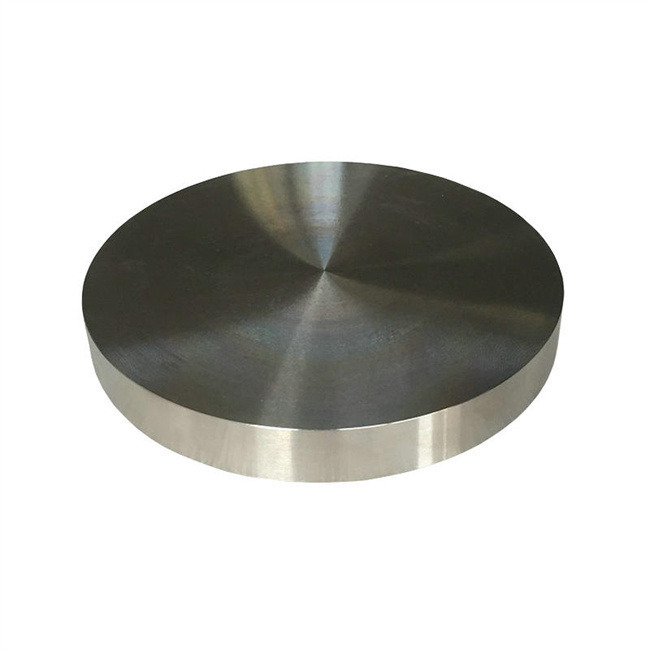
Our titanium flange factory manufactures titanium and titanium alloy flanges for demanding industrial and marine applications. We support production according to specified material grades, dimensions, flange configurations, and technical requirements. Manufacturing and inspection processes help maintain dimensional accuracy and consistent product quality.
For customized requirements, buyers can provide the material grade, flange standard, size, pressure rating, quantity, operating conditions, or technical drawings. For questions about Titanium flange products and manufacturing capabilities, please contact Joy@hc-titanium.com or Sherry@hc-titanium.com.
References
1. Smith, J. (2021). "Corrosion Resistance of Titanium Alloys in Marine Environments," Journal of Offshore Engineering, 45(3), 215-230.
2. Al-Hassan, M. et al. (2020). "Weight Optimization in Offshore Platforms: The Role of Advanced Materials," Offshore Technology Conference Proceedings, Houston, TX.
3. Johnson, L.K. (2022). "Lifecycle Cost Analysis of Titanium Components in Offshore Oil and Gas Applications," SPE Offshore Europe Conference and Exhibition, Aberdeen, Scotland.
4. Chen, X. and Wong, Y. (2019). "Comparative Study of Flange Materials for Subsea Applications," Deep Ocean Engineering Symposium, Singapore.
5. Patel, R.V. (2023). "Advances in Titanium Alloy Manufacturing for Marine Applications," Materials Today: Proceedings, 38, 2345-2360.
_1754030914677.webp)
_1755678829551.jpg)


Learn about our latest products and discounts through SMS or email