- English
- French
- German
- Portuguese
- Spanish
- Russian
- Japanese
- Korean
- Arabic
- Greek
- German
- Turkish
- Italian
- Danish
- Romanian
- Indonesian
- Czech
- Afrikaans
- Swedish
- Polish
- Basque
- Catalan
- Esperanto
- Hindi
- Lao
- Albanian
- Amharic
- Armenian
- Azerbaijani
- Belarusian
- Bengali
- Bosnian
- Bulgarian
- Cebuano
- Chichewa
- Corsican
- Croatian
- Dutch
- Estonian
- Filipino
- Finnish
- Frisian
- Galician
- Georgian
- Gujarati
- Haitian
- Hausa
- Hawaiian
- Hebrew
- Hmong
- Hungarian
- Icelandic
- Igbo
- Javanese
- Kannada
- Kazakh
- Khmer
- Kurdish
- Kyrgyz
- Latin
- Latvian
- Lithuanian
- Luxembou..
- Macedonian
- Malagasy
- Malay
- Malayalam
- Maltese
- Maori
- Marathi
- Mongolian
- Burmese
- Nepali
- Norwegian
- Pashto
- Persian
- Punjabi
- Serbian
- Sesotho
- Sinhala
- Slovak
- Slovenian
- Somali
- Samoan
- Scots Gaelic
- Shona
- Sindhi
- Sundanese
- Swahili
- Tajik
- Tamil
- Telugu
- Thai
- Ukrainian
- Urdu
- Uzbek
- Vietnamese
- Welsh
- Xhosa
- Yiddish
- Yoruba
- Zulu
Corrosion-resistant titanium marine propeller
2. Alloy: ASTM B348 Ti-6Al-4V, long service life.
3. Tested in salt spray > 2000 hours.
4. Polished mirror finish, anti-biofouling surface.
5. For marine vessels, ferries, offshore equipment.
Product Introduction
Corrosion-Resistant Titanium Marine Propeller | Custom Titanium Propulsion Solutions for Harsh Marine Environments
A corrosion-resistant titanium marine propeller delivers superior performance where conventional bronze or stainless steel propellers fail. Our propellers are made of Grade 5 Ti-6Al-4V titanium alloy as per ASTM B348. Our propellers have Tensile strength of 895 – 1000 MPa. Density is just 4.43 g/cm3 which is over 50% lighter than Nickel-Aluminum Bronze. These propellers are designed for long-term marine use with salt spray resistance in excess of 2,000 hours and polished mirror finish down to Ra 0.8µm. Diameter varies from 250 mm to 1600 mm.
Product Specification & OEM Customization
| Parameter | Details |
|---|---|
| Material Grade | Grade 2, Grade 5 (Ti-6Al-4V), Grade 7, Grade 9 |
| Material Standards | ASTM B348, AMS, ASME, DIN, as applicable |
| Diameter Range | 250–1600 mm |
| Tensile Strength | 895–1000 MPa, Grade 5 |
| Density | Approx. 4.43 g/cm³ |
| Elastic Modulus | Approx. 114 GPa |
| Salt Spray Resistance | >2,000 hours, depending on finish and test conditions |
| Surface Roughness | Ra ≤0.8 μm, where specified |
| Dimensional Tolerance | ISO 484/1 Class S or Class I, as applicable |
| Blade Count | Customized according to design |
| Dimensions & Weight | Manufactured according to customer drawings |
| Surface Treatment | Polishing, Anodizing, Sand Blasting, Pickling |
| Customization | OEM/ODM, drawing-based and sample-based production |

Product Features

· Self-healing oxide layer — resists chloride ion attack without coatings
· 50% weight reduction vs. nickel-aluminum bronze at comparable strength
· High cavitation resistance — extends service life in high-RPM applications
· Non-magnetic — suitable for mine-countermeasure and scientific vessels
· Anti-biofouling surface — polished finish allows easy cleaning without damage
· Retains ductility in freezing seawater — ideal for polar and ice-class vessels
Product Specification & OEM Customization
| Property | Titanium Grade 5 | Nickel-Aluminum Bronze | Stainless Steel |
|---|---|---|---|
| Density (g/cm³) | 4.43 | ~7.6 | ~7.9 |
| Tensile Strength | 895–1,000 MPa | ~620 MPa | ~515 MPa |
| Seawater Corrosion Resistance | Excellent | Moderate | Poor–Moderate |
| Cavitation Resistance | Very High | Moderate | Moderate |
| Magnetic Properties | Non-Magnetic | Magnetic* | Magnetic* |
| Typical Service Life | 20+ years | 5–10 years | 5–8 years |
| Maintenance Requirement | Very Low | High | High |
Product Application
Solutions One

01
Solutions One

02
Solutions One

03
Solutions One

04
Naval and Patrol Craft — The non-magnetic signature and high fatigue strength make titanium ideal for coast guard interceptors, submarines, and vessels operating in tropical high-salinity waters.
AUVs and ROVs — Deep-sea autonomous vehicles require zero-maintenance propulsion. Titanium's immunity to hydrostatic pressure corrosion and light weight maximizes battery endurance on long-duration missions.
Superyachts and Racing Vessels — Reduced rotational inertia improves acceleration and top speed. Superior damping characteristics eliminate propeller singing, improving onboard acoustic comfort on luxury vessels.
Ferries and Offshore Equipment — Long service cycles in aggressive seawater environments make the corrosion-resistant titanium marine propeller the most cost-effective long-term choice.
Why Choose Us
Titanium generates a passive TiO2 oxide layer which self heals instantaneously when exposed to saltwater. This makes it almost impervious to pitting, crevice corrosion and microbiologically influenced corrosion (MIC) – issues that may drastically limit the life of bronze propellers.
The non-magnetic characteristic is essential for mine-countermeasure boats and scientific survey vessels. This is coupled with excellent resistance to cavitation. Titanium performs better than conventional marine alloys under cyclic loading at high RPM.
Baoji Huacan has over 10 years of titanium machining expertise and over 40 CNC machines. They can make precision-machined propellers with complete OEM/ODM assistance and drawing-based customisation.
 |
 |
 |
Manufacturing Process
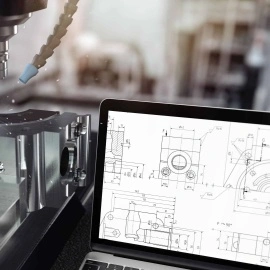
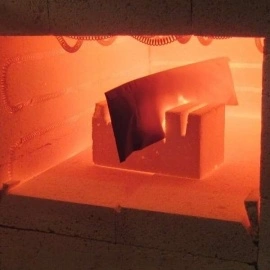
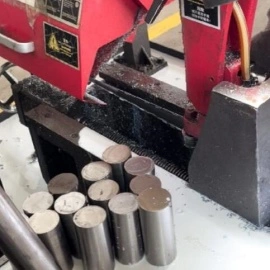
Production begins with certified titanium billets purchased to ASTM B348 and AMS standards. Each billet is then carefully forged using a 4000 tonne hydraulic press to enhance grain structure and mechanical integrity.
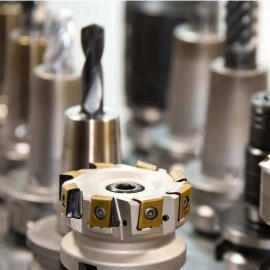
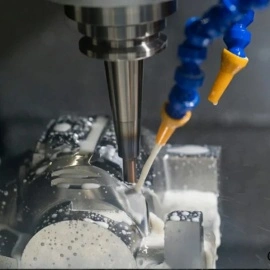
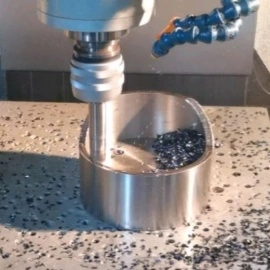
CNC machining, including 5-axis milling, turning, drilling and thread machining, creates intricate blade geometries, internal channels and precise sealing surfaces. This enables for tight-tolerance machining of thin-wall blade parts and high-pitch profiles.
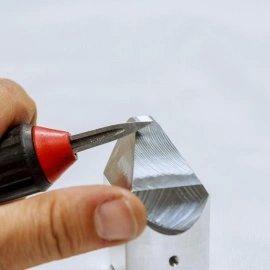
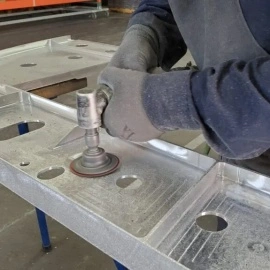
Secondary procedures include deburring, polishing and surface finishing. All propellers are mirror polished to decrease hydrodynamic drag and adherence of biofouling.
Manufacturing Capability
We run more than 40 CNC lathes, machining centers and gantry systems. Over 1,000 tonnes of annual manufacturing capacity of precise titanium components. With a dedicated 4,000-ton hydraulic press, we have a forging capability of over 3,000 tonnes per year.
 |
 |
 |
 |
 |
| melting | melting | forging | forging | rolling |
Quality Control
· Chemical Composition — Optical Emission Spectroscopy (OES) verifies alloy content per ASTM B367
· Internal Integrity — 100% X-ray or Gamma Ray inspection detects casting voids
· Surface Inspection — Fluorescent Dye Penetrant Inspection (DPI) checks blade root micro-fissures
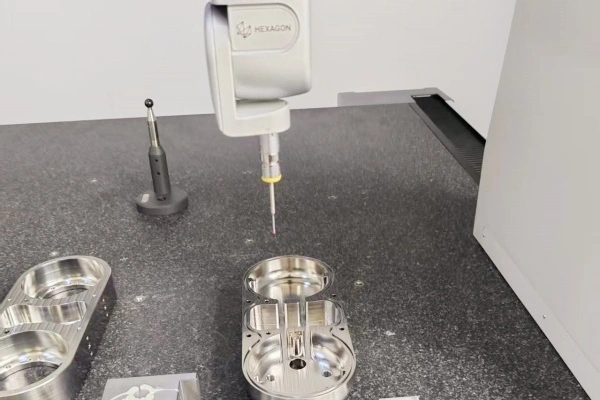
· Dimensional Check — CMM laser scanning verifies pitch, rake, and skew per ISO 484
· Balancing — Static and dynamic balancing to G1.0 or G2.5 grade per ISO 1940
Certifications
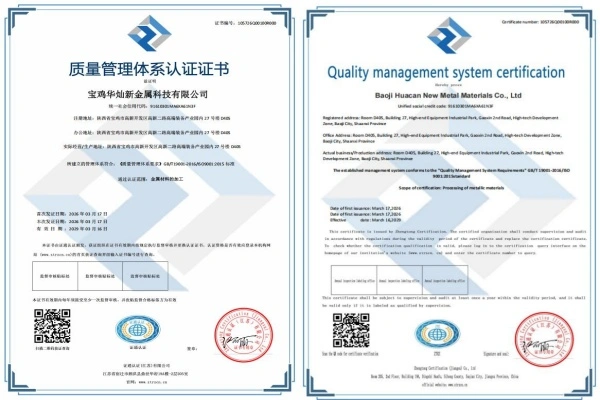
Baoji Huacan holds ISO 9001 Quality Management System Certification, covering all production stages from raw material verification to final inspection and shipment documentation.
Mechanical Properties Testing
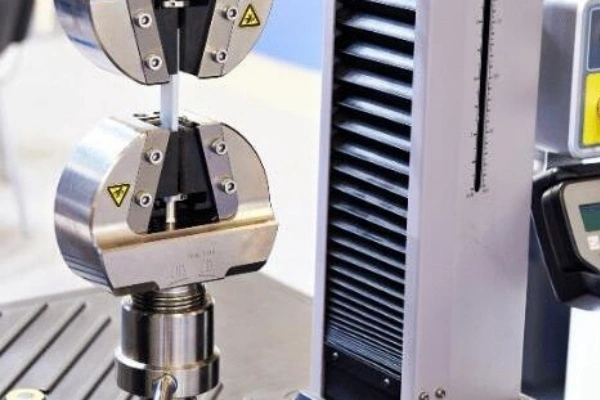
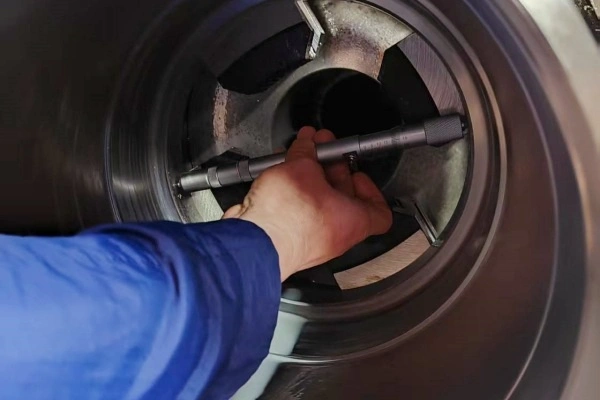
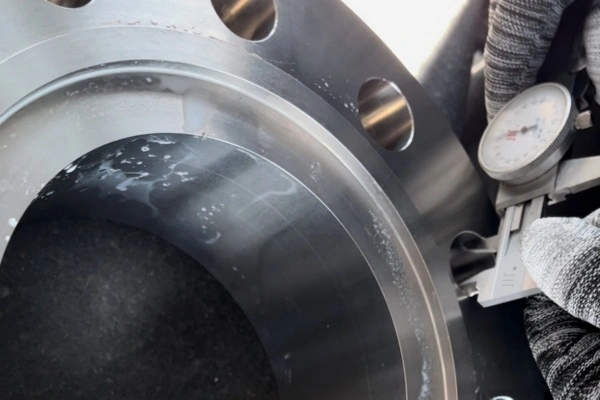
Inner Diameter Measurement
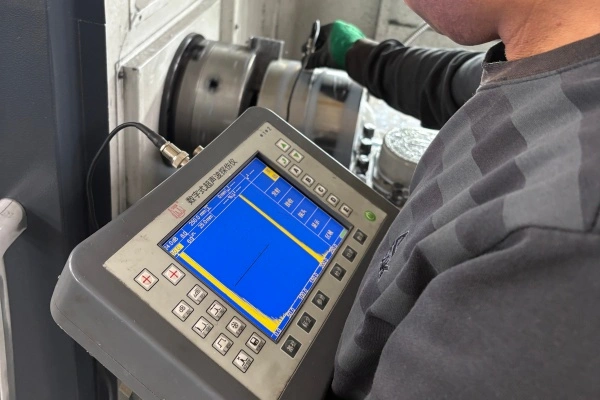
Ultrasonic Testing
CMM Dimensional
Mounting Hole Diameter Measurement
Quality Management System Certification
Packaging & Shipping
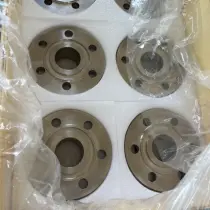
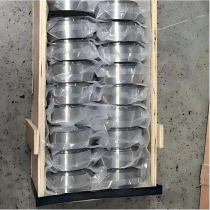
Individual bolts receive protective sleeves preventing surface damage during transit. Sets are packaged in vacuum-sealed bags with desiccants controlling moisture exposure. Foam inserts cushion components within corrugated boxes.
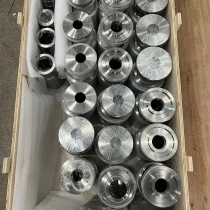
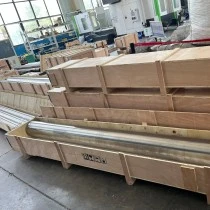
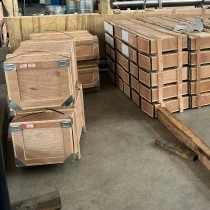
Bulk orders utilize sturdy wooden crates meeting international shipping standards. All packages include detailed labeling with product specifications and batch numbers. Documentation includes material certificates, inspection reports, and handling instructions.
We offer air freight for urgent requirements with 5-7 day delivery. Sea freight provides cost-effective solutions for volume orders. Tracking information ensures transparency throughout the logistics process.
FAQ
Q: How long does a titanium propeller last compared to bronze?
A:Titanium propellers can last 20+ years — the life of the hull — without re-pitching or replacement due to corrosion erosion.
Q: Will titanium cause galvanic corrosion to my shaft?
A: Yes, titanium is cathodic. When used with stainless steel shafts or aluminium housings, dielectric bushings and a properly sized cathodic protection system are required.
Q: Can a damaged propeller be repaired?
A: Yes, but only in a vacuum chamber or with rigorous inert gas shielding. Titanium absorbs oxygen while heated, therefore field repairs are not suggested.
Q: Does biofouling attach to titanium?
A:Biofouling does occur, but the intact surface makes cleaning simple. Hydrodynamic efficiency is fully restored without surface damage.
Q: Is Grade 5 titanium brittle in cold water?
A:No. Unlike certain steels, Grade 5 titanium retains full fracture toughness in freezing seawater, making it reliable for polar and ice-class applications.
Contact Us
Ready to upgrade your vessel? Contact us at sherry@hc-titanium.com for a custom corrosion-resistant titanium marine propeller quote today.




Learn about our latest products and discounts through SMS or email