- English
- French
- German
- Portuguese
- Spanish
- Russian
- Japanese
- Korean
- Arabic
- Greek
- German
- Turkish
- Italian
- Danish
- Romanian
- Indonesian
- Czech
- Afrikaans
- Swedish
- Polish
- Basque
- Catalan
- Esperanto
- Hindi
- Lao
- Albanian
- Amharic
- Armenian
- Azerbaijani
- Belarusian
- Bengali
- Bosnian
- Bulgarian
- Cebuano
- Chichewa
- Corsican
- Croatian
- Dutch
- Estonian
- Filipino
- Finnish
- Frisian
- Galician
- Georgian
- Gujarati
- Haitian
- Hausa
- Hawaiian
- Hebrew
- Hmong
- Hungarian
- Icelandic
- Igbo
- Javanese
- Kannada
- Kazakh
- Khmer
- Kurdish
- Kyrgyz
- Latin
- Latvian
- Lithuanian
- Luxembou..
- Macedonian
- Malagasy
- Malay
- Malayalam
- Maltese
- Maori
- Marathi
- Mongolian
- Burmese
- Nepali
- Norwegian
- Pashto
- Persian
- Punjabi
- Serbian
- Sesotho
- Sinhala
- Slovak
- Slovenian
- Somali
- Samoan
- Scots Gaelic
- Shona
- Sindhi
- Sundanese
- Swahili
- Tajik
- Tamil
- Telugu
- Thai
- Ukrainian
- Urdu
- Uzbek
- Vietnamese
- Welsh
- Xhosa
- Yiddish
- Yoruba
- Zulu
The Advantages of Titanium Screws in Electronics Industry
In order to work, the electronics industry needs fastening solutions that are accurate, dependable, and long-lasting in spaces that are getting smaller. High-performance titanium screw machined parts are now a good choice for companies that need parts that can work well in harsh conditions, stay the same size, and keep working well for a long time in important electrical applications.
Superior Material Properties for Electronic Applications
Exceptional Strength-to-Weight Ratio in Miniaturized Designs
As the technology industry keeps trying to make things smaller, they need connectors that are strong without being too heavy. Grade 5 (Ti6Al4V) alloy used to make titanium screw machined parts has a high tensile strength and a much lower density than steel. This ratio of strength to weight is useful for laptops, portable electronics, and other uses where reducing component weight is important.
Manufacturers who specialise in certain things can use CNC to turn and thread metal to make small screws that are the right size. Titanium fasteners that are properly defined help designers to reduce the weight of the fasteners while still keeping the right level of assembly strength. This supports small product designs and effective component integration.

Non-Magnetic Properties for Sensitive Electronic Equipment
Electromagnetic interference is a problem in modern technology, especially in medical devices, measurement tools, and precise instruments. Although ferromagnetic screws are magnetic, titanium custom parts are not as magnetic and usually don't behave magnetically like iron-based materials do. This trait can be useful in tools that need to keep magnetic interactions to a minimum.
Grade 2 and Grade 5 titanium screws are not very magnetic when they are working normally. This is a property of the material that is usually not changed by CNC machining. For the right parts, it is possible to get dimension tolerances as low as ±0.02mm, but the exact tolerance relies on the shape of the part, the state of the material, the cutting process, and the testing needs.

Outstanding Corrosion Resistance in Harsh Environments
More and more, electronic devices are being used in tough conditions, such as humid climates, salty marine environments, and chemically hostile industrial settings. Because a steady passive titanium oxide layer forms naturally on uncovered surfaces, titanium screw made parts are very resistant to rust. This layer of protection helps titanium keep its surface structure in a lot of places where it would normally rust.
When rust protection and shapeability are important, Grade 2 titanium is often chosen. Grade 5 titanium, on the other hand, has higher mechanical strength. Outdoor communication gear, underwater sensor housings, and industrial control systems are just a few examples of what it can be used for. Finishes on the surface, like polishing or anodising, can be chosen for looks, identification, or specific surface needs. The titanium base itself protects against corrosion the most.

Performance Advantages in Critical Electronic Systems
Thermal Stability and Low Expansion Characteristics
Changes in temperature can be hard on electronic assemblies because they can cause problems with the preload on fasteners, the alignment of parts, and the strength of the joints. Titanium screw cut parts don't expand or contract as much as aluminium parts, and they can work well with some ceramic and composite materials because they have a similar temperature expansion rate. When the right material combinations are used, this property can help keep the size from changing when the temperature changes.
Grade 5 titanium can still work well mechanically at high temperatures, but the highest temperature that it can be used at depends on the load, the exposure time, the environment, and the condition of the material. Precision CNC cutting and fitting help keep output measurements uniform. Metric, UNC, and UNF threads can be used based on customer plans and application needs.
Enhanced Reliability in High-Vibration Applications
Electronics used in aerospace, automotive, and industrial settings have to be able to handle vibrations that can damage standard threaded joints and electrical connections. When made and fitted correctly, titanium screw cut parts have a good strength-to-weight ratio and do well with wear. Titanium threads, on the other hand, can get galling, so the right thread design, surface treatment, lubrication, and controlled installation torque may be needed.
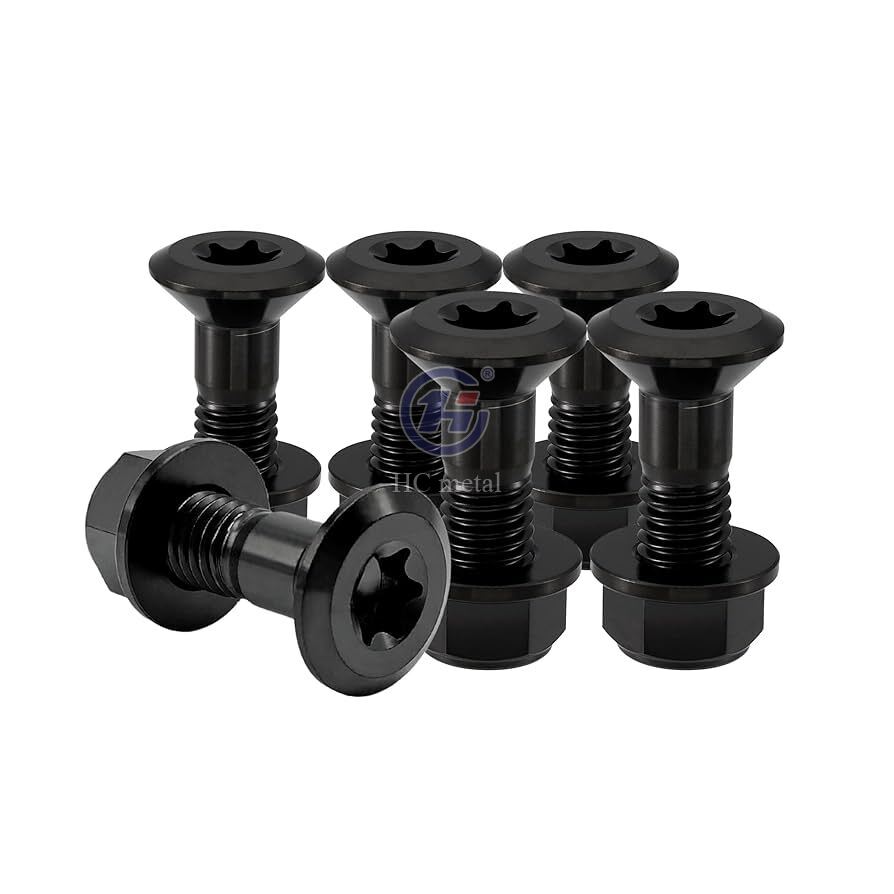
You can choose between button head, hex head, and countersunk configurations for different mounting needs, such as holding circuit boards in place or attaching bigger electronic parts. The right thread shape and limited loading help keep the joint reliable while still letting you take it apart for repair when the unit is made to be serviceable.
Biocompatibility for Medical Electronic Devices
When medical electronics parts touch flesh or are used in internal systems, they may need fasteners with the right mechanical qualities and biocompatibility. Titanium screw machined parts made from Grade 23 (Ti6Al4V ELI) can be used in medical applications that need the right kind of material certification and biocompatibility testing. Final usefulness depends on how the whole gadget is designed, what rules apply, and how it needs to be processed and validated.
When CNC machines are used to make parts, the surfaces can be left as-machined, cleaned, or anodised. Instead of thinking that a certain finish will immediately make biological function better, surface choice should be based on the purpose. Sizes can be changed based on the needs of the parts, ranging from small electronic assemblies to larger medical equipment that is used outside the body.

Manufacturing Excellence and Quality Assurance
Precision CNC Machining for Consistent Quality
The production of high-performance titanium screw machined parts demands controlled manufacturing processes capable of delivering specified tolerances and surface finishes. CNC machining centers equipped with tooling suitable for titanium can produce complex screw geometries while maintaining dimensional control. Material selection begins with choosing the appropriate titanium grade and certified raw material according to application requirements, followed by CNC turning, drilling, and threading as required.
Threading operations create consistent profiles across production runs, whether Metric, UNC, or UNF threads are required. Applicable product and material standards are selected according to the finished component and customer specification. Standards such as ASTM B348 and AMS 4928 may apply to certain titanium raw materials, while thread dimensions and tolerances should be specified using the relevant thread standard or drawing requirements.
Advanced Quality Control Systems
Reliable electronic assemblies require fasteners that meet defined specifications with minimal batch variation. Quality control can include dimensional inspection using coordinate measuring machines, hardness testing, surface finish measurement, and material verification. Chemical composition or material certificates are used to confirm titanium grade, while hardness testing can help evaluate material condition or heat-treatment requirements.
Each titanium screw machined part can be inspected according to agreed quality requirements under an ISO 9001 quality management system. Traceability systems can link production lots with raw material documentation, machining records, and final inspection results, supporting quality control for aerospace, medical, and other regulated applications.
Customization Capabilities for Specialized Applications
The diverse requirements of modern electronics often require fasteners that differ from standard specifications. Customization capabilities allow electronics manufacturers to specify titanium screw machined parts according to their drawings, including thread profiles, head styles, dimensions, and surface finishes.
Engineering teams can support material selection, thread design, machining requirements, and finishing options such as anodizing or polishing. CNC machining is suitable for prototypes and production quantities where flexibility and dimensional control are important. Custom parts can be developed around assembly requirements while considering manufacturability, tolerance, and inspection needs.

Conclusion
Titanium screws can provide useful combinations of strength, low density, corrosion resistance, thermal stability, and low magnetic response for selected electronics applications. Grade 2 and Grade 5 titanium offer different balances of corrosion resistance, formability, and mechanical strength, while precision CNC machining supports controlled dimensions and repeatable production. From consumer electronics to medical and aerospace equipment, titanium screw machined parts can be considered when material performance and weight reduction are important design factors.
As a China titanium screw machined parts manufacturer, Baoji Huacan New Metal Materials Co., Ltd. combines titanium material processing with over 40 CNC machining centers to produce precision components according to customer specifications. Whether you require standard fasteners or custom-engineered solutions, our team can support material selection, machining, inspection, and delivery. Contact us at Joy@hc-titanium.com or Sherry@hc-titanium.com with your drawings, dimensions, quantity, thread specifications, or surface requirements to discuss your titanium screw machined parts project.
FAQ
Q: What titanium grades are most suitable for electronics applications?
A: Grade 2 titanium offers excellent corrosion resistance and good formability for general applications, while Grade 5 (Ti6Al4V) provides higher strength for mechanically demanding components. Both grades have low magnetic susceptibility and can be precision machined.
Q: Can titanium screws be used in automated assembly processes?
A: Yes, when dimensional tolerances, thread specifications, and surface conditions are controlled to suit the assembly system. Actual tolerance requirements depend on the component design and equipment.
Q: What thread types are available for electronic applications?
A: We produce Metric, UNC, and UNF threads according to customer drawings and application requirements. Thread selection depends on mating components, load requirements, and assembly methodology.
Q: How do surface finishes affect performance?
A: As-machined surfaces can provide the inherent corrosion resistance of titanium, while polished finishes may improve cleanability and anodized finishes can provide color identification and selected surface characteristics. Finish selection depends on the application.
Q: What is the typical lead time for custom titanium screws?
A: Lead times vary according to order complexity, quantity, material availability, and inspection requirements. Standard configurations may require 2-3 weeks, while custom designs and special processing can require additional production time.
References
1. Boyer R, Welsch G, Collings EW. Materials Properties Handbook: Titanium Alloys. ASM International. 1994.
2. Donachie MJ. Titanium: A Technical Guide, 2nd Edition. ASM International. 2000.
3. Peters M, Kumpfert J, Ward CH, Leyens C. Titanium Alloys for Aerospace Applications. Advanced Engineering Materials. 2003.
4. Schutz RW, Watkins HB. Recent Developments in Titanium Alloy Application in the Energy Industry. Materials Science and Engineering A. 1998.
5. Veiga C, Davim JP, Loureiro AJR. Properties and Applications of Titanium Alloys: A Brief Review. Reviews on Advanced Materials Science. 2012.
_1755759872549.jpg)


Learn about our latest products and discounts through SMS or email