- English
- French
- German
- Portuguese
- Spanish
- Russian
- Japanese
- Korean
- Arabic
- Greek
- German
- Turkish
- Italian
- Danish
- Romanian
- Indonesian
- Czech
- Afrikaans
- Swedish
- Polish
- Basque
- Catalan
- Esperanto
- Hindi
- Lao
- Albanian
- Amharic
- Armenian
- Azerbaijani
- Belarusian
- Bengali
- Bosnian
- Bulgarian
- Cebuano
- Chichewa
- Corsican
- Croatian
- Dutch
- Estonian
- Filipino
- Finnish
- Frisian
- Galician
- Georgian
- Gujarati
- Haitian
- Hausa
- Hawaiian
- Hebrew
- Hmong
- Hungarian
- Icelandic
- Igbo
- Javanese
- Kannada
- Kazakh
- Khmer
- Kurdish
- Kyrgyz
- Latin
- Latvian
- Lithuanian
- Luxembou..
- Macedonian
- Malagasy
- Malay
- Malayalam
- Maltese
- Maori
- Marathi
- Mongolian
- Burmese
- Nepali
- Norwegian
- Pashto
- Persian
- Punjabi
- Serbian
- Sesotho
- Sinhala
- Slovak
- Slovenian
- Somali
- Samoan
- Scots Gaelic
- Shona
- Sindhi
- Sundanese
- Swahili
- Tajik
- Tamil
- Telugu
- Thai
- Ukrainian
- Urdu
- Uzbek
- Vietnamese
- Welsh
- Xhosa
- Yiddish
- Yoruba
- Zulu
China Titanium Heat Exchanger Plates for B2B Buyers
Titanium heat exchanger plates are widely used in industries where corrosion resistance, reliable heat transfer, and long service life are important. Titanium combines low density, good mechanical strength, and resistance to many aggressive media, making it suitable for demanding heat exchanger applications. Baoji Huacan New Metal Materials Co., Ltd. is based in Baoji, Shaanxi Province, a major center for China's titanium industry, and supplies Titanium Plate for Heat Exchanger for business buyers with different material, dimensional, and processing requirements.
Excellence in Manufacturing: China's Titanium Industry Group Better off
China has developed a large network of titanium manufacturers, processors, material suppliers, and technical specialists, with Baoji serving as one of the country's important titanium industry hubs. This concentration of manufacturing resources and technical expertise supports the production of Titanium Plate for Heat Exchanger for demanding industrial applications.
Advanced Manufacturing Capabilities
Titanium processing requires suitable equipment and controlled procedures because material properties affect cutting, forming, and machining. Depending on product requirements, Titanium Plate for Heat Exchanger can be processed through cutting, forming, CNC machining, and other operations. Dimensional and surface control are important when plates require additional processing before assembly. Quality should be evaluated through measurable characteristics rather than general claims about advanced technology. Material verification, dimensional inspection, surface inspection, and applicable non-destructive testing can provide buyers with useful evidence of product conformity.
Extensive Supply Chain Integration
The concentration of titanium-related businesses in Baoji supports coordination between raw material suppliers, processors, machining facilities, and inspection providers. This connected supply chain can simplify communication between production stages and support customized orders. Lead time and cost still depend on material grade, dimensions, thickness, quantity, processing requirements, and inspection specifications. These factors should be confirmed according to the individual project.
Specialized Workforce and Expertise
A specialized workforce has developed around Baoji's titanium industry. Engineers, technicians, machinists, and quality personnel with experience in titanium processing can support material selection, fabrication, dimensional control, and inspection. This experience is useful for customized heat exchanger components with requirements for titanium grade, thickness, dimensions, surface condition, or machining tolerances. Manufacturers can review drawings and specifications before production to confirm processing requirements.

Precision Plate Fabrication and Quality Control Standards
Producing a reliable Titanium Plate for Heat Exchanger requires controlled material selection, fabrication, and inspection. The applicable material and product standards should be confirmed according to the buyer's industry, design requirements, and purchasing specification.
Material Selection and Testing
Material selection is the first step in manufacturing a Titanium Plate for Heat Exchanger. The appropriate titanium grade should be selected according to the operating medium, temperature, mechanical requirements, and corrosion environment.
Commercially pure titanium grades are often considered when corrosion resistance is a major requirement, while titanium alloys may be selected when higher mechanical strength is needed. The actual grade should follow the heat exchanger design and applicable material standard.
Incoming materials can be checked through documentation review and, where specified, chemical composition and mechanical property verification. Material certificates and traceability records help connect the finished plate with its original material batch.
Precision Cutting and Forming
Titanium plates can be cut according to required dimensions using suitable processing methods. Water jet cutting, laser cutting, plasma cutting, or other methods may be selected according to plate thickness, geometry, surface requirements, and production volume. After cutting, edges may require finishing to remove burrs or unwanted surface conditions. Forming operations can also be used when the design requires a particular shape. Controlled cutting and forming help maintain consistency between individual Titanium Plate for Heat Exchanger units.
Precision CNC Machining Process
When a Titanium Plate for Heat Exchanger is supplied as a machined component, CNC machining can produce specified holes, slots, edges, or other features. The exact process depends on the component drawing and required tolerances.
1. Hole Positioning and Alignment
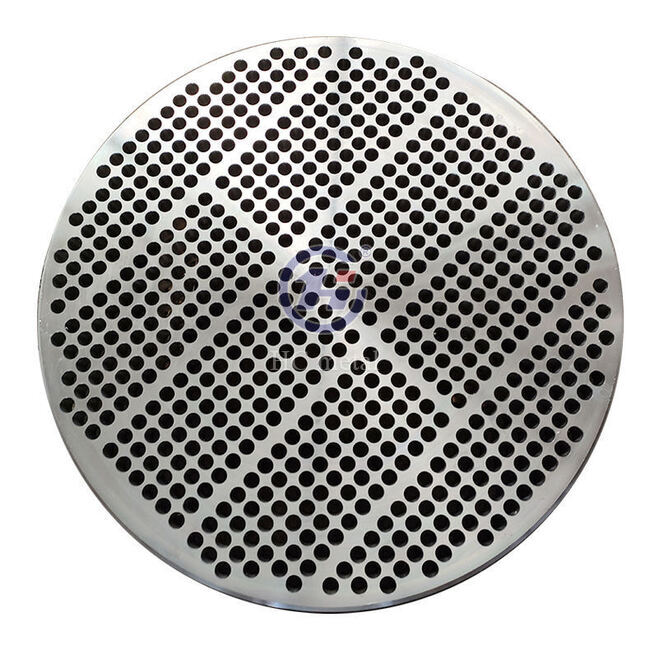
For machined titanium components requiring multiple holes, accurate positioning is essential. CNC programming, fixtures, reference points, and suitable measuring equipment can control hole locations according to the engineering drawing. For tube sheets, hole diameter, pitch, and alignment can be especially important because they affect tube installation and sealing. A titanium tube sheet is a specific heat exchanger component and should not be confused with a general Titanium Plate for Heat Exchanger.
2. CNC Milling
CNC milling can be used when a plate or fabricated component requires controlled dimensions, machined edges, grooves, or holes. Appropriate cutting parameters and tooling are important when machining titanium to control heat generation and surface quality. After machining, relevant dimensions should be checked against the approved drawing. Required tolerances depend on the component design and customer specification.

3. Hole Cleaning and Deburring
Machining can leave chips, burrs, and other residues on processed surfaces. These contaminants should be removed before inspection or assembly. Suitable cleaning methods may include brushing, compressed air, washing, or other appropriate procedures. Deburring around machined holes is important because remaining burrs can interfere with assembly or sealing.
4. Dimensional and Tolerance Inspection
Dimensional inspection verifies whether the finished component conforms to the approved drawing and specified tolerances. Inspection may include thickness, length, width, hole diameter, hole spacing, flatness, and other critical dimensions. A coordinate measuring machine (CMM), calibrated gauges, or other suitable equipment may be used according to the required accuracy. Inspection results can be recorded as part of the final quality documentation.
5. Surface Treatment
Surface treatment should be selected according to the required surface condition and service environment. Suitable processes may include cleaning, pickling where appropriate, or mechanical finishing. These processes can remove surface contamination or oxide-related residues and help achieve the specified surface condition. Surface treatment should not be described as a universal method for removing internal or residual stresses. Its main purpose is to control surface cleanliness and finish according to the application.

Explosion-Clad Titanium-Steel Composite Options for Cost Efficiency
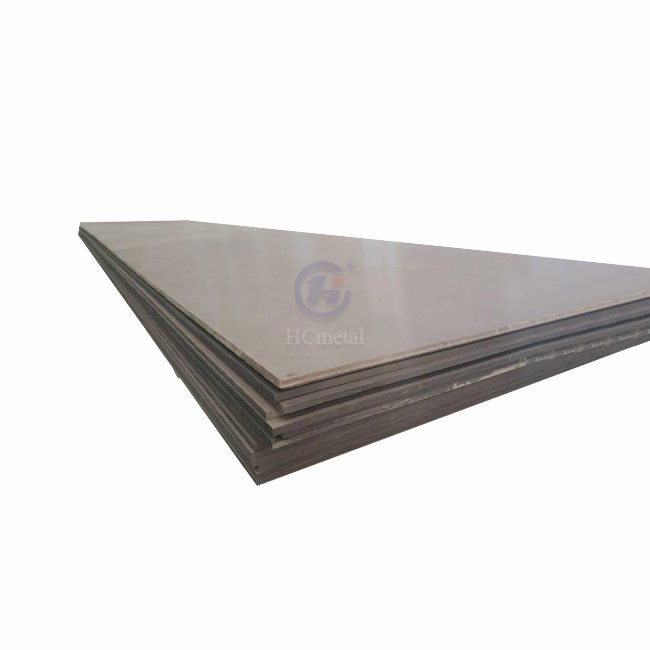
Explosively bonded titanium-steel clad plates can provide an alternative when a project requires titanium's corrosion resistance while reducing the amount of titanium used. A titanium layer is metallurgically bonded to a steel backing material to create a composite structure.
Process and Benefits
Explosive welding, also called explosive bonding, uses controlled energy to create a metallurgical bond between titanium and steel. The resulting clad plate combines the corrosion-resistant surface of titanium with the structural support and lower material cost of steel.
This approach can be useful for large equipment where using solid titanium throughout the structure would increase material costs. The appropriate cladding thickness, backing material, bond quality, and fabrication procedure depend on the equipment design and operating conditions.
A clad Titanium Plate for Heat Exchanger should not automatically be considered equivalent to a solid titanium plate. Selection should consider temperature, pressure, process media, mechanical loads, fabrication requirements, and the expected corrosion environment.
Applications and Limitations
Titanium-steel clad plates may be considered for chemical processing equipment, desalination systems, marine equipment, and other applications where a titanium corrosion-resistant surface is required. However, clad construction involves additional design and fabrication considerations. The bond interface must remain suitable for the expected service conditions. Temperature, pressure, thermal cycling, forming, welding, and mechanical loading should be reviewed before selection.
Quality Assurance for Clad Plates
Bond quality is a key consideration for titanium-steel clad plates. Ultrasonic testing can be used to evaluate the bonded interface according to the applicable specification. Additional mechanical testing may be required to verify bond strength.
Where specified, corrosion evaluation should reflect the intended service environment. Inspection records should identify the tested material, procedure, results, and acceptance criteria, providing buyers with documented evidence of conformity.

Conclusion
High-quality Titanium Plate for Heat Exchanger production requires suitable material selection, controlled fabrication, accurate machining where required, and documented inspection. Baoji's established titanium industry provides access to material resources, processing expertise, and supporting manufacturing services.
Solid titanium plates can be selected according to the operating environment and design requirements. For projects seeking to reduce titanium consumption while maintaining a titanium corrosion-resistant surface, explosively bonded titanium-steel clad plates may be considered when service conditions are suitable.
Baoji Huacan New Metal Materials Co., Ltd. supports titanium material processing, cutting, machining, dimensional inspection, and customized manufacturing according to customer specifications. Buyers can provide drawings, material grades, dimensions, quantities, tolerances, and inspection requirements for technical evaluation and quotation. We are proud at Baoji Huacan to provide Titanium Plate for Heat Exchanger solutions for different industrial applications. Our production and inspection processes focus on material conformity, dimensional accuracy, surface condition, and traceability.
Frequently Asked Questions
What are the main benefits of heat exchanges that use titanium plates?
Titanium plates offer strong corrosion resistance in many aggressive environments, along with a favorable strength-to-weight ratio. These characteristics make titanium useful in chemical processing, desalination, marine systems, and other heat exchanger applications. Performance depends on the titanium grade, temperature, fluid chemistry, plate design, and operating conditions.
How are solid titanium plates and explosion-clad titanium-steel alloy plates different from each other?
Solid titanium plates are manufactured entirely from titanium, while explosively bonded titanium-steel clad plates combine a titanium layer with a steel backing. Clad construction can reduce titanium consumption and material cost while providing a titanium surface for corrosion resistance. Selection should consider temperature, pressure, mechanical loads, process medium, and applicable specifications.
What kinds of quality control steps are used when titanium heat exchanger plates are made?
Quality control can include material certificate review, chemical composition verification where required, mechanical property testing, dimensional inspection, surface inspection, and applicable non-destructive testing. For machined components, critical dimensions and tolerances should be checked against the approved drawing. For clad plates, ultrasonic or other suitable testing may be used to evaluate bond integrity.
Titanium Expertise: Your Reliable Heat Exchanger Solution
At Baoji Huacan, we focus on titanium material processing and customized heat exchanger components. Our quality-control process covers material selection, fabrication, machining where required, and final inspection. We can supply solid titanium products and explosively bonded titanium-steel clad solutions for applications requiring both material efficiency and corrosion resistance.
Our CNC machining capabilities can also support customized Titanium Flange parts used with heat exchanger systems. For a quotation, buyers can send drawings, titanium grade, dimensions, quantity, tolerances, and applicable inspection requirements. This information allows our technical team to evaluate manufacturing requirements and prepare a more accurate solution. For Titanium Plate for Heat Exchanger and customized Titanium Flange requirements, contact Joy@hc-titanium.com or Sherry@hc-titanium.com to discuss your project specifications.
References
1. Wang, L., et al. (2021). "Advances in Titanium Heat Exchanger Technology for Industrial Applications." Journal of Materials Engineering and Performance, 30(8), 5672-5685.
2. Zhang, Y., & Li, X. (2020). "Comparative Study of Solid Titanium vs. Explosion-Clad Titanium-Steel Composite Plates in Corrosive Environments." Corrosion Science, 167, 108524.
3. Liu, H., et al. (2019). "Quality Control Strategies in the Production of Titanium Heat Exchanger Components." International Journal of Advanced Manufacturing Technology, 103(1), 1245-1259.
4. Chen, J., & Wu, X. (2022). "Development and Challenges of China's Titanium Industry Cluster: A Case Study of Baoji City." Resources Policy, 75, 102411.
5. Zhao, Q., et al. (2023). "Innovative Surface Treatment Techniques for Enhancing Performance of Titanium Heat Exchanger Plates." Surface and Coatings Technology, 446, 128728.
_1757056312298.jpg)


Learn about our latest products and discounts through SMS or email