- English
- French
- German
- Portuguese
- Spanish
- Russian
- Japanese
- Korean
- Arabic
- Greek
- German
- Turkish
- Italian
- Danish
- Romanian
- Indonesian
- Czech
- Afrikaans
- Swedish
- Polish
- Basque
- Catalan
- Esperanto
- Hindi
- Lao
- Albanian
- Amharic
- Armenian
- Azerbaijani
- Belarusian
- Bengali
- Bosnian
- Bulgarian
- Cebuano
- Chichewa
- Corsican
- Croatian
- Dutch
- Estonian
- Filipino
- Finnish
- Frisian
- Galician
- Georgian
- Gujarati
- Haitian
- Hausa
- Hawaiian
- Hebrew
- Hmong
- Hungarian
- Icelandic
- Igbo
- Javanese
- Kannada
- Kazakh
- Khmer
- Kurdish
- Kyrgyz
- Latin
- Latvian
- Lithuanian
- Luxembou..
- Macedonian
- Malagasy
- Malay
- Malayalam
- Maltese
- Maori
- Marathi
- Mongolian
- Burmese
- Nepali
- Norwegian
- Pashto
- Persian
- Punjabi
- Serbian
- Sesotho
- Sinhala
- Slovak
- Slovenian
- Somali
- Samoan
- Scots Gaelic
- Shona
- Sindhi
- Sundanese
- Swahili
- Tajik
- Tamil
- Telugu
- Thai
- Ukrainian
- Urdu
- Uzbek
- Vietnamese
- Welsh
- Xhosa
- Yiddish
- Yoruba
- Zulu
How to Improve Material Yield in Titanium Billet Production?
Improving material output in the production of titanium billets is necessary to make the process more cost-effective and sustainable in the long term in the world of modern manufacturing. This piece talks about useful ways to speed up the process of making square titanium billets. It focuses on important steps that have a direct impact on how well materials are used, the quality of the product, and how efficiently production is done.
Optimizing Sponge to Ingot Conversion Flow
Changes from sponge to ingot are the first big step in making high-quality square titanium billet from titanium sponge. When making titanium billets, this stage needs to be carefully controlled because it sets the stage for chemical consistency, internal quality, and material yield in later steps.
Refining Raw Material Selection
To keep flaws and material loss under control, it is important to choose high-quality titanium sponge. If the raw material that is sent in isn't clean or has an uneven chemical makeup, it can affect how stable the melting is and cause flaws in the final square titanium billet. Strict checking and tracking of arriving titanium sponge can improve regularity and cut down on wasteful material loses during production.
Enhancing densification techniques
Titanium sponge is compacted before melting to create dense and stable feedstock. Proper densification improves the consistency of the material entering the melting process and supports stable melting conditions. Uniform compacts can reduce the risk of internal discontinuities and help produce an ingot with a more consistent structure, improving the yield of square titanium billet production.
Optimizing Melting Parameters
It is important to control the melting parameters used in vacuum arc remelting (VAR) and other applicable melting processes. Factors such as electrical input, melting rate, electrode condition, and molten-pool stability can influence ingot quality. Stable melting conditions help reduce internal defects and limit the amount of material that must be removed during subsequent conditioning and hot working of square titanium billet.

Hot Working Schedules to Minimize Scrap?
After the ingot is produced, the hot working phase is critical for converting titanium into the required billet dimensions while controlling material losses. Appropriate deformation schedules, heating conditions, and reduction ratios can improve material utilization and reduce the risk of defects in square titanium billet.
Implementing Advanced Forging Techniques
Computer-aided forging models can be used to evaluate material flow and deformation during the production of square titanium billet. These simulations help engineers assess deformation distribution and identify potential problem areas before production. Better control of the forging sequence can reduce unnecessary rework, excessive material removal, and process losses while improving the consistency of titanium materials.
Tailoring Temperature Profiles
When square titanium billet is hot worked, accurate temperature control helps reduce problems such as surface cracking, excessive deformation resistance, and undesirable microstructural changes. Carefully controlled heating and working temperatures can maintain material integrity and reduce the amount of material removed during surface conditioning. This supports better yield and more consistent quality in square titanium billet production.
Optimizing Billet Geometry
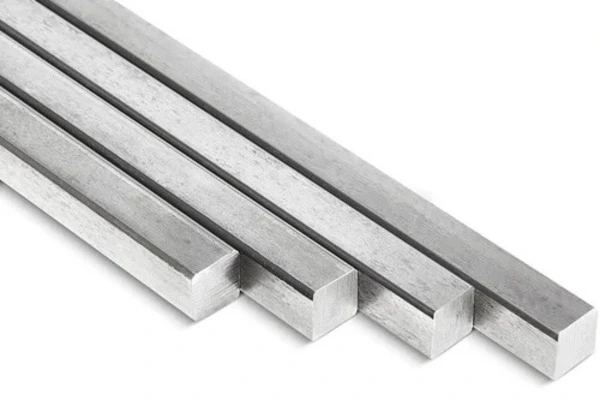
Selecting the appropriate square titanium billet dimensions can help minimize material waste during subsequent processing. Billet cross-section, length, and machining allowance should be considered according to the dimensions and requirements of the final product. Planning the square titanium billet around the final application can reduce unnecessary cutting and machining losses while maintaining the required processing allowance.
Scrap Reutilization and Secondary-Recovery Loops
To obtain the highest practical material yield from titanium billet production, manufacturers need effective scrap management and recovery procedures. Titanium scrap should be classified according to alloy grade, source, and condition before it is considered for reuse or remelting.
Establishing Efficient Scrap Sorting Systems
A structured sorting system for square titanium billet scrap and other titanium materials helps manufacturers separate recoverable material according to grade and composition. Proper identification and segregation also protect material traceability and reduce the risk of cross-contamination. Recoverable scrap can then be directed to suitable recycling or remelting processes instead of being discarded unnecessarily.
Implementing Advanced Remelting Technologies
Investing in suitable remelting technologies for qualified titanium scrap can improve material recovery. Scrap generated during the production of square titanium billet may include cutting remnants, machining material, or other process scrap. When properly sorted and evaluated, suitable scrap can be returned to an appropriate melting route, allowing valuable titanium materials to be reused while reducing dependence on new raw materials.
Integrating Closed-Loop Material Recovery
A closed-loop recovery system for square titanium billet production can improve material utilization across the manufacturing process. By tracking titanium materials from melting and hot working through cutting, inspection, and final processing, manufacturers can identify material that remains suitable for recovery. This approach reduces avoidable waste and supports better control of material costs and resources.
Manufacturers can improve material output from titanium billet production by focusing on three key areas: optimizing the sponge-to-ingot conversion process, improving hot working schedules, and establishing effective scrap recovery systems. These measures can reduce unnecessary material loss while maintaining consistent quality. Better use of titanium materials also supports more efficient manufacturing and can reduce the environmental impact associated with raw material consumption.

Conclusion
Improving material output in the production of titanium billets requires careful control at every stage of the manufacturing process. From selecting and compacting titanium sponge to maintaining stable melting conditions, optimizing hot working, and recovering qualified scrap, each stage can affect the final amount of usable material. By applying these methods, manufacturers can improve the efficiency of square titanium billet production, reduce processing costs, and limit material waste. Consistent process control is also important for applications where titanium performance, dimensional stability, and resistance to corrosion are required.
We at Baoji Huacan New Metal Materials Co., Ltd. are committed to producing reliable titanium products through controlled manufacturing and quality management. Our ISO 9001-certified quality management system, together with VAR and PAM melting capabilities, supports the production of square titanium billet for demanding applications. We provide a wide range of titanium materials and can work with customers on grades, dimensions, processing requirements, and technical specifications. Our technical team can also assist with selecting suitable titanium materials for applications where strength, durability, and corrosion resistance are important.
Frequently Asked Questions
What are the most important things that affect the material yield when making titanium billets?
Important factors include raw material quality, melting stability, hot working conditions, billet geometry, machining allowances, inspection requirements, and scrap recovery methods. Controlling these factors helps reduce unnecessary material removal and production losses.
What changes when you improve the sponge-to-ingot process?
A controlled sponge-to-ingot conversion process improves the consistency of the feedstock and helps maintain a more uniform ingot structure. This can reduce downstream defects and material losses during the production of square titanium billet.
How does hot working help cut down on scrap?
Proper hot working methods promote controlled material flow and reduce the risk of defects such as cracking and excessive surface damage. Accurate temperature and deformation control can also reduce end-crop and conditioning losses in square titanium billet production.
How can remelting scrap help increase the amount of material that is produced?
Qualified titanium scrap can be recovered through suitable remelting processes and returned to an appropriate production route. This allows manufacturers to make better use of valuable titanium materials and reduce the amount of recoverable material that becomes waste.
Why is it important to keep an eye on the temperature when making titanium billets?
Temperature affects deformation behavior, microstructure, surface condition, and cracking risk during hot working. Accurate temperature control helps maintain stable processing conditions and supports consistent quality in square titanium billet.

Maximize Yield and Quality with Our Titanium Solutions
At Baoji Huacan, we apply controlled melting, hot working, and quality management procedures to produce high-quality square titanium billet and other titanium materials. Our VAR and PAM capabilities support consistent production, while our quality control procedures help maintain material reliability throughout the manufacturing process. We serve customers in aerospace, medical, chemical processing, and other industrial sectors where strength, durability, and corrosion resistance are important. Whether you require standard products or customized dimensions and technical requirements, our team can discuss the appropriate titanium solution for your application. Email us at Joy@hc-titanium.com or Sherry@hc-titanium.com to discuss your titanium material requirements, product specifications, and sourcing needs.
References
1. Zhang, L., et al. (2021). "Advances in Titanium Sponge-to-Ingot Conversion for Improved Yield in Billet Production." Journal of Materials Processing Technology, 289, 116942.
2. Chen, Q., et al. (2020). "Optimization of Hot Working Parameters for Titanium Alloy Billets: A Comprehensive Review." Materials Science and Engineering: A, 772, 138709.
3. Wang, X., et al. (2019). "Scrap Recycling and Remelting in Titanium Industry: Challenges and Opportunities." JOM, 71(9), 3114-3124.
4. Liu, Y., et al. (2022). "Advanced Melting Technologies for High-Quality Titanium Billet Production." Metallurgical and Materials Transactions B, 53(1), 24-39.
5. Semiatin, S.L., et al. (2018). "Microstructure Evolution during Alpha-Beta Heat Treatment of Titanium Alloys." Metallurgical and Materials Transactions A, 49(11), 5635-5652.
_1755153145516.jpg)
_1754963553266.jpg)


Learn about our latest products and discounts through SMS or email