- English
- French
- German
- Portuguese
- Spanish
- Russian
- Japanese
- Korean
- Arabic
- Greek
- German
- Turkish
- Italian
- Danish
- Romanian
- Indonesian
- Czech
- Afrikaans
- Swedish
- Polish
- Basque
- Catalan
- Esperanto
- Hindi
- Lao
- Albanian
- Amharic
- Armenian
- Azerbaijani
- Belarusian
- Bengali
- Bosnian
- Bulgarian
- Cebuano
- Chichewa
- Corsican
- Croatian
- Dutch
- Estonian
- Filipino
- Finnish
- Frisian
- Galician
- Georgian
- Gujarati
- Haitian
- Hausa
- Hawaiian
- Hebrew
- Hmong
- Hungarian
- Icelandic
- Igbo
- Javanese
- Kannada
- Kazakh
- Khmer
- Kurdish
- Kyrgyz
- Latin
- Latvian
- Lithuanian
- Luxembou..
- Macedonian
- Malagasy
- Malay
- Malayalam
- Maltese
- Maori
- Marathi
- Mongolian
- Burmese
- Nepali
- Norwegian
- Pashto
- Persian
- Punjabi
- Serbian
- Sesotho
- Sinhala
- Slovak
- Slovenian
- Somali
- Samoan
- Scots Gaelic
- Shona
- Sindhi
- Sundanese
- Swahili
- Tajik
- Tamil
- Telugu
- Thai
- Ukrainian
- Urdu
- Uzbek
- Vietnamese
- Welsh
- Xhosa
- Yiddish
- Yoruba
- Zulu
Custom titanium flange
OD 100–300mm
Class Optional
ASTM Standard
Custom Machined
Polished Surface
Industrial Use
OEM Service
Product Introduction
Custom Titanium Flange — Precision-Engineered Connecting Solutions for Demanding Industrial Applications
Baoji Huacan's custom titanium flange is a precision-forged connecting component manufactured from high-grade titanium alloys, including Grade 2, Grade 5 (Ti-6Al-4V), Grade 7, and Grade 23. Designed for OD ranges of 100-300mm with polished surface finishes and meeting ASTM B381 and equivalent international standards. With over 10 years of expertise in the machining industry, we have 40+ CNC machines and over 1,000 tonnes of yearly production capacity and we manufacture flanges to your specific designs, pressure ratings and dimensional requirements. If your system demands don’t fit normal ANSI or DIN setups, this is the product for you.
Product Specification & OEM Customization
| Parameter | Details |
|---|---|
| Product Type | Titanium Flange |
| Available Grades | Grade 2, Grade 5 (Ti-6Al-4V), Grade 7, Grade 9, Grade 23 (Ti-6Al-4V ELI) |
| Material Standards | ASTM B381, AMS, DIN, ISO |
| Outer Diameter Range | 100–300mm (custom sizes available) |
| Thickness | Customized according to drawings or application requirements |
| Flange Types | Weld Neck, Slip-On, Blind, Socket Weld, Threaded, Lap Joint |
| Pressure Rating | Customized according to design requirements |
| Sealing Face Options | Raised Face (RF), Flat Face (FF), Ring Type Joint (RTJ), Tongue & Groove |
| Manufacturing Standards | ANSI/ASME B16.5, DIN, JIS, or customer-specific standards |
| Surface Finish | Natural titanium finish, polished, anodized, or customized |
| Surface Roughness | Ra 3.2–6.3μm for sealing surfaces (custom requirements available) |
| Dimensional Tolerance | According to customer drawings or applicable standards |
| Custom Manufacturing | OEM/ODM, drawing-based production, full specification customization |
| Quality Documentation | MTC, COC, EN10204 3.1 certificates available |

Product Features

Titanium flanges have the best strength to weight ratio of any similar steel or alloy product. This is particularly important in offshore platforms and aerospace pipes and chemical processing systems where reduction of the structural stress is a design consideration.
Titanium has a natural oxide layer that passively protects against corrosion in saltwater, chloride conditions, and in most acidic media. It does not pit or suffer crevice corrosion under these circumstances as does stainless steel.
Grade 5 (Ti-6Al-4V) is the perfect choice in high pressure applications where a higher tensile strength is a must while Grade 2 is the choice when maximum weldability and corrosion resistance are a concern. Grade 7 has better resistance to decreasing acid conditions.
Product Comparison
| Feature | Custom Titanium Flange | Stainless Steel Flange | Carbon Steel Flange |
|---|---|---|---|
| Weight | Approx. 45% lighter than steel alternatives | Medium | Heavy |
| Density | Approx. 4.51 g/cm³ | Approx. 7.9–8.0 g/cm³ | Approx. 7.85 g/cm³ |
| Corrosion Resistance | Excellent resistance to seawater, chlorides, and aggressive environments | Good resistance depending on grade | Requires additional protection in corrosive environments |
| Strength-to-Weight Ratio | Excellent | Good | Moderate |
| Seawater Applications | Excellent choice for marine and offshore applications | Used with suitable grades and protection | Limited without coatings or protection |
| Custom Manufacturing | Full OEM/ODM and drawing-based production | Standard sizes mainly available; customization possible | Standard sizes mainly available; customization possible |
| Service Life in Harsh Environments | Long service life with proper material selection | Good performance depending on environment | May require maintenance or corrosion protection |
| Biocompatibility | Suitable for medical and special applications | Depends on alloy composition | Generally not selected for biomedical applications |
Product Application
Chemical Processing

01
Energy & Power Generation

02
Offshore & Marine

03
Chemical Processing: Titanium flanges link pipes in reactors and heat exchangers handling acids, chlorides and strong solvents where steel flanges would erode fast.
Offshore & Marine: Titanium’s resistance to seawater makes it the material of choice for subsea pipelines, desalination systems and offshore platform plumbing. The weight reductions are quite important in terms of the reduction of the strain on the structure.
Aerospace: Low weight and high strength make these flanges suitable for hydraulic and fuel system connections in aircraft and spacecraft assemblies.
Medical & Pharmaceutical: Titanium's biocompatibility and cleanliness make it appropriate for sterile processing equipment and medical gas systems.
Energy & Power Generation: Used in geothermal, nuclear, and industrial energy systems where thermal resistance and longevity are critical for custom titanium flange.
Why Choose Us
Standard flanges may fail in three key situations: mismatched bolt patterns on outdated equipment, poor corrosion resistance in harsh chemical environments, and excessive weight in aeronautical or subsea systems.
Our titanium flanges address all three of those. Titanium is 45% lighter than duplex stainless steel yet has better resistance to chloride caused pitting and crevice corrosion . Titanium is known for its long-term reliability in areas where stainless steel or carbon steel would fail.
We make every flange from your technical drawings, not from a catalogue. We provide precisely what your system demands, whether it a non-standard bolt circle, a special sealing face geometry (RTJ, tongue-and-groove, raised face) or a particular hub design.
 |
 |
 |
Manufacturing Process
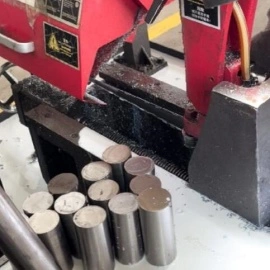
Production starts with high-purity titanium billets certified to ASTM B381. Parts are forged utilising precision die forging machinery and our 4,000-ton hydraulic press, which provides the requisite grain structure and mechanical integrity.
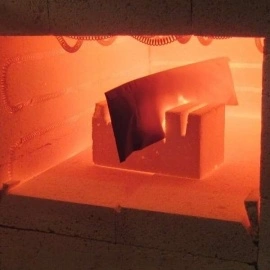
Annealing is performed after forging to reduce internal tensions and to provide dimensional stability during subsequent machining. This step is required to retain accurate geometry in service during pressure and heat cycling.
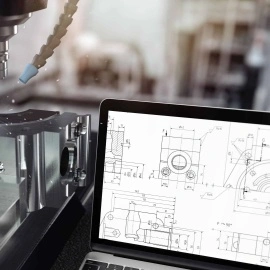
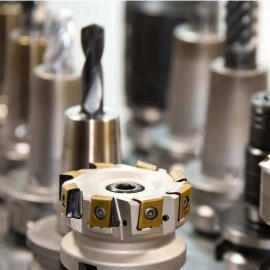
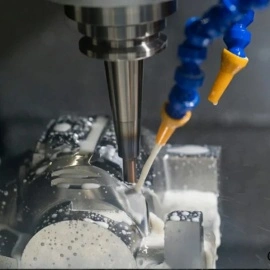
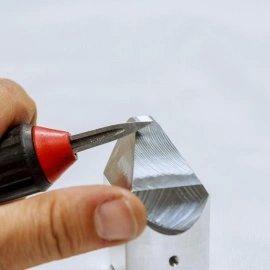
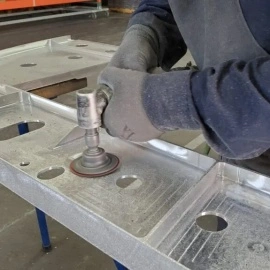
CNC turning and milling on our 40+ machining centers then bring each flange to final dimensions, including sealing faces, bolt holes, and hub profiles. Thread machining is performed where required, with tolerance control applied to all critical mating and sealing surfaces.

Manufacturing Capability
| Capability | Details |
|---|---|
| CNC Machining | 40+ CNC lathes, machining centers, and gantry systems for complex titanium parts |
| Production Capacity | Supports over 1,000 tons of titanium component processing annually |
| Forging Capability | 4,000-ton hydraulic press and ring rolling equipment for titanium forgings |
| Forging Capacity | Over 3,000 tons of annual forging capacity |
| Manufacturing Range | From prototypes and samples to small batches and volume production |
| Delivery Time | Standard lead time: 3–5 weeks (varies by complexity and order quantity) |
| Quality Assurance | Material traceability, in-process inspection, dimensional inspection, and final quality verification |
 |
 |
 |
 |
 |
| melting | melting | forging | forging | rolling |
Quality Control
Raw material verification is the first step. Every titanium billet is chemically analyzed using spectrometers and cross-checked against supplier certificates before entering production.
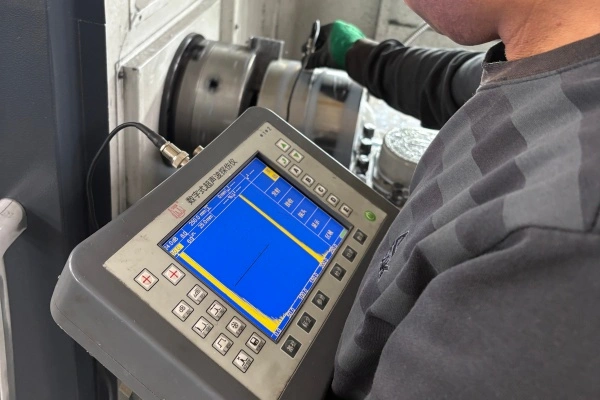
In-process dimensional checks are performed at each manufacturing stage — forging, annealing, and machining — to maintain tight tolerances throughout. Ultrasonic testing detects internal flaws without damaging the component.
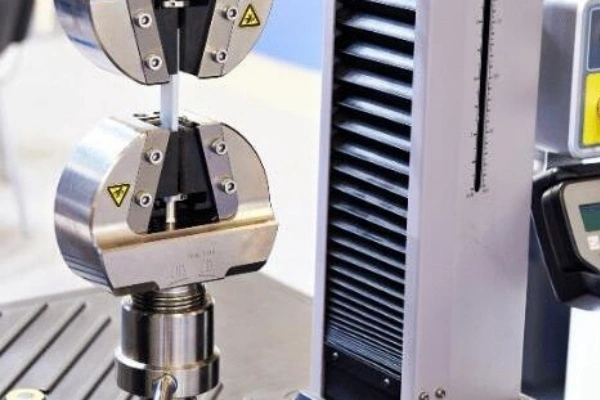
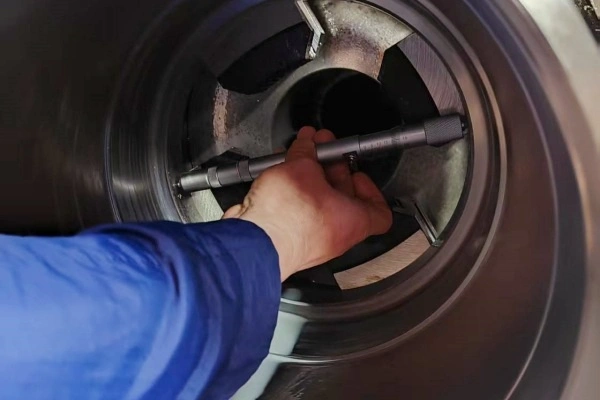
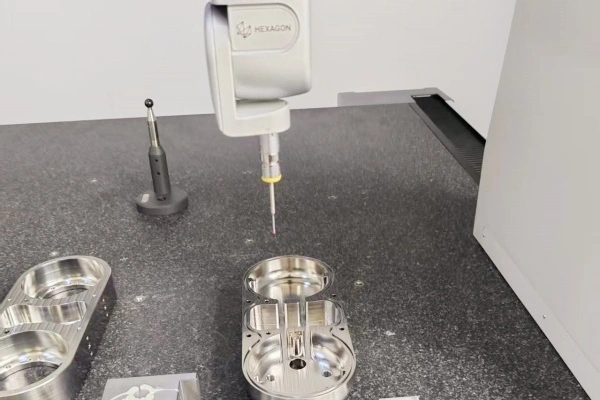
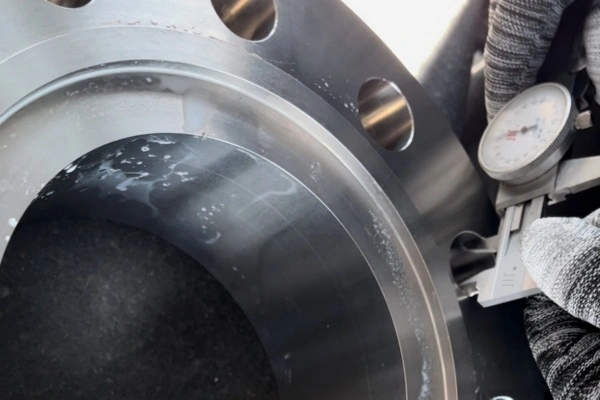
The completed flanges are examined with the use of coordinate measuring machines (CMM), surface roughness gauges and mechanical property tests (including tensile strength, yield strength and hardness according to ASTM, AMS and DIN standards).
Mechanical Properties Testing
Inner Diameter Measurement
Ultrasonic Testing
CMM Dimensional
Mounting Hole Diameter Measurement
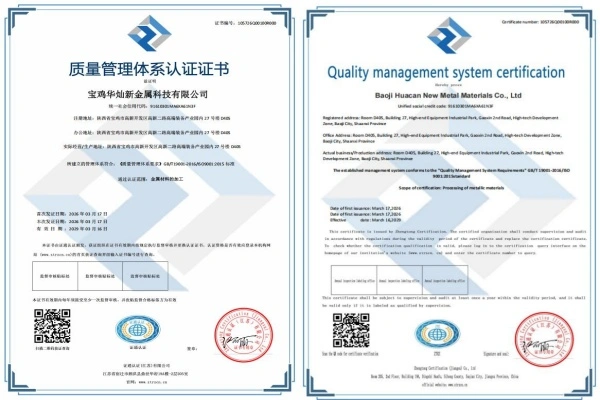
Quality Management System Certification
Packaging & Shipping
| Packaging Method | Purpose |
|---|---|
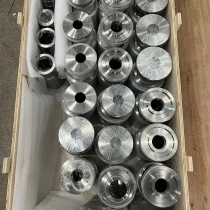
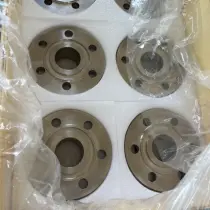
| Custom Foam Inserts | Protect precision-machined surfaces and prevent scratches or deformation during transportation |
| Vacuum-Sealed Bags with Desiccants | Provide moisture protection and maintain product condition during international shipment |
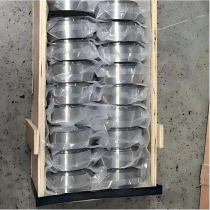
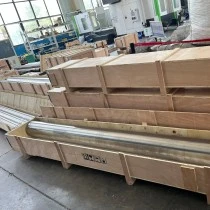
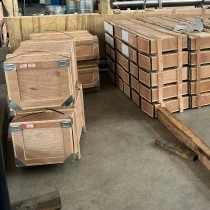
| Heavy-Duty Wooden Crates | Suitable for large, heavy, or high-value titanium components requiring extra protection |
| Detailed Labeling & Documentation | Ensure full traceability, easy identification, and smooth customs clearance |
FAQ
Q: What lead time should I expect for the product order?
A: Typically 3–5 weeks, depending on material grade, complexity, and order volume. Custom tooling and CNC programming are set up specifically for each design.
Q: Which titanium grade should I choose?
A: Grade 2 works well for general corrosion resistance and weldability. Grade 5 (Ti-6Al-4V) suits high-pressure, high-strength applications. Grade 7 performs best in reducing acid environments. We can advise based on your operating conditions.
Q: Can you produce a flange from a damaged sample without drawings?
A: Yeah. We employ 3D scanning and CAD reconstruction to reverse engineer correct geometry prior to manufacturing.
Q: Which gaskets are suitable for titanium flanges?
A: Use PTFE or suitable spiral wrapped gaskets. They inhibit galvanic corrosion between different materials and prevent harm to the flange face.
Q: How do you prevent galling on threaded titanium flanges?
A: Titanium has certain friction properties that can cause galling during assembly if the surface is not treated. Anodising or anti-seize coatings on threaded areas are advised.
Contact Us
Send your drawings or specifications to sherry@hc-titanium.com— Our engineering team responds promptly to your custom titanium flange needs.
_1754554142881.jpg)



Learn about our latest products and discounts through SMS or email