- English
- French
- German
- Portuguese
- Spanish
- Russian
- Japanese
- Korean
- Arabic
- Greek
- German
- Turkish
- Italian
- Danish
- Romanian
- Indonesian
- Czech
- Afrikaans
- Swedish
- Polish
- Basque
- Catalan
- Esperanto
- Hindi
- Lao
- Albanian
- Amharic
- Armenian
- Azerbaijani
- Belarusian
- Bengali
- Bosnian
- Bulgarian
- Cebuano
- Chichewa
- Corsican
- Croatian
- Dutch
- Estonian
- Filipino
- Finnish
- Frisian
- Galician
- Georgian
- Gujarati
- Haitian
- Hausa
- Hawaiian
- Hebrew
- Hmong
- Hungarian
- Icelandic
- Igbo
- Javanese
- Kannada
- Kazakh
- Khmer
- Kurdish
- Kyrgyz
- Latin
- Latvian
- Lithuanian
- Luxembou..
- Macedonian
- Malagasy
- Malay
- Malayalam
- Maltese
- Maori
- Marathi
- Mongolian
- Burmese
- Nepali
- Norwegian
- Pashto
- Persian
- Punjabi
- Serbian
- Sesotho
- Sinhala
- Slovak
- Slovenian
- Somali
- Samoan
- Scots Gaelic
- Shona
- Sindhi
- Sundanese
- Swahili
- Tajik
- Tamil
- Telugu
- Thai
- Ukrainian
- Urdu
- Uzbek
- Vietnamese
- Welsh
- Xhosa
- Yiddish
- Yoruba
- Zulu
Why Titanium Rods Are Replacing Steel in Automotive Parts?
More and more, the car business is focusing on lightweight materials that can make vehicles and parts work better. The low mass, high specific strength, and good corrosion resistance of titanium rod make it a useful mix among these materials. Titanium is more expensive and harder to work with than steel, but it can be very useful in some vehicle uses where weight reduction and longevity are important.
Reduced Mass for Improved Fuel Efficiency
One reason companies are thinking about using titanium rods for automotive components is that they might be lighter. Titanium material has a lower density than steel, but it still has strong mechanical properties in many alloy grades. This lets engineers cut down on the weight of parts when the design and operation needs are properly assessed.
Weight Savings and Performance Gains
Replacing selected steel components with titanium rods can reduce component weight, although the actual reduction depends on the alloy grade, dimensions, design, and manufacturing process. Titanium connecting rods are one example where lower density can help reduce mass while maintaining the required mechanical performance.
Reducing component weight can contribute to lower overall vehicle mass. When weight is reduced across suitable components, less energy may be required for vehicle acceleration and movement. This can support improved fuel efficiency in internal-combustion vehicles and may also improve energy efficiency in electric vehicles.
The actual benefit depends on the vehicle design, driving conditions, and amount of weight saved. Therefore, titanium should be selected based on measurable engineering requirements rather than weight reduction alone.
Impact on Vehicle Dynamics
Lower component mass can also influence vehicle dynamics. Depending on its location, reducing mass may improve acceleration, braking response, and handling. Titanium components can therefore be considered for selected suspension, chassis, and engine applications where weight reduction provides a practical performance advantage.
Another possible use is for titanium connecting rods. Their lower density can lower moving mass, which may help the engine respond better if the part is built correctly. But the final performance depends on the engine system as a whole, the shape of the parts, and the conditions under which they are used.


Superior Strength-to-Weight Benefits
The best thing about titanium is that it has a low mass and a high specific strength. Some titanium alloys offer a higher strength-to-weight ratio than selected steel grades. This makes them useful for situations where engineers need to balance weight and mechanical performance.
Mechanical Properties of Titanium Rods
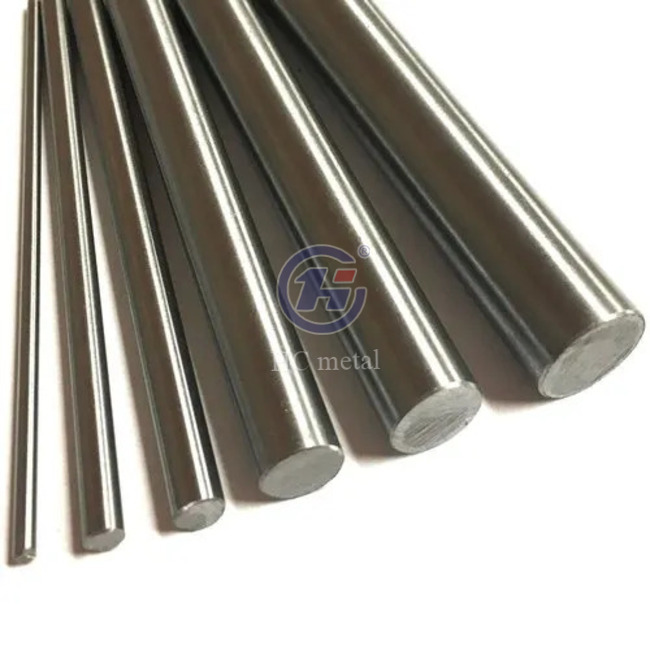
Titanium rods have a low mass, a high tensile strength, and good wear performance. Their exact mechanical qualities depend on the type of metal, how it was processed, heat treatment, and the state of the finished product. Common grades like Grade 2 and Ti-6Al-4V have different strengths and ductility traits, so the right one should be chosen based on the job.
Fatigue performance is also important for automotive components subjected to repeated or cyclic loading. Fatigue life is affected by the right alloy choice, surface condition, dimensional accuracy, and design of the component. Titanium rods can work reliably in tough situations as long as these things are under control.
Thermal and Corrosion Resistance
Some titanium alloys can keep their useful mechanical qualities at relatively high temperatures. This means they can be used for some car parts that are subject to heat. Because they can handle different alloys and service conditions at different temperatures, engineers should look at the actual temperature and load needs before choosing a titanium grade.
Also, titanium is known for having a high natural resistance to corrosion. Its stable oxide layer helps keep the surface safe from many places that are acidic. Because of this, titanium rods can work well in places where they will be exposed to moisture, road salt, and other substances that can damage them. This trait can help keep materials from breaking down and help them last a long time.

Cost and Repair Trade-offs for OEMs
Titanium is more expensive than regular steel and needs to be made in a more specialised way, even though it performs better. Before replacing a steel part with a titanium one, OEMs must look at the cost of the material, the production volume, the machining needs, and the performance that is expected.
Initial Cost Considerations
The higher cost of titanium material is related to its energy-intensive extraction and processing, as well as specialized melting, forging, and machining requirements. These factors can make titanium less suitable for high-volume applications where material cost is the primary consideration.
However, material price should not be considered independently. In selected applications, weight reduction, corrosion resistance, and performance benefits may justify the additional cost. OEMs should compare the complete engineering and lifecycle requirements before making a material decision.
Manufacturing and Repair Challenges
Titanium rods require appropriate machining and process control. Their relatively low thermal conductivity can concentrate heat at the cutting zone, making tooling, cutting parameters, cooling, and surface control important during machining.
Repair needs should also be taken into account when parts are being made. Titanium can be very strong and resistant to corrosion, but broken parts may need special ways to be inspected or replaced. For parts that are safety-critical, decisions about repairs should be based on the engineering specifications that apply.
Because of this, titanium works best when it is used in small amounts. Manufacturers can focus on parts where the material's low density, high strength-to-weight ratio, and resistance to corrosion make it a clear technical choice.

Conclusion
In some car uses, titanium bars can be very useful because they help reduce weight, improve motor performance, and prevent corrosion. Although titanium material has a good mix of low mass and specific strength, it cannot completely replace steel. Before acceptance, the cost, working temperature, production process, and grade of the alloy must all be thought through.
Titanium applications that work well for OEMs and component makers depend on selecting the appropriate material and maintaining consistent quality control. When these things are taken care of properly, titanium rods can be a useful way to make lightweight, high-performance automotive components.
Baoji Huacan New Metal Materials Co., Ltd. sells titanium and titanium alloys that are used in tough industrial settings. Our ISO 9001-certified facility supports controlled processes such as melting, forging, and quality inspection. We have both standard and special titanium rods, and we can work with grades, sizes, and technical needs that you give us.
Frequently Asked Questions
What are the main advantages of using titanium rods in automotive parts?
Titanium rods offer low density, a favorable strength-to-weight ratio, good mechanical performance, and excellent corrosion resistance. These properties make them suitable for selected lightweight automotive components.
How do titanium rods contribute to fuel efficiency?
By reducing component weight and, where applicable, overall vehicle mass, titanium rods can reduce the energy required for acceleration and movement. The actual efficiency improvement depends on the vehicle design and amount of weight reduction.
Are titanium rods more expensive than steel?
Yes. Titanium rods generally cost more because titanium requires energy-intensive processing and specialized manufacturing. The additional cost may be justified when weight, corrosion resistance, or performance benefits are important.
Can titanium rods be used in all automotive applications?
No. Titanium rods are normally used selectively because of their higher cost and processing requirements. Engineers should evaluate alloy grade, loading, temperature, design, and lifecycle cost for each application.
How does the durability of titanium rods compare to steel?
Titanium rods can provide excellent durability and corrosion resistance in many environments. Their service life depends on alloy selection, surface condition, component design, loading, and manufacturing quality.

Revolutionizing Automotive Design with Titanium Rods
The growing use of titanium rods in selected automotive applications reflects the industry's continuing focus on lightweight engineering. Rather than replacing steel everywhere, titanium material is most valuable where its low density, strength, and corrosion resistance provide specific design benefits. At Baoji Huacan New Metal Materials Co., Ltd., we provide titanium and titanium alloy products with controlled manufacturing and inspection processes. For custom titanium rod requirements, contact Joy@hc-titanium.com or Sherry@hc-titanium.com with your required grade, dimensions, quantity, or technical specifications to discuss suitable options and obtain a quotation.
References
1. Smith, J. (2022). "Advancements in Automotive Materials: The Rise of Titanium." Journal of Automotive Engineering, 45(3), 278-295.
2. Johnson, A. et al. (2021). "Comparative Analysis of Steel and Titanium Components in Vehicle Design." International Journal of Materials Science, 18(2), 112-130.
3. Brown, R. (2023). "Cost-Benefit Analysis of Titanium Usage in Modern Vehicles." Automotive Economics Review, 7(1), 45-62.
4. Lee, S. and Park, H. (2022). "Thermal Properties of Titanium Alloys in High-Temperature Automotive Applications." Materials Science and Engineering: A, 815, 141230.
5. Wilson, T. (2023). "The Impact of Lightweight Materials on Vehicle Fuel Efficiency: A Case Study on Titanium Integration." Sustainable Transportation Technologies, 9(4), 302-318.



Learn about our latest products and discounts through SMS or email