- English
- French
- German
- Portuguese
- Spanish
- Russian
- Japanese
- Korean
- Arabic
- Greek
- German
- Turkish
- Italian
- Danish
- Romanian
- Indonesian
- Czech
- Afrikaans
- Swedish
- Polish
- Basque
- Catalan
- Esperanto
- Hindi
- Lao
- Albanian
- Amharic
- Armenian
- Azerbaijani
- Belarusian
- Bengali
- Bosnian
- Bulgarian
- Cebuano
- Chichewa
- Corsican
- Croatian
- Dutch
- Estonian
- Filipino
- Finnish
- Frisian
- Galician
- Georgian
- Gujarati
- Haitian
- Hausa
- Hawaiian
- Hebrew
- Hmong
- Hungarian
- Icelandic
- Igbo
- Javanese
- Kannada
- Kazakh
- Khmer
- Kurdish
- Kyrgyz
- Latin
- Latvian
- Lithuanian
- Luxembou..
- Macedonian
- Malagasy
- Malay
- Malayalam
- Maltese
- Maori
- Marathi
- Mongolian
- Burmese
- Nepali
- Norwegian
- Pashto
- Persian
- Punjabi
- Serbian
- Sesotho
- Sinhala
- Slovak
- Slovenian
- Somali
- Samoan
- Scots Gaelic
- Shona
- Sindhi
- Sundanese
- Swahili
- Tajik
- Tamil
- Telugu
- Thai
- Ukrainian
- Urdu
- Uzbek
- Vietnamese
- Welsh
- Xhosa
- Yiddish
- Yoruba
- Zulu
How to Maintain Sterility During Medical Titanium Rod Manufacturing?
Controlling infection is an important part of making medical devices like medical titanium rods that are used in orthopaedic implants and oral parts. Titanium materials used in medical uses must be produced, cleaned, handled, and packed in a way that is controlled for their purpose. It's important to know the difference between cleanliness and sterility. Cleaning gets rid of dust, oils, and processing leftovers, but sterilisation is a proven way to reach a certain level of sterility guarantee. The steps below help makers keep their goods clean and get medical titanium rods ready for further processing into medical devices.
Cleanroom Classifications and Floor Layout
A lab that is well-designed and well-kept is the basis for controlled making of medical titanium rods. These settings help keep airborne particles to a minimum and lower the risk of contamination while processing, inspecting, and packaging. The necessary conditions should be chosen based on the production method, the needs of the product, the strategy for preventing contamination, and any laws that apply.
ISO Classifications for Medical Device Manufacturing
Cleanrooms used for medical device manufacturing may be classified according to ISO 14644-1, which establishes airborne particle concentration limits. Common classifications include:
- ISO Class 7 (Class 10,000): Used for controlled manufacturing environments where particle control is required
- ISO Class 6 (Class 1,000): Provides more stringent airborne particle control for selected processes
- ISO Class 5 (Class 100): Provides highly controlled conditions for processes requiring very low particle concentrations
The appropriate ISO classification for medical titanium rod production should be selected according to the process, product risk, handling requirements, and applicable quality requirements. A lower ISO class number indicates a more stringent particle-control requirement. The selected classification should be supported by environmental qualification, monitoring, and documented procedures.

Optimizing Cleanroom Layout for Sterile Production
An efficient cleanroom layout helps reduce contamination during medical titanium rod production. Important considerations include:
- Unidirectional workflow: Separate incoming materials, processing, inspection, and finished products where practical
- Airlocks and gowning rooms: Provide controlled transitions between areas with different cleanliness requirements
- Material transfer systems: Use suitable pass-through systems to control material movement
- Equipment placement: Arrange machinery and workstations to support effective airflow and reduce unnecessary turbulence
Personnel and material flows should also be controlled through clear procedures for gowning, cleaning, transfer, and equipment maintenance.
Environmental Monitoring and Control
Maintaining controlled environmental conditions requires a documented monitoring program. The specific monitoring frequency and acceptance criteria should reflect the cleanroom classification, process risk, and applicable requirements.
Critical parameters may include:
- Particle counts: Monitor airborne particles to verify the required cleanroom classification
- Temperature and humidity: Control environmental conditions to support process stability and contamination control
- Pressure differentials: Maintain appropriate pressure relationships between adjacent areas
- Air changes per hour (ACH): Provide adequate air movement according to the cleanroom design and validated requirements
Monitoring should use calibrated instruments, documented results, and defined alert and action levels. Deviations should be investigated according to established procedures.

Pre-machine Cleaning: Solvents & Ultrasonic Baths
Before machining or during intermediate processing, medical titanium rods may require controlled cleaning to remove oils, particles, and other manufacturing residues. Cleaning improves product cleanliness and prepares the component for subsequent processing. It should not be considered a substitute for validated sterilization.
Selecting Appropriate Cleaning Solvents
Selecting a cleaning agent for a medical titanium rod requires consideration of the titanium material and the contaminants generated during production. Important factors include:
- Compatibility with titanium material: Select agents that do not adversely affect the alloy or surface condition
- Effectiveness against expected contaminants: Remove machining oils, particles, fingerprints, and other relevant residues
- Residue-free properties: Verify that cleaning and rinsing do not leave unacceptable residues
- Environmental and safety considerations: Consider worker safety, ventilation, handling, and waste requirements
Isopropyl alcohol, acetone, and formulated aqueous detergents may be used in different processes. The appropriate choice depends on the contamination type and process requirements, and cleaning procedures should be validated where necessary.

Ultrasonic Cleaning Techniques
Ultrasonic cleaning uses high-frequency sound waves to create cavitation bubbles within a cleaning solution. The formation and collapse of these bubbles can help dislodge contaminants from medical titanium rods and difficult-to-reach surfaces.
Key considerations include:
- Frequency selection: Different frequencies provide different cleaning effects depending on component geometry and contamination
- Temperature control: Maintain the cleaning solution within the established process range
- Cleaning duration: Establish cycle time through process development and validation rather than using a universal duration
- Solution composition: Select a solution compatible with the titanium alloy, surface condition, and contaminants
Cleaning effectiveness also depends on ultrasonic power, solution concentration, bath condition, loading, and component arrangement.
Multi-stage Cleaning Processes
A multi-stage cleaning process can provide consistent results when medical titanium rods contain different manufacturing residues. A typical sequence may include:
- Initial rinse: Remove loose particles and surface debris
- Solvent or detergent cleaning: Remove oils and organic contaminants
- Ultrasonic cleaning: Dislodge particles and residues from difficult-to-clean surfaces
- Final rinse: Remove remaining cleaning agents and dissolved contaminants
- Drying: Remove residual moisture and prevent unwanted surface contamination
The actual sequence should be established according to the manufacturing process and contamination profile. Controlled handling and suitable packaging are also important when high product cleanliness is required.
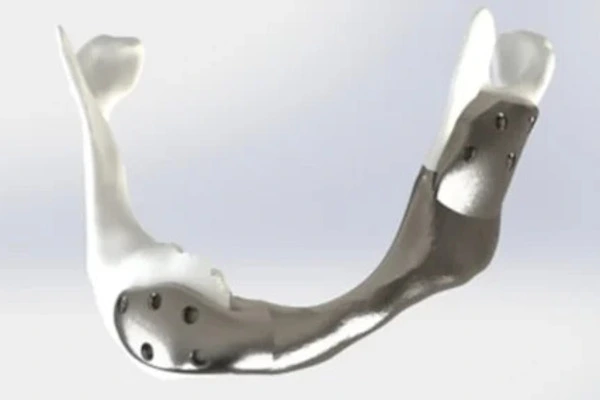
Sterilization Methods: Autoclave, Gamma, EO
After manufacturing and cleaning, a medical titanium rod may undergo sterilization as part of the finished medical-device process. The appropriate method depends on the complete device, packaging system, materials, and validated sterilization cycle. Sterilization parameters should not be treated as universal values because effectiveness must be demonstrated through validation.
Autoclave Sterilization for Medical Titanium Rods
Autoclave sterilization uses saturated steam under controlled temperature, pressure, and exposure conditions to inactivate microorganisms. Titanium is generally compatible with steam sterilization, but the complete device and packaging system must be evaluated.
Key aspects include:
- Cycle parameters: Temperature, pressure, and exposure time must be established through a validated cycle
- Packaging: Packaging must allow sterilant penetration and maintain the sterile barrier
- Load configuration: The load should follow the validated arrangement to support consistent steam penetration
- Validation: Appropriate physical and biological indicators should be used according to the sterilization strategy
Steam sterilization can be practical for heat- and moisture-resistant devices and does not leave chemical sterilant residues.
Gamma Radiation Sterilization
Gamma sterilization uses ionizing radiation to inactivate microorganisms and can be suitable for products sterilized in final packaging. The process must be validated for the specific product and packaging configuration.
Important considerations include:
- Absorbed dose: The required dose must be established through sterilization development and validation
- Penetration: Gamma radiation can penetrate many packaging and product configurations
- Material compatibility: Evaluate the complete device, including coatings, polymers, adhesives, and packaging where applicable
- Validation: Dosimetry and other validation activities are required to demonstrate consistent performance
The complete product system should be evaluated before selecting this method.
Ethylene Oxide (EO) Sterilization
Ethylene oxide sterilization is a low-temperature process that can be used for medical devices unsuitable for high heat or moisture. It requires control of gas concentration, temperature, humidity, exposure, and aeration.
Key aspects include:
- Gas concentration: Establish the required concentration according to the validated cycle
- Temperature: Control temperature within the specified process range
- Humidity control: Maintain the humidity required for effective sterilization
- Exposure time: Determine exposure and aeration periods through process validation
Adequate aeration is essential because residual EO and related compounds must be controlled within applicable limits. The sterilization method should therefore be evaluated for the complete product and packaging system.
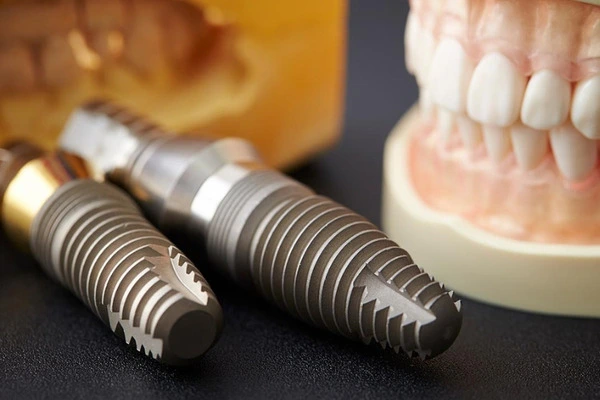
Conclusion
To keep things clean and help with sterilisation while medical titanium rods are being made, there needs to be control at every step, from setting up the cleanroom and moving materials to cleaning, inspecting, packing, and finally sterilising the rods. A cleanroom's classification helps keep airborne contamination under control, and cleaning methods that have been proven to work get rid of production leftovers. Sterilisation is a different, proven process that is used when the finished medical device needs to be in a certain level of sterility.
Choosing the right titanium materials is only one part of quality control for people who make and buy medical devices. You should also think about the type of material, its size, its state, its ability to be tracked, its inspection, its cleaning methods, its packing, and any other requirements that may apply.
We make titanium and titanium alloy items at Baoji Huacan New Metal Materials Co., Ltd., such as medical titanium rod parts. Our quality management system is ISO 9001-certified and helps with controlled production, inspection, and tracking. Customers can talk to us about different types of materials, their sizes, the area they need, and other details that are specific to their needs. Our titanium material options are made for uses that need good mechanical qualities, consistent sizes, and resistance to corrosion.
FAQ
Q1: What are the key advantages of using medical titanium rods?
Medical titanium rods can offer a combination of biocompatibility, high strength-to-weight ratio, corrosion resistance, and compatibility with many imaging environments. Depending on the application, titanium alloys can provide the mechanical performance and durability required for medical components. The selected grade and surface condition should match the intended device and applicable material requirements.
Q2: How often should cleanroom environments be monitored during titanium rod production?
Monitoring frequency depends on the cleanroom classification, process risk, qualification status, and applicable requirements. Particle monitoring and other environmental controls should follow a documented program with defined acceptance criteria. Additional microbial or environmental testing may be required according to the facility's contamination-control strategy.
Q3: Can different sterilization methods be combined for medical titanium rods?
Multiple sterilization approaches are technically possible in some situations, but combining methods is not normally necessary unless the complete process has been specifically developed and validated. Each method should be evaluated for its effect on the product, packaging, and materials. The selected method should be based on the finished device and validated processing requirements.
Enhancing Medical Titanium Rod Manufacturing Excellence
At Baoji Huacan New Metal Materials Co., Ltd., we focus on producing titanium and titanium alloy components for demanding industrial and medical applications. Our manufacturing capabilities support customized medical titanium rod requirements, including specified dimensions, material grades, surface conditions, and inspection requirements.
Our ISO 9001-certified quality management system supports controlled manufacturing and quality inspection throughout production. We understand that medical-device manufacturers need more than a standard titanium material supplier. They also require consistent dimensions, material documentation, traceability, and reliable communication about technical specifications.
For customers evaluating medical titanium rod suppliers, we can discuss the required titanium grade, dimensions, tolerances, surface condition, inspection documentation, and application requirements before production. Contact us at Joy@hc-titanium.com or Sherry@hc-titanium.com to discuss your project and determine a suitable titanium solution.
References
1. Smith, J.A., et al. (2022). "Advances in Cleanroom Technology for Medical Device Manufacturing." Journal of Biomedical Engineering, 45(3), 278-295.
2. Johnson, M.B. (2021). "Comparative Analysis of Sterilization Methods for Titanium Implants." Medical Device Technology Review, 18(2), 112-128.
3. Zhang, L., et al. (2023). "Ultrasonic Cleaning Optimization for Medical-Grade Titanium Alloys." International Journal of Surface Engineering and Coatings, 101(4), 189-203.
4. Brown, R.D. (2020). "Cleanroom Design and Management for Sterile Medical Device Production." Pharmaceutical Engineering, 40(6), 32-41.
5. Patel, S.K., et al. (2022). "Quality Assurance in Medical Titanium Rod Manufacturing: A Comprehensive Review." Journal of Materials Science in Medicine, 33(5), 601-618.
_1759974387152.jpg)


Learn about our latest products and discounts through SMS or email