- English
- French
- German
- Portuguese
- Spanish
- Russian
- Japanese
- Korean
- Arabic
- Greek
- German
- Turkish
- Italian
- Danish
- Romanian
- Indonesian
- Czech
- Afrikaans
- Swedish
- Polish
- Basque
- Catalan
- Esperanto
- Hindi
- Lao
- Albanian
- Amharic
- Armenian
- Azerbaijani
- Belarusian
- Bengali
- Bosnian
- Bulgarian
- Cebuano
- Chichewa
- Corsican
- Croatian
- Dutch
- Estonian
- Filipino
- Finnish
- Frisian
- Galician
- Georgian
- Gujarati
- Haitian
- Hausa
- Hawaiian
- Hebrew
- Hmong
- Hungarian
- Icelandic
- Igbo
- Javanese
- Kannada
- Kazakh
- Khmer
- Kurdish
- Kyrgyz
- Latin
- Latvian
- Lithuanian
- Luxembou..
- Macedonian
- Malagasy
- Malay
- Malayalam
- Maltese
- Maori
- Marathi
- Mongolian
- Burmese
- Nepali
- Norwegian
- Pashto
- Persian
- Punjabi
- Serbian
- Sesotho
- Sinhala
- Slovak
- Slovenian
- Somali
- Samoan
- Scots Gaelic
- Shona
- Sindhi
- Sundanese
- Swahili
- Tajik
- Tamil
- Telugu
- Thai
- Ukrainian
- Urdu
- Uzbek
- Vietnamese
- Welsh
- Xhosa
- Yiddish
- Yoruba
- Zulu
How to Machine a Titanium Rod for High Precision Parts?
Making high-precision parts out of a Titanium rod requires specialised skills and understanding of metal machining. For makers who need parts with high strength, low weight, and outstanding corrosion resistance, this process is crucial. This full guide covers all the important things you need to know about working with Titanium rods, from choosing the right material and tools to using the right machining methods and process controls to make sure that precision parts meet quality standards.
Understanding Titanium rod Properties
Before starting to machine, it's important to know what the Titanium rod's material qualities are. These traits have an immediate impact on the cutting conditions, the choice of tool, the control of heat, and the finished parts' dimensions.
Exceptional Strength-to-Weight Ratio
Titanium rods are strong for their weight, so they can be used in situations where both strength and weight reduction are important. Titanium can be very strong while still being relatively light compared to many other technical metals. This mix changes cutting forces, tool choice, workholding, and the steadiness needed to make correct parts during machining.
High Heat Resistance
Because of how it reacts to heat, titanium is both hard to machine and easy to handle if the process is managed correctly. Because titanium doesn't conduct heat very well, the heat that is created during cutting stays close to the cutting area instead of quickly moving through the workpiece. Cutting at temperatures that are too high can speed up tool wear and affect dimensional stability. When working with Titanium rod, it's important to have good coolant delivery and the right cutting parameters.
Corrosion Resistance
Titanium is widely used for precision components that must operate in aggressive environments because it provides strong corrosion resistance. A stable passive oxide film forms naturally on the titanium surface and helps protect the underlying metal. During machining, contamination, excessive heat, or unsuitable surface treatment can affect surface condition, so appropriate machining and cleaning practices should be followed to maintain the required corrosion performance of the finished Titanium rod component.
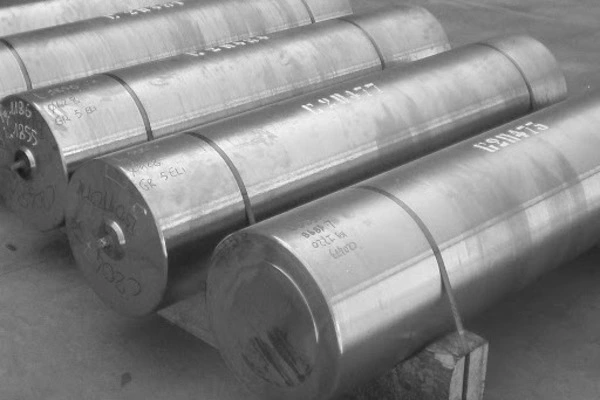
Preparing for Titanium rod Machining
Preparation is an important step in machining Titanium rods successfully. This includes selecting suitable tooling, checking machine rigidity, establishing a stable workholding setup, and preparing an appropriate coolant and inspection strategy.
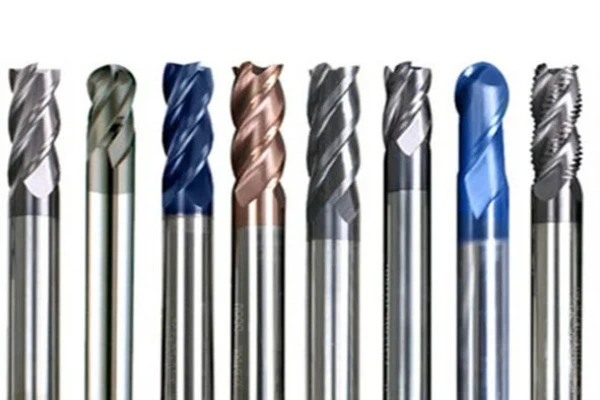
Choosing the Right Cutting Tools
When making a Titanium rod, it's important to use the right cutting tools to keep the tools lasting as long as possible and keep the measurements accurate. For titanium cutting, carbide tools with appropriate cutting-edge geometry, rake angles, and clearance angles are usually thought of. The right shape of the tool can help you control the cutting forces and heat that are made. Coated carbide tools, such as those with TiAlN (Titanium Aluminium Nitride) coatings, may also last longer if they are used in the right way. The quality of titanium, the job being done, and the manufacturer's suggestions should all be taken into account when choosing a tool.
Machine Setup and Rigidity
It's important for machine tools to be rigid because working with titanium can create high cutting forces and vibrations. To make the system stiffer, cut down on tool overhang as much as possible and use the shortest tool length that you can. The workholding must also have enough clamping force to prevent workpiece movement. When titanium parts are being machined, a rigid setup helps keep the dimensions accurate, reduces vibration and chatter, and ensures stable cutting conditions.
Coolant Selection and Application
When cutting Titanium rod, it's important to get the coolant to the cutting zone quickly so that heat doesn't build up there. High-pressure coolant systems can help chips escape and heat escape more efficiently, especially during operations that create heavy cutting loads. The type of cutting, tools, and machine system should all be taken into account when choosing a coolant. A steady flow of coolant into the cutting zone can help keep the temperature under control, cut down on tool wear, and keep the machine performance stable.
Advanced Machining Techniques for Titanium rods
To make precise parts out of Titanium rods, you need to use controlled cutting techniques and the right process parameters. These methods take into account titanium's reaction to heat, cutting forces, tool wear, and tendency to work harden when cutting conditions are not well managed.
Optimizing Cutting Parameters
When machining a Titanium rod, it is very important to choose the right cutting parameters. The type of titanium, the job being done, the tools available, and the machine's capabilities should all be taken into account when choosing the cutting speed, feed rate, depth of cut, radial engagement, and tool shape. Cutting speeds that aren't too fast are often best for testing out a new process. The feed per tooth or feed rate should be kept under control to keep chip production effective and avoid rubbing or prolonged tool dwell. Then, process trials can be used to find the best settings for accuracy in measurements, surface finish, and tool life.
Implementing High-Speed Machining (HSM)
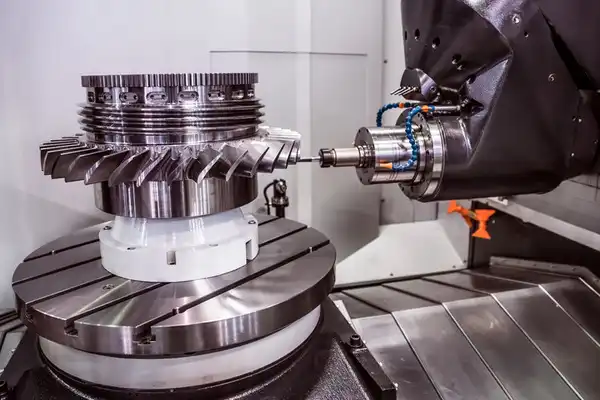
High-Speed Machining can be applied to selected titanium operations when the machine tool, cutting tools, toolpath, and process parameters are properly matched. HSM generally uses higher spindle speeds and controlled material engagement rather than simply increasing every cutting parameter. Appropriate toolpaths can help manage cutting forces and maintain stable chip formation. When using HSM to machine Titanium rods, the machine tool must provide sufficient spindle performance, acceleration, rigidity, and control to maintain the required machining conditions.
Utilizing Trochoidal Milling
Trochoidal milling is an advanced toolpath strategy that can be useful for selected titanium machining operations. The tool follows a controlled looping or circular path while moving progressively through the workpiece, helping maintain a relatively consistent radial engagement. This approach can reduce peak cutting forces and control heat generation when properly programmed. For Titanium rods, trochoidal milling can be considered for suitable roughing operations where tool engagement, chip evacuation, and machine dynamics are properly controlled.
Conclusion
Machining Titanium rods into precision components requires an understanding of material properties, suitable tooling, stable machine conditions, and controlled cutting parameters. By considering titanium's thermal behavior and corrosion resistance, selecting appropriate tools and workholding methods, and optimizing cutting strategies, manufacturers can improve dimensional consistency and machining efficiency. During production, cutting conditions should be monitored and adjusted when necessary to maintain stable quality and process performance.
At Baoji Huacan New Metal Materials Co., Ltd., we provide titanium machining and manufacturing services for customers requiring precision components and titanium products. Our ISO 9001-certified production facility, machining equipment, heating and forming capabilities, and quality control procedures support production according to customer drawings and specified requirements. Our team can assist with material selection, machining feasibility, dimensional requirements, and inspection needs, whether you require wholesale Titanium bar or customized Titanium Material solutions.
Frequently Asked Questions
What makes it hard to machine Titanium rods?
Titanium can be challenging to machine because of its low thermal conductivity, relatively high strength, chemical reactivity at elevated temperatures, and sensitivity to unsuitable cutting conditions. Effective tooling, coolant delivery, workholding, and parameter control are important for consistent machining performance.
How is working with Titanium rods different from working with other metals?
Titanium machining generally requires careful control of cutting speed, feed, tool engagement, and heat management. Compared with many common engineering metals, titanium's low thermal conductivity can concentrate heat near the cutting zone. Proper tool geometry, coolant delivery, and machine rigidity are therefore important for controlling tool wear and maintaining dimensional accuracy.
What are the most important things to keep in mind when you're cutting Titanium rods to get them very precise?
For high-precision machining of titanium, select appropriate tooling, maintain a rigid machine and workholding setup, optimize cutting parameters, and provide consistent coolant delivery. Dimensional inspection and process monitoring are also important for confirming that finished components remain within the required tolerances.
Maximizing Efficiency in Titanium rod Machine work
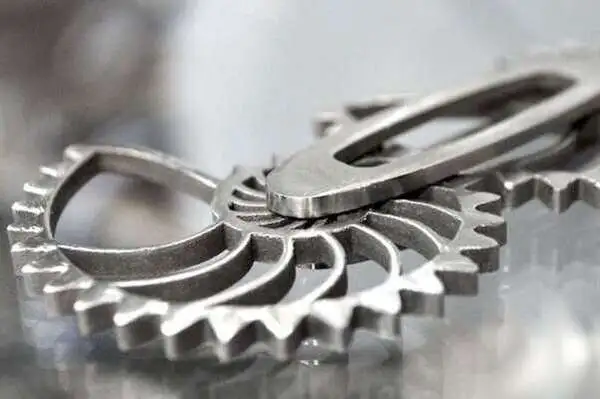
Efficient machining of Titanium rods is important when manufacturers need precision components while controlling production costs. Process optimization, suitable tooling, stable workholding, and effective coolant management can improve productivity and finished-part consistency. Baoji Huacan New Metal Materials Co., Ltd. manufactures and supplies Titanium rods and provides titanium machining capabilities for application-specific requirements. Our production and inspection processes are designed to support customer drawings, material specifications, dimensional requirements, and quality documentation. If you have questions about our Titanium rods or machining services, please contact Joy@hc-titanium.com or Sherry@hc-titanium.com.
References
1. Johnson, M. (2022). Advanced Techniques in Titanium Machining for Aerospace Applications. Journal of Materials Engineering and Performance, 31(8), 6142-6155.
2. Smith, R. L., & Davis, J. R. (2020). Machining of Titanium Alloys: Challenges and Opportunities. ASM Handbook, Volume 23B: Metalworking: Cutting, 321-336.
3. Yang, X., & Liu, C. R. (2021). Optimization of Cutting Parameters for Titanium rod Machining. International Journal of Advanced Manufacturing Technology, 112(5), 1437-1451.
4. Brown, T. H., & Wilson, G. F. (2023). High-Speed Machining Strategies for Titanium Alloys in Medical Implant Manufacturing. Journal of Biomedical Materials Research Part B: Applied Biomaterials, 111(3), 543-557.
5. Zhang, L., & Chen, Y. (2022). Tool Wear Mechanisms and Performance in Titanium rod Machining. Wear, 502-503, 204358.
_1755140948461.jpg)



Learn about our latest products and discounts through SMS or email