- English
- French
- German
- Portuguese
- Spanish
- Russian
- Japanese
- Korean
- Arabic
- Greek
- German
- Turkish
- Italian
- Danish
- Romanian
- Indonesian
- Czech
- Afrikaans
- Swedish
- Polish
- Basque
- Catalan
- Esperanto
- Hindi
- Lao
- Albanian
- Amharic
- Armenian
- Azerbaijani
- Belarusian
- Bengali
- Bosnian
- Bulgarian
- Cebuano
- Chichewa
- Corsican
- Croatian
- Dutch
- Estonian
- Filipino
- Finnish
- Frisian
- Galician
- Georgian
- Gujarati
- Haitian
- Hausa
- Hawaiian
- Hebrew
- Hmong
- Hungarian
- Icelandic
- Igbo
- Javanese
- Kannada
- Kazakh
- Khmer
- Kurdish
- Kyrgyz
- Latin
- Latvian
- Lithuanian
- Luxembou..
- Macedonian
- Malagasy
- Malay
- Malayalam
- Maltese
- Maori
- Marathi
- Mongolian
- Burmese
- Nepali
- Norwegian
- Pashto
- Persian
- Punjabi
- Serbian
- Sesotho
- Sinhala
- Slovak
- Slovenian
- Somali
- Samoan
- Scots Gaelic
- Shona
- Sindhi
- Sundanese
- Swahili
- Tajik
- Tamil
- Telugu
- Thai
- Ukrainian
- Urdu
- Uzbek
- Vietnamese
- Welsh
- Xhosa
- Yiddish
- Yoruba
- Zulu
Rotatory titanium sputter target
Uniform Density: Ensures stable sputtering rates and consistent thin film quality.
Excellent Thermal Stability: Performs reliably under high sputtering temperatures.
Good Electrical Conductivity: Supports efficient sputtering and coating processes.
Precise Dimensions: Customizable in diameter, length, width, and thickness.
Strong Bonding Options: Compatible with backing plates (Cu, Mo, SS).
Low Impurity Levels: Reduces contamination for high-tech applications.
Wide Compatibility: Suitable for PVD, CVD, and vacuum coating systems.
Consistent Performance: Provides uniform coating thickness and high deposition efficiency.
Application Versatility: Used in optics, electronics, solar, decorative, and semiconductor fields.
Product Introduction
Rotatory Titanium Sputter Target for Large-Area Coating — High Utilization & Custom Dimensions
Rotatory titanium sputter target from Baoji Huacan delivers purity grades from 99.5% to 99.995%, with target utilization rates of 75–80% — far beyond the 20–30% typical of planar targets. By rotating 360° around a magnetic bar assembly, it eliminates the racetrack erosion effect, extends production run times, and reduces downtime. Compatible with PVD, CVD, and vacuum coating systems, it supports architectural glass, solar, semiconductor, and display applications. All dimensions, lengths, and bonding configurations are fully customizable to your equipment.
Product Features

High material utilization: 360° erosion reaches 75–80%, dramatically reducing your material cost versus planar alternatives.
Ultra-low impurity control: Oxygen levels controlled below 500–1000 ppm depending on grade, preventing film embrittlement in sensitive applications.
Fine, uniform grain structure: AGS below 50 µm ensures consistent plasma impedance, stable deposition rates, and uniform film thickness — essential for optical and display coatings.
Excellent thermal stability: High-density construction (>99%) combined with efficient bonding withstands thermal loads up to 20–30 kW/m without delamination.
Reduced nodule formation: Rotating geometry lowers power density per unit area and improves cooling, minimizing particulate contamination in cleanroom environments.
Product Specification & OEM Customization
|
Parameter
|
Details
|
|
Product Type
|
Rotatory (Cylindrical) Titanium Sputter Target
|
|
Material Grade
|
Grade 1, Grade 2, Grade 5 (Ti-6Al-4V), Grade 7, Grade 9, Grade 23
|
|
Purity Range
|
99.5% – 99.995% (2N5 to 5N)
|
|
Oxygen Content
|
Typically <500–1000 ppm (grade dependent)
|
|
Relative Density
|
>99%
|
|
Average Grain Size (AGS)
|
<100 µm (premium grades <50 µm)
|
|
Target Length
|
Customized (segment-joined up to 4000 mm+)
|
|
Outer Diameter
|
Customized
|
|
Wall Thickness
|
Customized
|
|
Backing Tube Material
|
Stainless Steel, Copper, Molybdenum (customized)
|
|
Bonding Method
|
Indium bonding, Elastomer bonding, Monolithic (no bond)
|
|
Bonding Ratio
|
≥95–98% (verified by ultrasonic C-Scan)
|
|
Surface Roughness
|
Ra < 0.8 µm
|
|
Material Standard
|
ASTM, AMS, ISO
|
|
Target Utilization
|
75–80% guaranteed
|
Product Application
Solutions One

01
Solutions One

02
Solutions One

03
Solutions One

04
Architectural Low-E Glass: Deposits TiOx and TiN layers as barrier and seed layers protecting silver stacks. The rotatory geometry coats glass sheets up to 3.2 meters wide with excellent uniformity.
Photovoltaics (Solar): Creates back-contact layers and diffusion barriers in CIGS and thin-film solar cells. Performs reliably under the thermal stress of roll-to-roll manufacturing processes.
Flat Panel Displays (Gen 8.5+): Deposits adhesion and barrier layers for large-format LCD and OLED screens. Minimizes nodule generation — directly reducing pixel defects in cleanroom production.
Semiconductors & Electronics: Provides thin-film barrier layers and conductive coatings in IC manufacturing where purity and film uniformity are non-negotiable.
Factory Show
Why Choose Our Rotatory Titanium Sputter Target
Most sputtering targets waste material. Conventional planar designs erode in a narrow track, leaving the majority of the target unused.
Our cylindrical rotating design solves this directly. The target rotates around a fixed magnet bar, so erosion spreads evenly across the full 360° surface — boosting utilization to 75–80%.
This means longer production campaigns, fewer changeovers, and significantly lower cost per coated square meter for your operation.
 |
 |
 |
 |
 |
 |
 |
 |
Manufacturing Process
Production begins with high-purity titanium ingots refined through vacuum arc remelting (VAR) or plasma arc melting (PAM), ensuring low impurity levels and excellent chemical homogeneity.
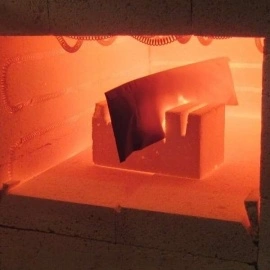
Ingots are then formed into cylindrical tube shapes via forging and precision rolling. Advanced heat treatment refines grain size to below 50 µm for premium applications.
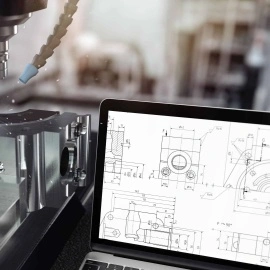
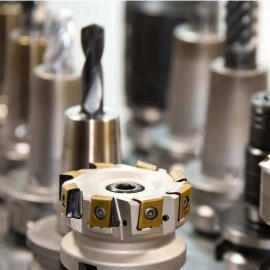
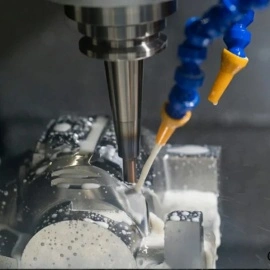
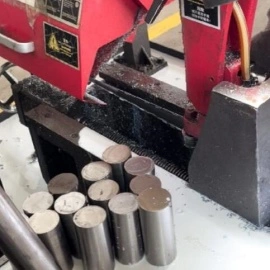
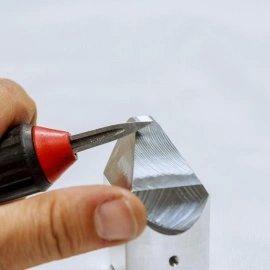
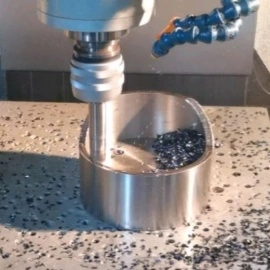
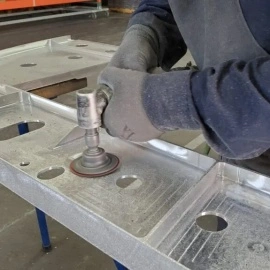
Final dimensions are achieved through precision CNC machining on our 40+ CNC lathes and machining centers. Surface finishing brings roughness to Ra < 0.8 µm, which is critical to preventing arcing during operation.
Bonding to the backing tube uses Indium or Elastomer methods, with a verified bonding ratio exceeding 95%. Monolithic designs are also available for higher power density requirements.
Manufacturing Capability
Baoji Huacan operates 40+ precision CNC machines including lathes, machining centers, and gantry systems — all dedicated to titanium and titanium alloy production.
Annual production capacity exceeds 1,000 tons of machined components, backed by over 10 years of titanium machining experience. Our melting partner capacity exceeds 5,000 tons annually for ingot supply.
With 100+ international client collaborations across aerospace, semiconductor, solar, and industrial sectors, we have the depth to support both prototype development and volume production.
 |
 |
 |
 |
 |
| melting | melting | forging | forging | rolling |
Quality Control
Quality inspection for the product follows a strict multi-stage protocol:
· Chemical Analysis: GDMS verifies purity and trace element levels across the full target length
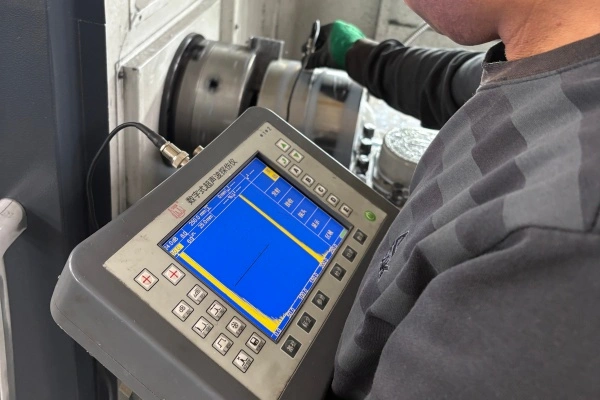
· Bonding Integrity: Ultrasonic C-Scan confirms bonding ratio ≥95–98%, eliminating hotspot risk
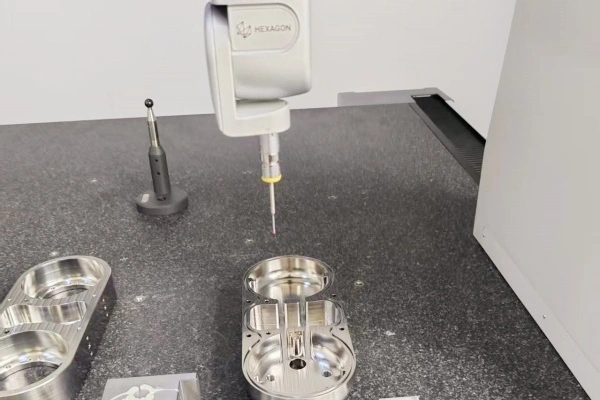
· Dimensional Accuracy: CMM inspection controls straightness (bow) and Total Indicator Runout (TIR) to prevent wobble during rotation
· Microstructure Inspection: Metallographic analysis confirms grain size uniformity and absence of segregation or porosity
· Surface Inspection: Surface roughness verified at Ra < 0.8 µm to prevent arcing
Full documentation — including material traceability records, inspection reports, and certificates — is provided with every shipment.
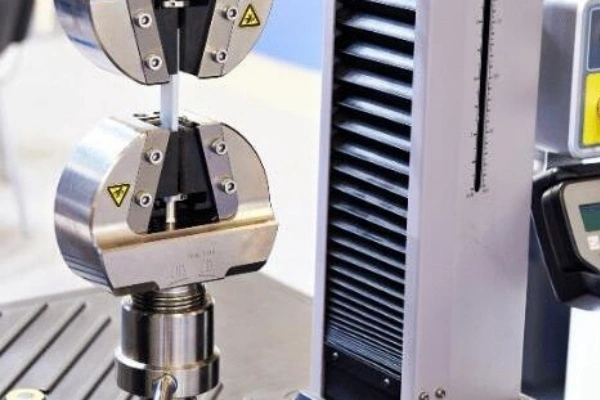
Mechanical Properties Testing
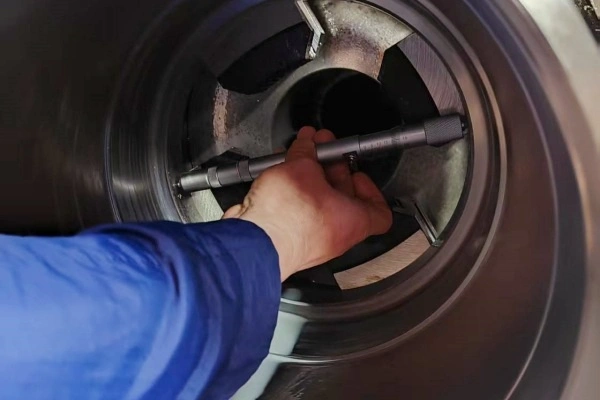
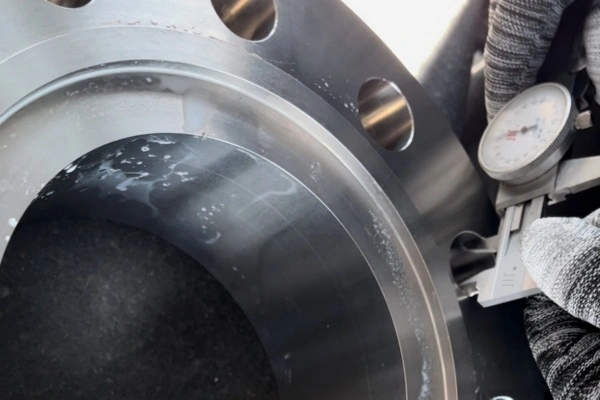
Inner Diameter Measurement
Ultrasonic Testing
CMM Dimensional
Mounting Hole Diameter Measurement
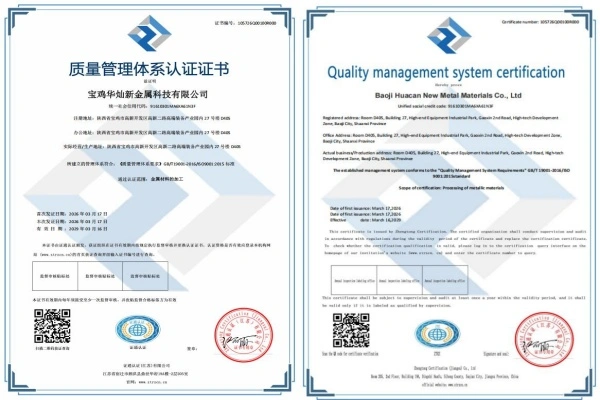
Quality Management System Certification
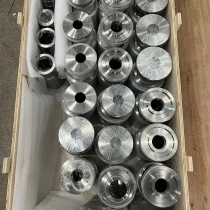
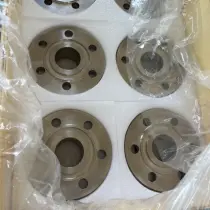
Packaging & Shipping
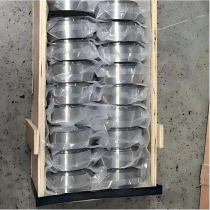
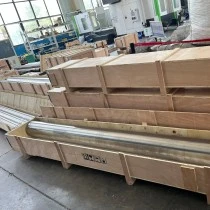
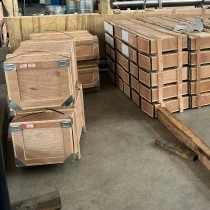
Each target is carefully packaged to prevent damage and contamination during transit:
· Custom foam inserts for dimensional protection
· Vacuum-sealed bags with desiccants for moisture control
· Sturdy wooden crates for bulk and long-length shipments
· Detailed labeling and documentation for full traceability
We offer both air freight for urgent orders and sea freight for cost-effective bulk deliveries worldwide.
FAQ
Q: What is the difference between a monolithic and bonded product?
A:Monolithic targets eliminate the bonding layer, supporting higher power densities and better thermal transfer. Bonded targets allow reuse of the stainless steel backing tube, reducing long-term costs.
Q: How does grain size affect coating quality?
A:Finer grain sizes below 50 µm produce faster, more uniform sputtering rates — critical for optical coatings and display applications where thickness consistency is essential.
Q: Can you produce extra-long targets?
A:Yes. Segment-joined targets using electron beam welding can reach 4000 mm and beyond, based on your equipment requirements.
Q: How do you prevent arcing?
A:High density above 99%, surface roughness Ra < 0.8 µm, and proper burn-in procedures to remove surface oxides all work together to minimize arcing risk.
Q: What documentation is provided?
A:We provide material test certificates (MTC), inspection reports, chemical composition analysis, and traceability records for every batch.
Upgrade Your Vehicle's Performance Today
Ready to source a custom rotatory titanium sputter target? Send your drawings or requirements to sherry@hc-titanium.com — our team responds promptly.
_1754030914677.webp)
(2)_1756801951851.jpg)



Learn about our latest products and discounts through SMS or email