- English
- French
- German
- Portuguese
- Spanish
- Russian
- Japanese
- Korean
- Arabic
- Greek
- German
- Turkish
- Italian
- Danish
- Romanian
- Indonesian
- Czech
- Afrikaans
- Swedish
- Polish
- Basque
- Catalan
- Esperanto
- Hindi
- Lao
- Albanian
- Amharic
- Armenian
- Azerbaijani
- Belarusian
- Bengali
- Bosnian
- Bulgarian
- Cebuano
- Chichewa
- Corsican
- Croatian
- Dutch
- Estonian
- Filipino
- Finnish
- Frisian
- Galician
- Georgian
- Gujarati
- Haitian
- Hausa
- Hawaiian
- Hebrew
- Hmong
- Hungarian
- Icelandic
- Igbo
- Javanese
- Kannada
- Kazakh
- Khmer
- Kurdish
- Kyrgyz
- Latin
- Latvian
- Lithuanian
- Luxembou..
- Macedonian
- Malagasy
- Malay
- Malayalam
- Maltese
- Maori
- Marathi
- Mongolian
- Burmese
- Nepali
- Norwegian
- Pashto
- Persian
- Punjabi
- Serbian
- Sesotho
- Sinhala
- Slovak
- Slovenian
- Somali
- Samoan
- Scots Gaelic
- Shona
- Sindhi
- Sundanese
- Swahili
- Tajik
- Tamil
- Telugu
- Thai
- Ukrainian
- Urdu
- Uzbek
- Vietnamese
- Welsh
- Xhosa
- Yiddish
- Yoruba
- Zulu
Ansi titanium blind flange
Size 6 Inch
OD 280mm
Class 150
Corrosion Resistant
Marine Application
Lightweight
OEM Available
Product Introduction
ANSI Titanium Blind Flange for Marine & Chemical Applications — Corrosion-Resistant, Lightweight Sealing Solution
Baoji Huacan's ANSI titanium blind flange is a solid-disk titanium forging manufactured to ANSI/ASME B16.5 dimensional standards, designed to hermetically seal the end of piping systems, valves, or pressure vessels. Made from grade 2 or grade 5 titanium per ASTM B381, the material has a tensile strength of 345 MPa (grade 2) to more than 895 MPa (grade 5) and weighs around 45% less than steel counterparts. It is available in pressure ratings from 150# up to 2500# and is excellent for maritime, chemical and off-shore applications.
Product Specification
| Parameter | Details |
|---|---|
| Material Grades | Grade 2, Grade 5 (Ti-6Al-4V), Grade 7, Grade 9, Grade 23 — other grades available on request |
| Material Standard | ASTM B381; other material standards available upon request |
| Product Standard | ASME B16.5 / ANSI B16.5 |
| Nominal Size | 6 Inch (OD 280 mm); other sizes available as required |
| Pressure Class | Class 150 to Class 2500 |
| Face Type | Raised Face (RF), Flat Face (FF), Ring Type Joint (RTJ) |
| Flange Type | Blind Flange |
| Center Bore | No center bore |
| Surface Finish | Natural titanium finish, polished, anodized — customized finishes available |
| Dimensional Tolerance | According to ASME B16.5 or customer drawings |
| Customization | OEM/ODM; custom sizes, material grades, dimensions, and surface finishes available |

Product Features

· ~45% lighter than steel — reduces structural load in offshore and subsea installations
· Self-healing TiO₂ film — passive corrosion protection that regenerates automatically
· Non-magnetic signature — suitable for naval defense and sensitive electronic environments
· Wide pressure rating — from Class 150# through 2500# to match system demands
· Zero-leakage performance — sealing face machined to 125–250 AARH for spiral wound and cam-profile gaskets
· High-temperature capability — Grade 2 suitable up to approximately 315°C (600°F) per ASME B31.3
| Feature | Titanium Blind Flange | Stainless Steel Blind Flange | Carbon Steel Blind Flange |
|---|---|---|---|
| Weight | Up to ~45% lighter than comparable steel flanges | Moderate | Heavier |
| Chloride Corrosion Resistance | Excellent | Good to moderate, depending on grade | Limited |
| Wet Chlorine Resistance | Excellent | Limited, depending on grade and conditions | Poor |
| Typical Service Temperature | Up to ~315°C* | Up to ~400°C* | Up to ~425°C* |
| Magnetic Properties | Non-magnetic | Varies by grade; austenitic grades are generally non-magnetic | Generally magnetic |
| Marine Service | Excellent long-term corrosion resistance | Good, depending on grade and environment | Requires protective coating and maintenance |
| Initial Cost | Higher | Moderate | Lower |
| Maintenance Requirements | Low in suitable environments | Moderate | Higher, especially in corrosive environments |
| Typical Applications | Marine, chemical processing, offshore, seawater systems | Chemical, marine, industrial piping | General industrial piping, water and utility systems |
Titanium costs more upfront but significantly reduces maintenance, replacement, and downtime costs over the service life.
Product Application
Solutions One

01
Solutions One

02
Solutions One

03
Solutions One

04
Marine & Offshore: Titanium’s resistance to saltwater corrosion at pipeline terminations on offshore sites prevents the crevice corrosion failures typical of stagnant pipe ends.
Chemical Processing: Wet chlorine gas, hypochlorite solutions and oxidising acid lines where stainless steel flanges fail early.
Desalination Plants: Titanium blind flanges are the preferred option for reverse osmosis and evaporator systems because to their high chloride resistance.
Subsea Infrastructure. The weight reduction of 45% against super-duplex steel considerably lowers the structural stress on subsea manifolds and risers.
Naval & Defence: Non-magnetic qualities meet signature management needs for naval vessels and undersea systems.
Why Choose Us
The most common failure point in aggressive pipe systems is corrosion. In chloride-rich conditions up to 260°C, the self-healing TiO2 oxide coating of titanium renders it resistant to pitting, crevice corrosion and stress corrosion cracking.
This product is not attacked by wet chlorine gas, hypochlorites or metallic chlorides, such as carbon or stainless steel flanges. That makes it a stable, long term option while other materials are always failing.
Baoji Huacan has more than 10 years of professional expertise in titanium machining, and an annual production capacity of more than 1,000 tonnes.
 |
 |
 |
Manufacturing Process
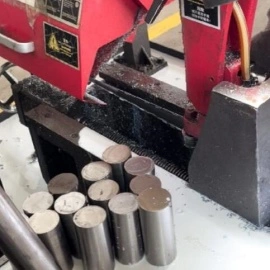
Each flange is derived from titanium ingots of high purity, manufactured by vacuum arc remelting (VAR) assuring minimal levels of impurities and great chemical uniformity.
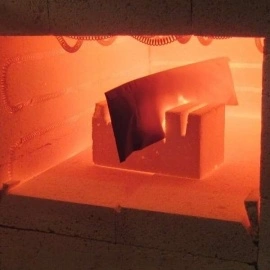
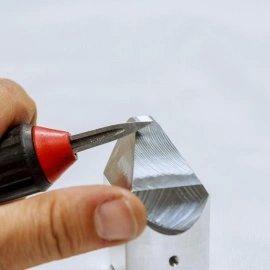
The forging is accomplished using a 4,000-ton hydraulic press and a precision die-forging machine. This improves grain structure and optimises mechanical integrity across the flange body.
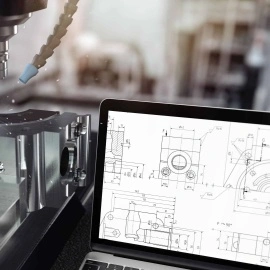
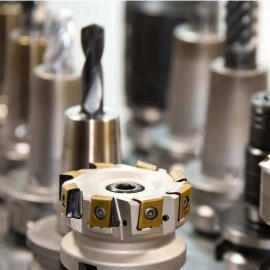
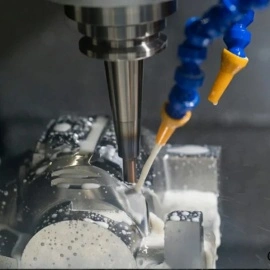
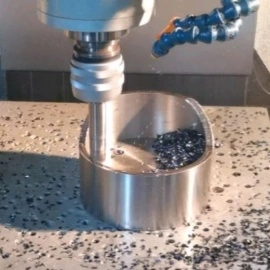
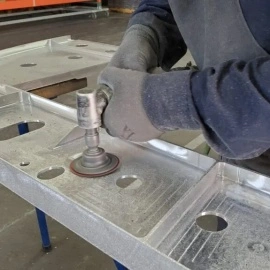
Final dimensions are achieved through precision CNC machining across 40+ advanced machining centers. Tight tolerances are maintained on the bolt circle diameter, outer diameter, and sealing face to meet ASME B16.5 requirements exactly.
Manufacturing Capability
Located in the “Titanium Valley”of China, Baoji Huacan has direct access to titanium expertise and high-quality raw materials.
Key capabilities include: >3,000 tonnes per year of forging capability, >5,000 tonnes of melting capacity and 40+ precision CNC machines for complicated flange shapes. The team has over 10 years of focused expertise in titanium machining and has serviced over 100 worldwide customers in the aerospace, marine, chemical and energy industries.
 |
 |
 |
 |
 |
| melting | melting | forging | forging | rolling |
Quality Control
Every ANSI titanium blind flange produced at Baoji Huacan goes through a strict multi-stage inspection process:
· PMI (XRF analysis): Verifies titanium grade chemistry, e.g., Fe content <0.30% for Grade 2
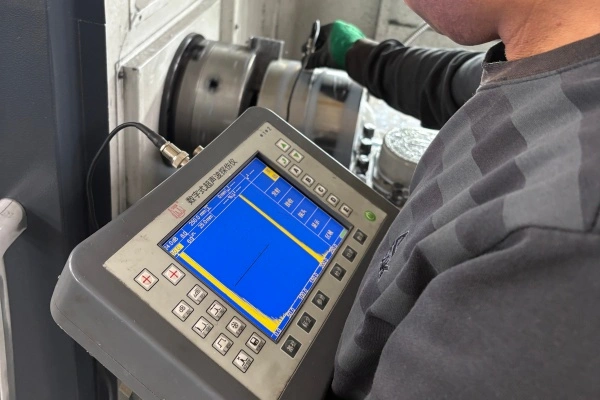
· Ultrasonic Testing (UT): Detects internal forging voids or inclusions per ASTM B381/AMS 2631
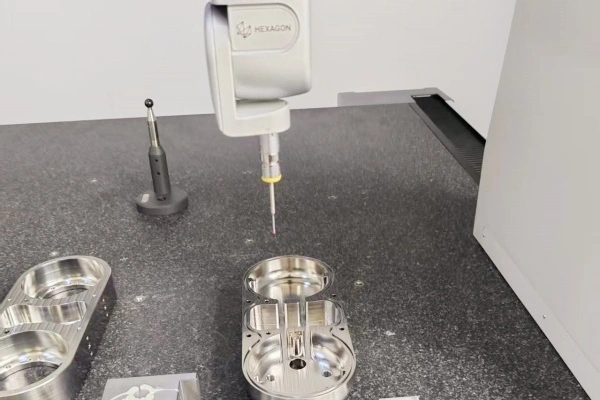
· Dimensional Metrology: CMM verification of bolt circle diameter, OD, and flange thickness against ASME B16.5
· Surface Finish Inspection: Sealing face roughness measured to 125–250 AARH for gas-tight sealing
· Dye Penetrant Inspection (DPI): Checks machined surfaces for hairline cracks or porosity
· Final Documentation: Material Test Certificate (MTC), EN10204 3.1, and Certificate of Conformance issued with each order
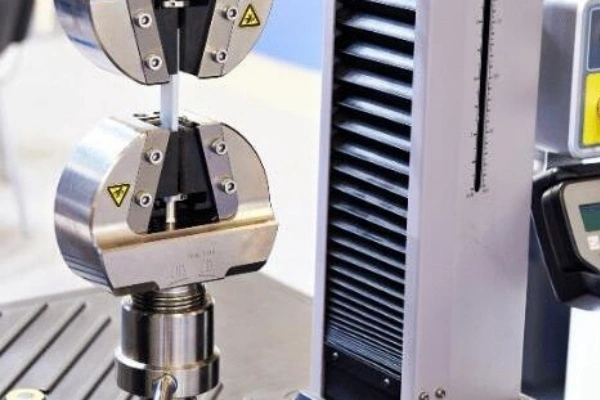
Mechanical Properties Testing
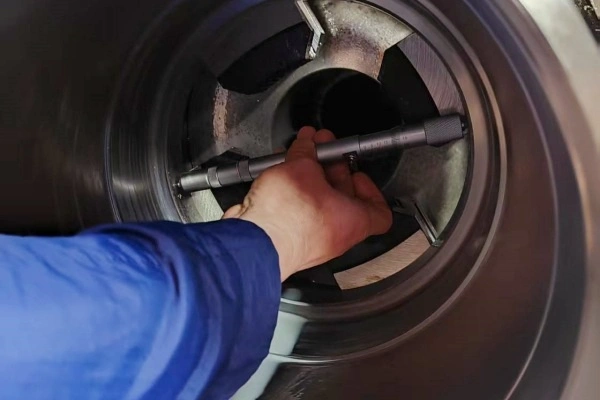
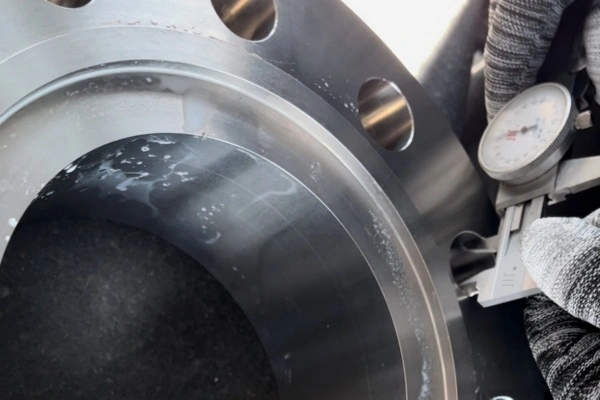
Inner Diameter Measurement
Ultrasonic Testing
CMM Dimensional
Mounting Hole Diameter Measurement
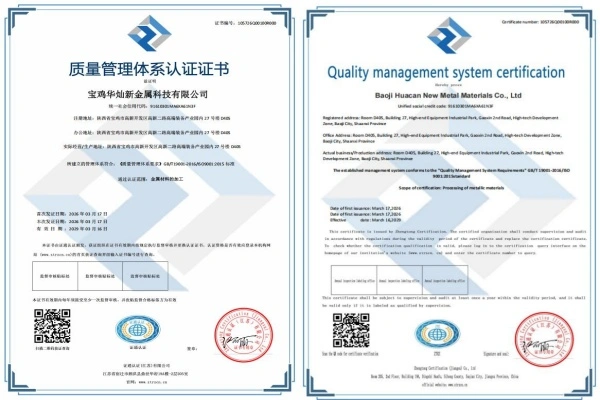
Quality Management System Certification
Packaging & Shipping
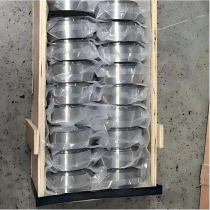
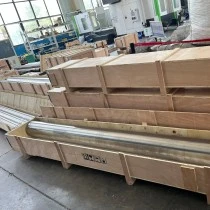
Each flange is carefully protected for transit:
· Hard-plastic face covers on all sealing faces to prevent scratching (titanium Grade 2 is softer than steel)
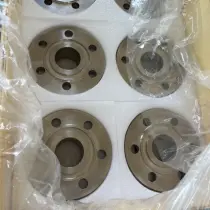
· Vacuum-sealed bags with desiccants for moisture protection during ocean freight
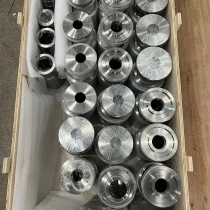
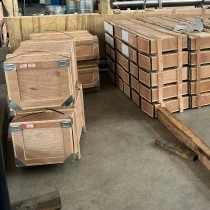
· Individual wooden crates for bulk shipments, preventing movement and impact damage
· Detailed labeling and documentation including MTC, part numbers, and heat traceability records
Air freight is available for urgent orders, while sea freight provides cost efficient bulk delivery to anywhere in the globe.
FAQ
Q: Can I use a titanium blind flange with a stainless steel mate flange?
A: Yes but highly suggest an insulating kit (sleeves & washers). Without it, the stainless steel is an anode in the presence of an electrolyte like saltwater and may corrode fast.
Q: What is Grade 2 against Grade 5?
A: Grade 2 is economically pure titanium with good ductility and corrosion resistance, suitable for broad chemical duty. Grade 5 (Ti-6Al-4V) gives much greater tensile strength (895+ MPa) for high pressure subsea or aeronautical applications.
Q: Does the blind flange require post-weld heat treatment (PWHT)?
A:Blind flanges are bolted, not welded, so PWHT is generally not required. If subsequent welding or modification is involved, stress relieving in an inert argon atmosphere is recommended to prevent embrittlement.
Q: What is the maximum service temperature?
A:Per ASME B31.3, Grade 2 titanium is typically limited to approximately 315°C (600°F). Higher-temperature alloy grades are available for more demanding applications.
Q: How are sealing faces protected during shipping?
A:Every flange ships with hard-plastic face covers and is individually crated. This preserves the required Ra surface finish and prevents damage to the sealing surface.
Contact Us
Need a reliable, corrosion-resistant sealing solution like ansi titanium blind flange? Contact our team at sherry@hc-titanium.com — fast response, expert support guaranteed.


Learn about our latest products and discounts through SMS or email