- English
- French
- German
- Portuguese
- Spanish
- Russian
- Japanese
- Korean
- Arabic
- Greek
- German
- Turkish
- Italian
- Danish
- Romanian
- Indonesian
- Czech
- Afrikaans
- Swedish
- Polish
- Basque
- Catalan
- Esperanto
- Hindi
- Lao
- Albanian
- Amharic
- Armenian
- Azerbaijani
- Belarusian
- Bengali
- Bosnian
- Bulgarian
- Cebuano
- Chichewa
- Corsican
- Croatian
- Dutch
- Estonian
- Filipino
- Finnish
- Frisian
- Galician
- Georgian
- Gujarati
- Haitian
- Hausa
- Hawaiian
- Hebrew
- Hmong
- Hungarian
- Icelandic
- Igbo
- Javanese
- Kannada
- Kazakh
- Khmer
- Kurdish
- Kyrgyz
- Latin
- Latvian
- Lithuanian
- Luxembou..
- Macedonian
- Malagasy
- Malay
- Malayalam
- Maltese
- Maori
- Marathi
- Mongolian
- Burmese
- Nepali
- Norwegian
- Pashto
- Persian
- Punjabi
- Serbian
- Sesotho
- Sinhala
- Slovak
- Slovenian
- Somali
- Samoan
- Scots Gaelic
- Shona
- Sindhi
- Sundanese
- Swahili
- Tajik
- Tamil
- Telugu
- Thai
- Ukrainian
- Urdu
- Uzbek
- Vietnamese
- Welsh
- Xhosa
- Yiddish
- Yoruba
- Zulu
S‑PARTS Titanium Alloy Headset Spacers
Grade 5 titanium alloy material
Lightweight and high strength design
Precise thickness tolerance control
Corrosion resistant surface finish
Standard 1-1/8″ steerer compatibility
Smooth stacking and clean appearance
Performance upgrade for road bikes
Product Introduction
S‑PARTS Titanium Alloy Headset Spacers — Precision Titanium Cockpit Components for High-Performance Cycling
S‑PARTS Titanium Alloy Headset Spacers are aerospace-grade bicycle cockpit components precision-machined from Ti-6Al-4V (Grade 5) titanium alloy. The spacers have an outstanding strength-to-weight ratio with a density of just 4.43 g/cm3 and a tensile strength of more than 895 MPa. CNC skeletonizing lowers weight to rival carbon fiber. PVD vacuum coating gives durability, UV resistant color and a premium finish. Manufactured to +/- 0.01mm specifications, they guaranty a play-free fit on common 1-1/8″ steerer tubes. Whether you’re creating a fast road bike or a custom high-end construction, these spacers provide a solid, corrosion-resistant addition.
 |
 |
 |
Product Specification & OEM Customization
|
| |
|---|---|
|
Parameter
|
Details
|
|
Material Grade
|
Ti-6Al-4V (Grade 5 / TC4)
|
|
Material Standard
|
ASTM, AMS, DIN
|
|
Tensile Strength
|
≥ 895 MPa
|
|
Material Density
|
4.43 g/cm³
|
|
Inner Diameter Compatibility
|
1-1/8″ (28.6mm) standard; customized
|
|
Thickness
|
Customized per drawing
|
|
Dimensional Tolerance
|
±0.01mm on ID/OD
|
|
Surface Treatment
|
Machined Finish / PVD Coating / Anodizing / Polishing
|
|
PVD Color Options
|
Gold, Black, Rainbow (Oil Slick), customized
|
|
Manufacturing Process
|
CNC Turning, Milling, 5-Axis CNC Machining
|
|
Design Support
|
2D drawings, 3D models, OEM/ODM
|

Product Application
Solutions One

01
Solutions One

02
Solutions One

03
Solutions One

04
These spacers serve as structural columns in the headset assembly of road bikes, gravel bikes, mountain bikes, and custom high-end builds. They transmit preload force from the top cap bolt evenly down to the headset bearings.
They are particularly well-suited for carbon frame builds, where galvanic corrosion from aluminum spacers is a known long-term risk. Titanium's chemical inertness eliminates that concern entirely.
For competitive cyclists focused on weight savings and aesthetics, the skeletonized and PVD-coated variants of S‑PARTS Titanium Alloy Headset Spacers offer a meaningful performance and visual upgrade over standard components.
Factory Show
Why Choose Our S‑PARTS Titanium Alloy Headset Spacers
Standard aluminum spacers corrode, fatigue, and lack visual appeal. Carbon spacers crack under over-torque. The products solve all three problems in a single component.
Ti-6Al-4V forms a stable oxide layer that resists galvanic corrosion, even against sweat and moisture. The material will not seize on carbon or steel steerers the way aluminum does.
Unlike carbon spacers that delaminate under high compression, titanium withstands standard 5–6 Nm preload torque without deformation. This makes it the safer, longer-lasting choice for demanding applications.
PVD coating bonds color at the molecular level. Finishes such as Gold, Black, and Oil Slick remain vibrant and abrasion-resistant for the component's full service life — something anodized aluminum simply cannot match.
 |
 |
 |
 |
 |
 |
 |
 |
Manufacturing Process
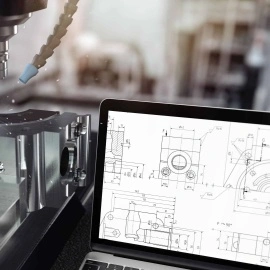
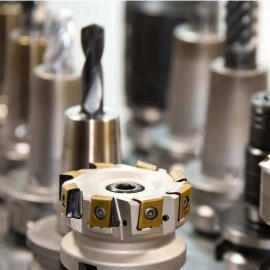
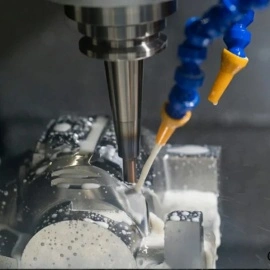
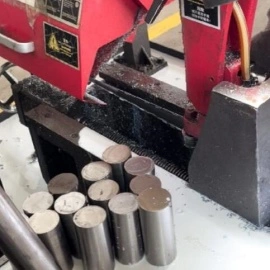
Production begins with certified Ti-6Al-4V bar stock verified through spectrographic composition analysis. CNC turn-milling then shapes each spacer with tightly controlled inner and outer diameters.
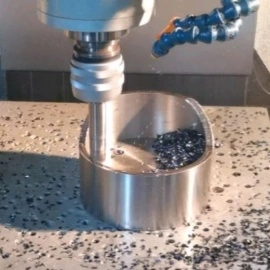
Precision face-milling ensures near-perfect parallelism between the top and bottom surfaces. This is critical — any deviation causes uneven compression on the headset bearings, leading to creaking and premature wear.
CNC skeletonization removes excess material strategically, achieving a final weight of approximately 3–5g for a standard 10mm spacer. This brings mass down to a level comparable to thicker-walled carbon spacers, but with far greater impact resistance.
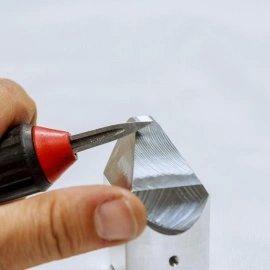
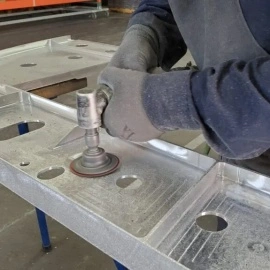
After machining, parts undergo deburring and surface finishing. PVD vacuum coating is applied last, creating a molecular bond between the coating and the titanium substrate for lasting hardness and colorfastness.
Manufacturing Capability
Baoji Huacan has more than 40 high-precision CNC lathes and machining centers, including 5-axis and gantry ones. 10+ years expertise in titanium machining with annual production capacity of more than 1,000 tons of machined components.
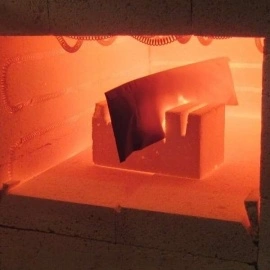
Manufacturing capability is in excess of 3,000 tons per year with a 4,000 ton hydraulic press, and support for difficult near-net-shape preforms as required. The VAR and PAM furnaces can melt more than 5,000 tons of raw material a year, providing a completely traceable supply of high purity titanium ingots.
 |
 |
 |
 |
 |
| melting | melting | forging | forging | rolling |
Quality Control
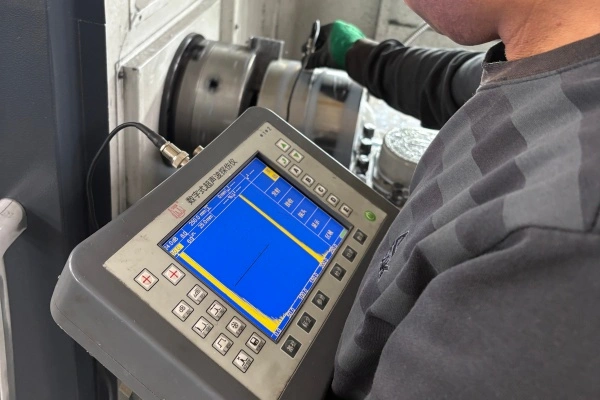
Every batch of the product passes a multi-stage inspection protocol. Incoming material is verified by spectrographic analysis to confirm Ti-6Al-4V composition, ruling out substitution with softer Grade 2 material.
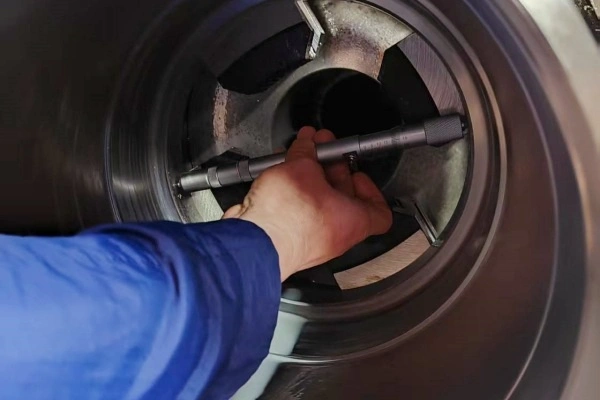
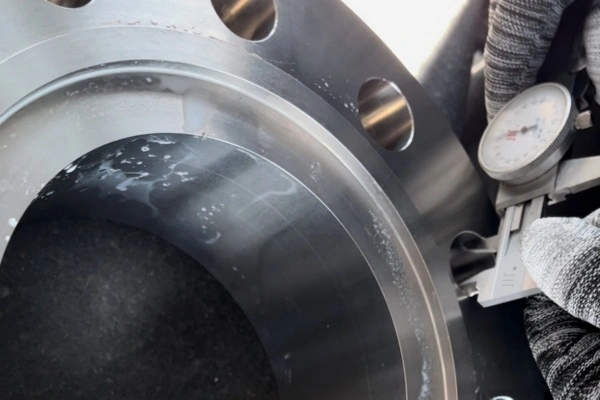
CMM, dial indicators, and Go/No-Go gauges verify inner diameter and face parallelism to micron-level precision. Poor parallelism is the leading cause of headset creaking — so this check is never skipped.
PVD adhesion is verified through scratch and cross-hatch testing. Visual inspection under magnification checks for CNC chatter marks or burrs that could damage carbon steerer tubes. Full material certificates and inspection reports accompany every shipment.
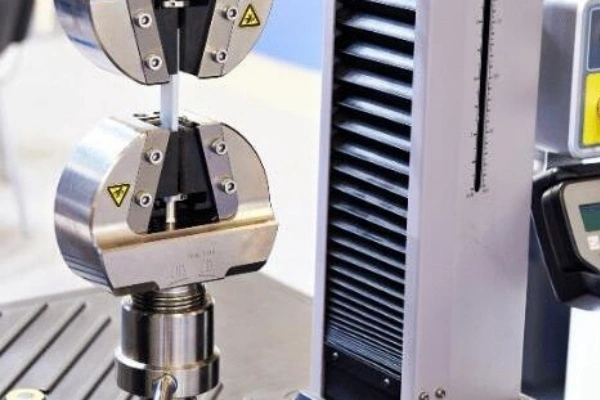
Mechanical Properties Testing
Inner Diameter Measurement
Ultrasonic Testing
CMM Dimensional
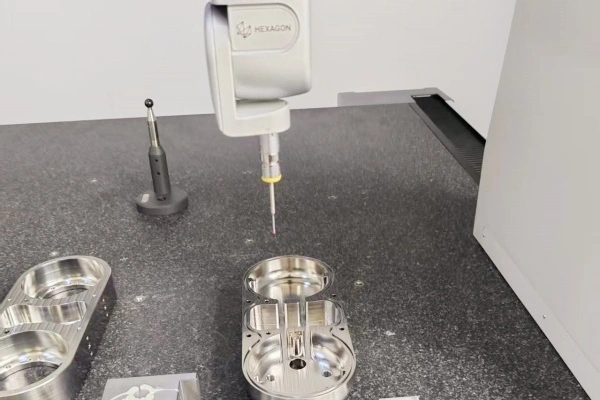
Mounting Hole Diameter Measurement
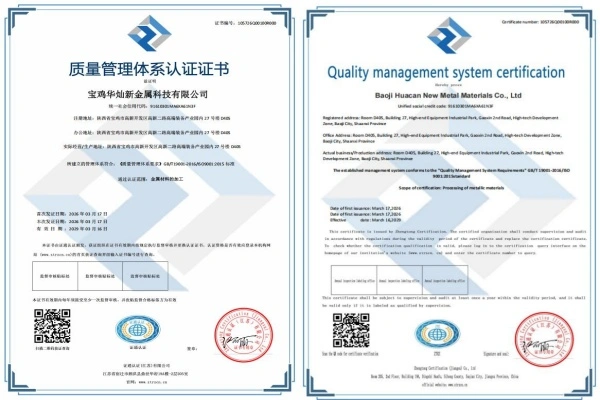
Quality Management System Certification
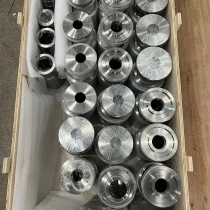
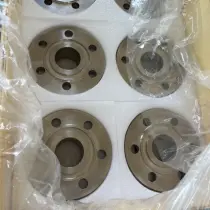
Packaging & Shipping
|
Method
|
Details
|
|
Component Protection
|
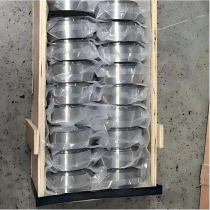
Custom foam inserts for individual spacers
|
|
Moisture Protection
|
Vacuum-sealed bags with desiccants
|
|
Bulk Shipment
|
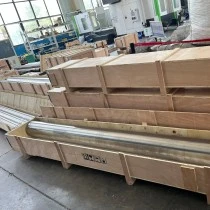
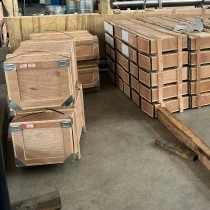
Sturdy wooden crates
|
|
Documentation
|
Inspection reports, material certs, traceability labels
|
|
Air Freight
|
Available for urgent orders
|
|
Sea Freight
|
Cost-effective option for large volume orders
|
FAQ
Q: Are these spacers safe for carbon steerer tubes?
A:Titanium is chemically inert and does not react with carbon fiber composite. Unlike aluminum, it will not galvanically bond to carbon resin even in the presence of sweat or moisture.
Q: How does the weight compare to carbon spacers?
A:CNC skeletonization brings a 10mm S‑PARTS spacer to approximately 3–5g — comparable to thicker-walled carbon spacers — but with far higher compressive strength and impact resistance.
Q: Will the PVD color fade?
A:No. PVD coating bonds at the molecular level, creating hardness and colorfastness that outlasts anodized aluminum finishes. UV exposure does not degrade the color.
Q: Can these be cleaned with harsh solvents?
A:Yes. The products resist degreasers, acetone, and isopropyl alcohol without surface damage — a clear advantage over painted or plastic components.
Q: What customization is available for OEM buyers?
A:You can customize thickness, diameter, PVD color, surface finish, and material grade based on your drawings or 3D models. Prototype and small-batch orders are both supported.
Contact Us
Ready to upgrade your build with S‑PARTS Titanium Alloy Headset Spacers? Contact our team at sherry@hc-titanium.com for pricing, samples, or OEM inquiries.



Learn about our latest products and discounts through SMS or email