- English
- French
- German
- Portuguese
- Spanish
- Russian
- Japanese
- Korean
- Arabic
- Greek
- German
- Turkish
- Italian
- Danish
- Romanian
- Indonesian
- Czech
- Afrikaans
- Swedish
- Polish
- Basque
- Catalan
- Esperanto
- Hindi
- Lao
- Albanian
- Amharic
- Armenian
- Azerbaijani
- Belarusian
- Bengali
- Bosnian
- Bulgarian
- Cebuano
- Chichewa
- Corsican
- Croatian
- Dutch
- Estonian
- Filipino
- Finnish
- Frisian
- Galician
- Georgian
- Gujarati
- Haitian
- Hausa
- Hawaiian
- Hebrew
- Hmong
- Hungarian
- Icelandic
- Igbo
- Javanese
- Kannada
- Kazakh
- Khmer
- Kurdish
- Kyrgyz
- Latin
- Latvian
- Lithuanian
- Luxembou..
- Macedonian
- Malagasy
- Malay
- Malayalam
- Maltese
- Maori
- Marathi
- Mongolian
- Burmese
- Nepali
- Norwegian
- Pashto
- Persian
- Punjabi
- Serbian
- Sesotho
- Sinhala
- Slovak
- Slovenian
- Somali
- Samoan
- Scots Gaelic
- Shona
- Sindhi
- Sundanese
- Swahili
- Tajik
- Tamil
- Telugu
- Thai
- Ukrainian
- Urdu
- Uzbek
- Vietnamese
- Welsh
- Xhosa
- Yiddish
- Yoruba
- Zulu
Gr. 2 titanium flange
Class 150
Flat Face
Corrosion Resistant
Annealed Condition
Marine & Chemical
Industrial Application
OEM Available
Product Introduction
Gr. 2 Titanium Flange for Marine & Chemical Applications — Superior Corrosion Resistance, OEM Available
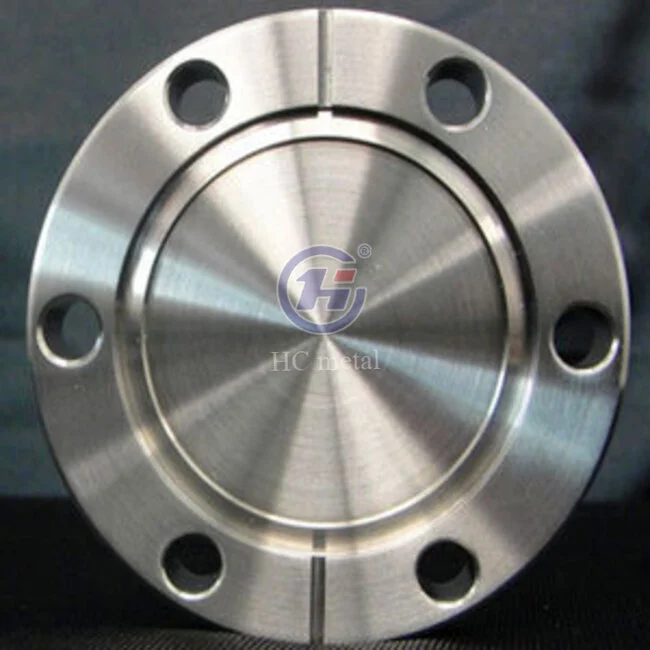
The Gr. 2 titanium flange is a high-performance pipeline connecting component made of commercially pure (CP) titanium that conforms to ASTM B381 Grade F2 (UNS R50400) requirements. This is a 165mm OD, Class 150 flat face flange in annealed condition. This flange has the best corrosion resistance in harsh industrial situations where 316L stainless steel fails. It generates a self-healing TiO2 passive layer that is almost completely resistant to wet chlorine, metal chlorides and saltwater.
 |
 |
 |
Product Features
|
Parameter
|
Specification
|
|---|---|
|
Material Grade
|
Grade 2 Titanium
|
|
Material Standard
|
ASTM B381 Grade F2 / UNS R50400
|
|
Outer Diameter (OD)
|
165 mm
|
|
Pressure Class
|
Class 150
|
|
Face Type
|
Flat Face (FF)
|
|
Heat Treatment
|
Annealed
|
|
Available Grades
|
Grades 2, 5, 7, 9 and 23
|
|
Customization
|
Custom Dimensions and Specifications Available
|
Product Application
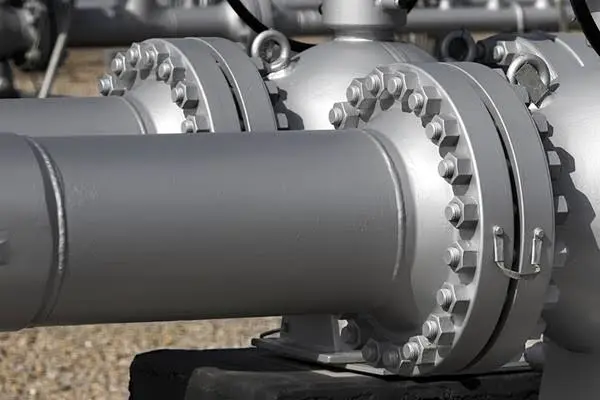
Chlor-Alkali & Bleaching Plants
01
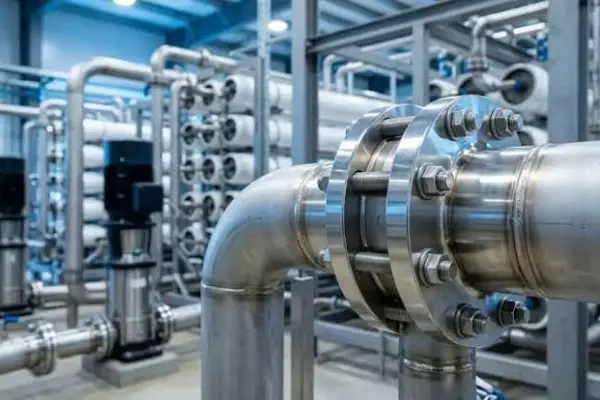
Marine Desalination
02
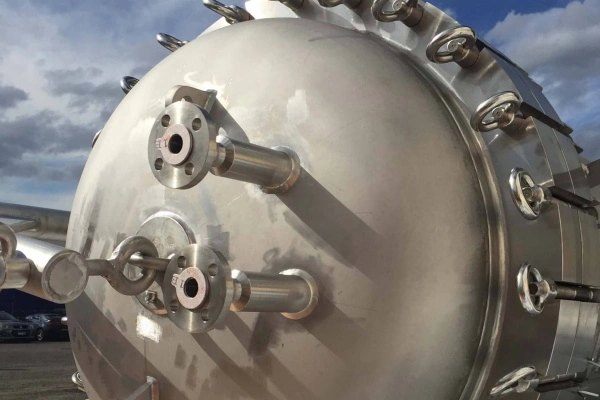
Power Generation Condensers
03
Chlor-Alkali & Bleaching Plants: These flanges are used to connect pipework handling moist chlorine gas and hypochlorites. Grade 2 titanium is resistant to strong oxidising conditions which swiftly destroy stainless steel.
Marine Desalination & Offshore Platforms: Used in reverse osmosis systems and fire suppression lines, they withstand stagnant seawater and high-velocity brine — often lasting the platform's full lifecycle with zero corrosion allowance.
Power Generation Condensers: In nuclear and fossil fuel plants using seawater cooling, gr. 2 titanium flange prevents erosion-corrosion from silt entrainment and high flow rates, maintaining uninterrupted heat transfer efficiency.
Why Choose Us
Baoji Huacan has more than 10 years of titanium machining expertise, more than 40 high-precision CNC machine tools, and an annual output capacity of over 1,000 tonnes. We have a 4,000-ton hydraulic press to support our forging capacity that provides constant grain structure and dimensional correctness.
We serve 100+ international clients across marine, chemical, and energy sectors. Every flange is manufactured under ISO 9001-certified quality procedures — from raw material verification to final documentation.
You get full OEM/ODM support, drawing-based customization, and flexible production from prototype to mass batch.
 |
 |
 |
 |
 |
 |
 |
 |
Manufacturing Process
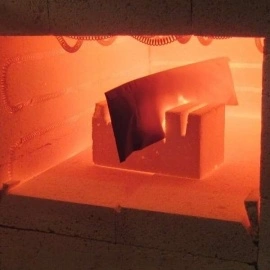
Each flange is manufactured from high purity titanium billets with certified chemical composition. The near-net form is hot forged on our 4,000 tonne hydraulic press . The part is then annealed at ~700°C to remove internal tensions and recover the ductility.
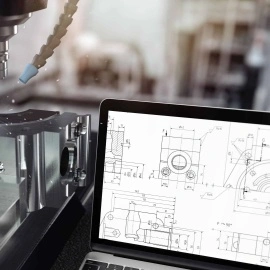
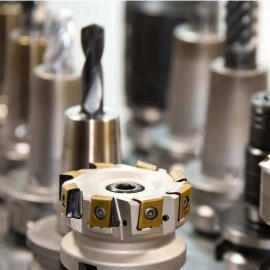
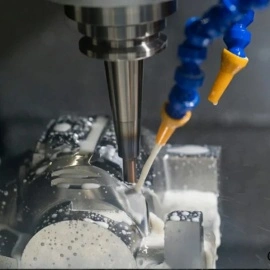
Then, precision CNC machining is used to produce precise dimensional tolerances on sealing faces, bolt holes, and OD/ID profiles. We have more than 40 CNC machining centers and gantry systems for thread machining and complicated feature processing.
All forging procedures are performed to ASTM, AMS and DIN standards to provide uniform grain refinement and mechanical integrity.
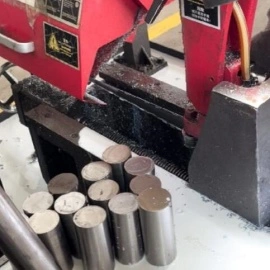
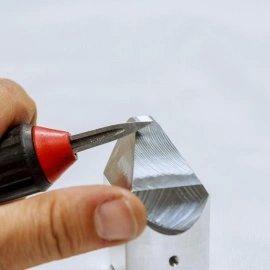
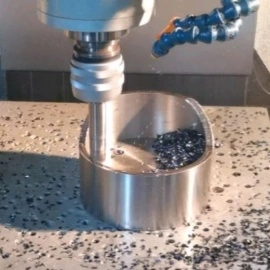
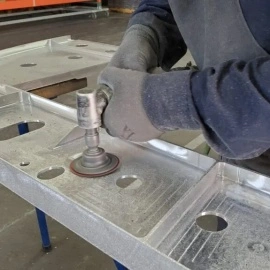
Manufacturing Capability
|
Capability
|
Details
|
|
CNC Equipment
|
40+ lathes, machining centers, gantry systems
|
|
Forging Press
|
Up to 4,000-ton hydraulic press
|
|
Annual Forging Capacity
|
3,000+ tons
|
|
Annual Production Capacity
|
1,000+ tons
|
|
Experience
|
10+ years titanium machining
|
 |
 |
 |
 |
 |
| melting | melting | forging | forging | rolling |
Quality Control

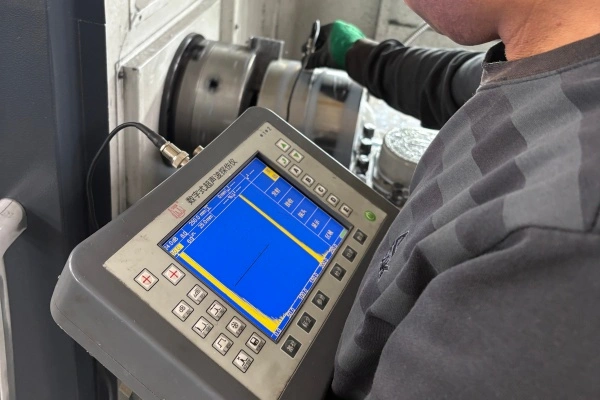
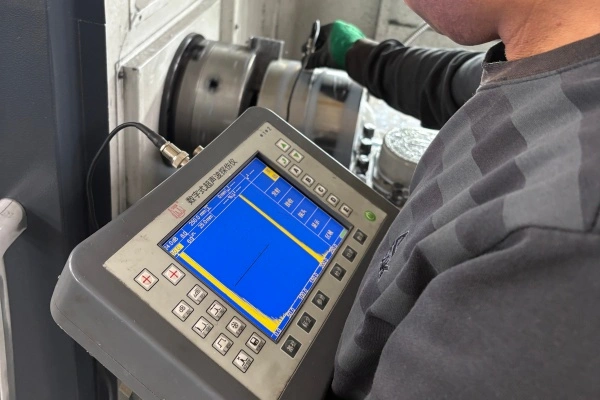
Every incoming titanium alloy undergoes spectrometer analysis verifying chemical composition. In-process dimensional checks occur at 5-stage intervals. Ultrasonic testing detects subsurface defects non-destructively.
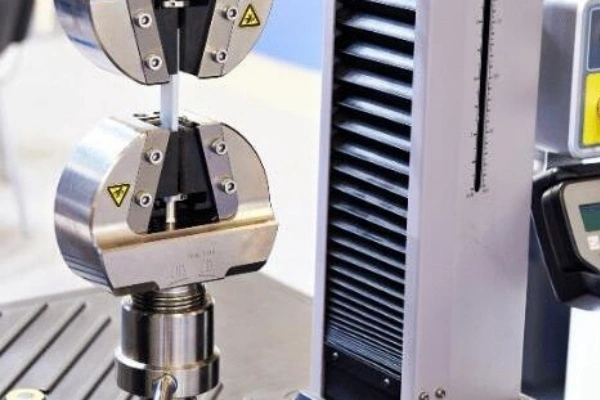
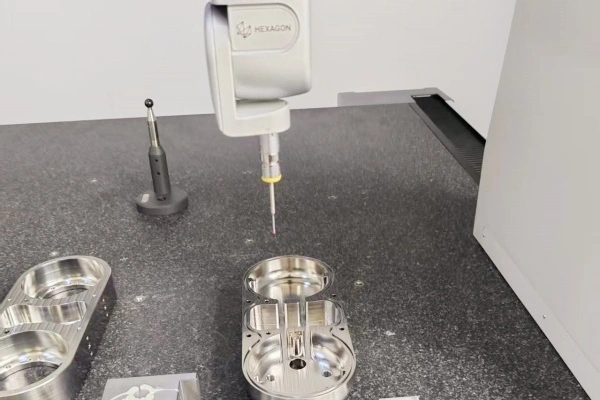
Coordinate measuring machines verify thread pitch accuracy to ISO standards. Tensile testing confirms mechanical properties meet specification minimums. Salt spray chambers validate corrosion resistance claims through 720-hour exposure cycles.

Surface roughness measurements ensure consistent finish quality. Final inspection includes torque testing and visual examination under magnification. Complete documentation packages accompany each shipment with material certificates.
Quality Control
· Raw material verification: Spectrometer-based chemical composition analysis + supplier certification checks
· In-process monitoring: Dimensional checks at each forging and machining stage
· Non-destructive testing: Ultrasonic testing for internal flaws
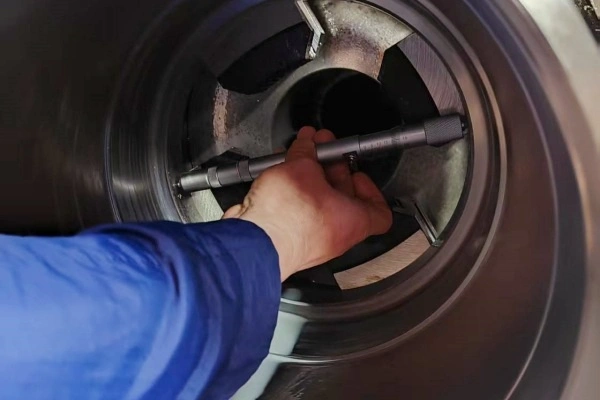
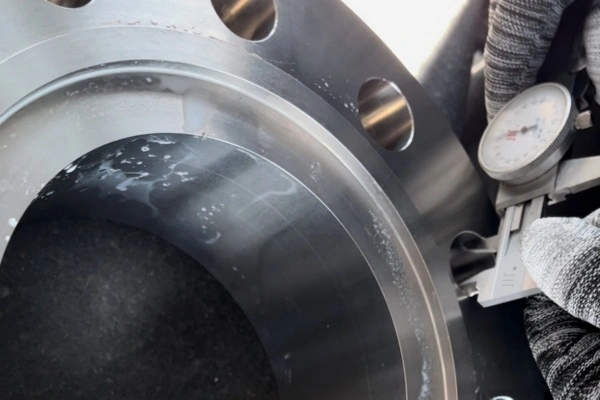
· Final dimensional inspection: CMM, calipers, depth and height gauges
· Mechanical testing: Tensile strength, yield strength, hardness per ASTM/AMS/DIN
· Surface inspection: Surface roughness testers + visual defect checks
· Documentation: Full MTR, inspection reports, and material traceability records per batch
Certifications
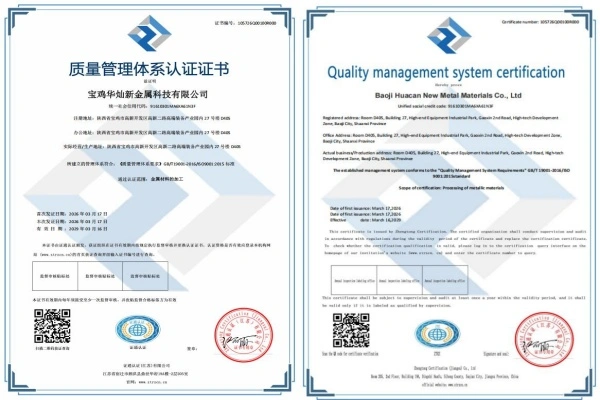
· ISO 9001 Quality Management System Certified
· Production compliant with ASTM B381, ASME B16.5, AMS, and DIN standards
· Material Test Reports (MTR) and Certificates of Conformance available per order
Mechanical Properties Testing
Inner Diameter Measurement
Ultrasonic Testing
CMM Dimensional
Mounting Hole Diameter Measurement
Quality Management System Certification
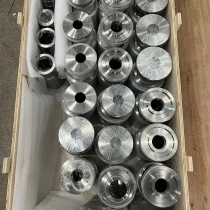
Packaging & Shipping
|
Method
|
Details
|
|
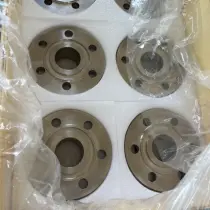
Component Protection
|
Custom foam inserts for individual flanges
|
|
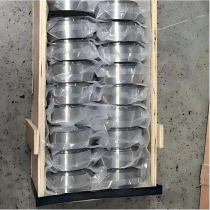
Moisture Protection
|
Vacuum-sealed bags with desiccants
|
|
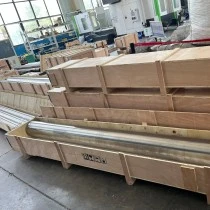
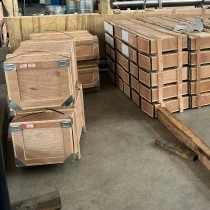
Bulk Shipment
|
Sturdy wooden crates
|
|
Documentation
|
Detailed labeling, MTR, packing list, COC
|
|
Shipping Options
|
Air freight (urgent) / Sea freight (bulk)
|
FAQ
Q: Can I weld the product directly to a stainless steel pipe?
A: No. Welding titanium to steel results in brittle intermetallic phases that shatter instantly . Use bolted mechanical connection or explosive bonded transition joint.
Q: What is the max operating temperature?
A: ASME B31.3 normally restricts continuous usage to around 315°C (600°F). The creep strength diminishes above this temperature and the danger of oxygen embrittlement rises.
Q: Does the flange require heat treatment after forging?
A:Yes. Annealing at approximately 700°C is standard practice to relieve forging stresses and restore ductility. This is documented in the Mill Test Report.
Q: How does Grade 2 compare to Grade 5 for flanges?
A:Grade 2 is commercially pure (99% Ti), prioritized for corrosion resistance and weldability. Grade 5 offers higher strength but lower corrosion resistance in certain media. For process industry applications, Grade 2 titanium flange remains the standard choice.
Contact Us
Get a custom quote for your gr. 2 titanium flange project. Email us at sherry@hc-titanium.com — fast response guaranteed.
_1755132370680.jpg)
_1755758373045.jpg)



Learn about our latest products and discounts through SMS or email