- English
- French
- German
- Portuguese
- Spanish
- Russian
- Japanese
- Korean
- Arabic
- Greek
- German
- Turkish
- Italian
- Danish
- Romanian
- Indonesian
- Czech
- Afrikaans
- Swedish
- Polish
- Basque
- Catalan
- Esperanto
- Hindi
- Lao
- Albanian
- Amharic
- Armenian
- Azerbaijani
- Belarusian
- Bengali
- Bosnian
- Bulgarian
- Cebuano
- Chichewa
- Corsican
- Croatian
- Dutch
- Estonian
- Filipino
- Finnish
- Frisian
- Galician
- Georgian
- Gujarati
- Haitian
- Hausa
- Hawaiian
- Hebrew
- Hmong
- Hungarian
- Icelandic
- Igbo
- Javanese
- Kannada
- Kazakh
- Khmer
- Kurdish
- Kyrgyz
- Latin
- Latvian
- Lithuanian
- Luxembou..
- Macedonian
- Malagasy
- Malay
- Malayalam
- Maltese
- Maori
- Marathi
- Mongolian
- Burmese
- Nepali
- Norwegian
- Pashto
- Persian
- Punjabi
- Serbian
- Sesotho
- Sinhala
- Slovak
- Slovenian
- Somali
- Samoan
- Scots Gaelic
- Shona
- Sindhi
- Sundanese
- Swahili
- Tajik
- Tamil
- Telugu
- Thai
- Ukrainian
- Urdu
- Uzbek
- Vietnamese
- Welsh
- Xhosa
- Yiddish
- Yoruba
- Zulu
Processing Titanium Alloy Automobile Modification Parts
Material: Gr5 titanium alloy
Machining: CNC, laser cutting, drilling
Products: Lug bolts, nuts, exhaust tips
Tolerance: High precision ±0.01mm
Surface: Burnt blue, anodized, brushed
Weight Reduction: Up to 40% over steel
Custom Design: Supported per drawing
Product Introduction
Processing Titanium Alloy Automobile Modification Parts represents the highest standard in automotive lightweight engineering. Fabricated from Ti-6Al-4V titanium alloy of Grade 5, these components weigh up to 40 percent less than their steel equivalents while retaining full structural strength. Their density is just 4.43 g/cm³ and tensile strength 895–1000 MPa, which gives them both better strength and durability than traditional materials. Baoji Huacan can be customized according to client designs, and the precise tolerance is controlled within ±0.01mm. Surface choices include anodized, brushed, and burned blue finishes.
 |
 |
 |
Product Features
|
| |
|---|---|
|
Parameter
|
Details
|
|
Material Grades
|
Grade 2, Grade 5 (Ti-6Al-4V), Grade 7, Grade 9, Grade 23; other grades available upon request
|
|
Material Standards
|
ASTM, AMS, ASME, and DIN standards, as applicable
|
|
Density
|
Approx. 4.43 g/cm³ (Grade 5)
|
|
Tensile Strength (UTS)
|
895–1,000 MPa (Grade 5, depending on material condition)
|
|
Machining Tolerance
|
Up to ±0.01 mm, depending on part geometry and machining requirements
|
|
Weight Reduction
|
Potentially up to 40% lighter than comparable steel components, depending on design
|
|
Surface Finishes
|
Burnt blue, anodized, brushed, polished, sandblasted, and pickled
|
|
Machining Processes
|
CNC turning, milling, drilling, 5-axis CNC machining, and thread machining
|
|
Product Types
|
Titanium lug bolts, lug nuts, exhaust tips, brackets, connectors, and housings
|
|
Customization
|
Custom manufacturing based on 2D drawings, 3D CAD models, or physical samples
|

Product Application
Solutions One

01
Solutions One

02
Solutions One

03
Solutions One

04
Wheels and Hubs: Machined titanium lug bolts and nuts minimize spinning and unsprung mass for enhanced suspension responsiveness and acceleration. Rust-free threads means quicker, safer wheel swaps at the track.
Internal Engine Components: Lightweight valve retainers and connecting rods minimize reciprocating mass, reducing valve float at high RPM and enabling engines to rev more easily and effectively.
Motorcycle and Racing Upgrades: Processing Titanium Alloy Automobile Modification Parts are widely used in motorcycle exhaust systems, frame brackets, and performance fasteners where weight savings and heat resistance are essential.
Factory Show
Why Choose Our Titanium Auto Modification Components
Titanium alloy provides a unique combination of properties that are not found in aluminum and stainless steel in high performance automotive environments.
Grade 5 (Ti-6Al-4V) has a tensile strength up to 1000 MPa, and is about 45% lighter than steel, while being much stronger than 6061-T6 aluminum. That means performance in your automobile without compromising safety or structural dependability.
The material also works dependably in high heat zones up to 400°C-500°C making it great for exhaust systems where aluminum would fail and steel would decay over time. Its innate corrosion resistance negates the rust replacement cycle associated with steel components.
distinctive burned blue esthetic (controlled anodizing or heat treatment) for superior visual appeal without affecting material integrity.
 |
 |
 |
 |
 |
 |
 |
 |
Manufacturing Process
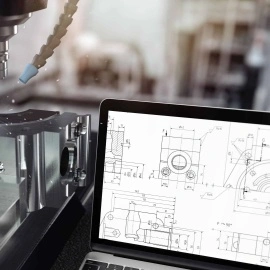
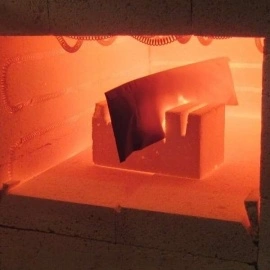
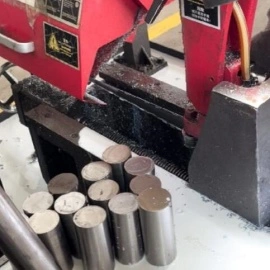
We begin with Grade 5 or other titanium alloy billets that are supplied and tested to ASTM B348 and AMS 4928. Before any machining is done, the chemical composition is verified using Optical Emission Spectroscopy.
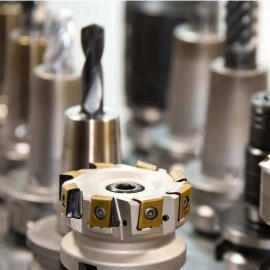
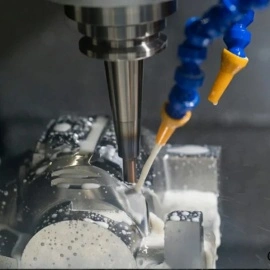
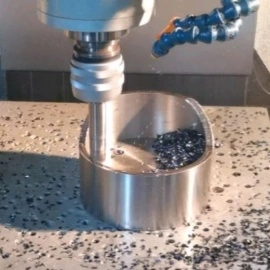
Depending on the shape of the components, parts are machined by CNC turning, multi-axis milling, drilling or precise thread machining. Titanium has a limited heat conductivity therefore regulated cutting rates, specialized carbide tooling and high pressure coolant systems are required to avoid tool wear and surface damage.
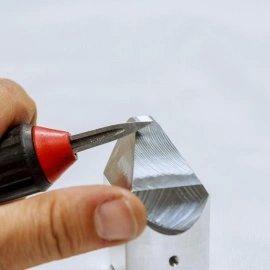
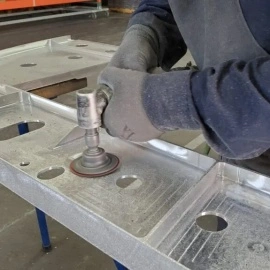
Secondary processes such as deburring, surface finishing and anodizing are carried out to client specification. Each item has a documented path through manufacture and is fully traceable from raw material through to completed component.
Manufacturing Capability
Baoji Huacan operates 40+ precision CNC lathes, machining centers, and gantry systems, with over 10 years of titanium machining experience. Annual production capacity exceeds 1,000 tons of finished components, supported by 1,000+ tons forging capacity and 5,000+ tons melting capacity through strategic partner furnaces.
This integrated capability — from ingot to finished part — means tighter quality control, shorter lead times, and consistent material traceability across every batch.
 |
 |
 |
 |
 |
| melting | melting | forging | forging | rolling |
Quality Control
Each batch of titanium auto parts follows a structured multi-stage inspection protocol:
· Chemical verification via OES spectrometer, confirming Ti-6Al-4V composition against ASTM B348
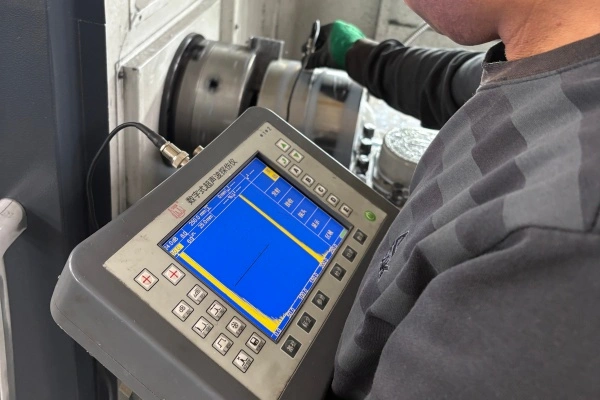
· Ultrasonic NDT to detect internal voids, cracks, or metallurgical inclusions before delivery
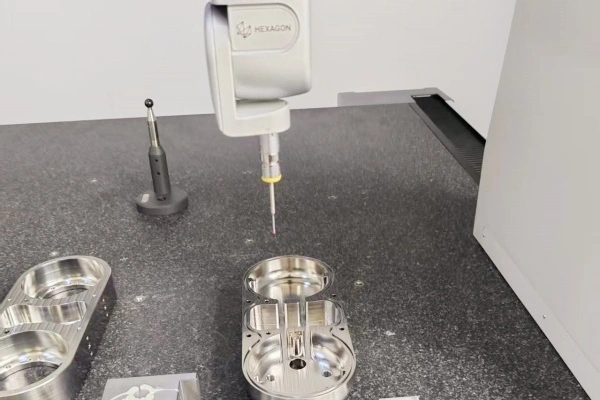
· CMM dimensional inspection with tolerance verification to ±0.005mm for critical fit features
· Rockwell hardness testing (typically 30–36 HRC for Grade 5) and Ra surface roughness checks
· Visual and surface inspection for defects, burrs, and finish quality before packaging
Full inspection reports, material certificates, and traceability documentation are provided with every shipment.
Certifications
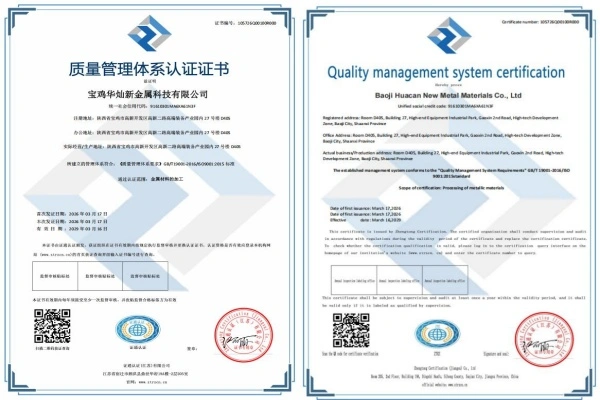
Baoji Huacan New Metal Materials Co., Ltd. ISO 9001 certified quality management system throughout the whole manufacturing flow from receipt of raw material to final inspection and shipping. All titanium materials and processes meet international standards ASTM, AMS, ASME and DIN.
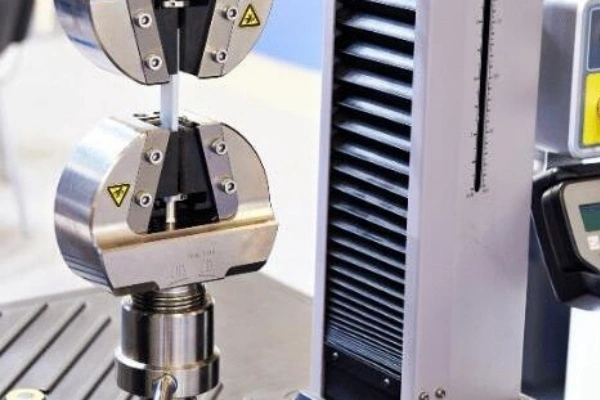
Mechanical Properties Testing
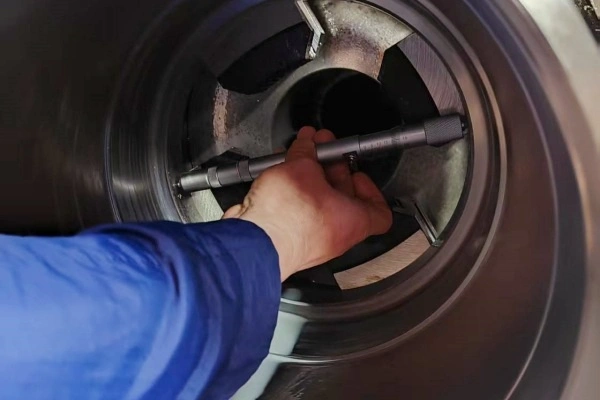
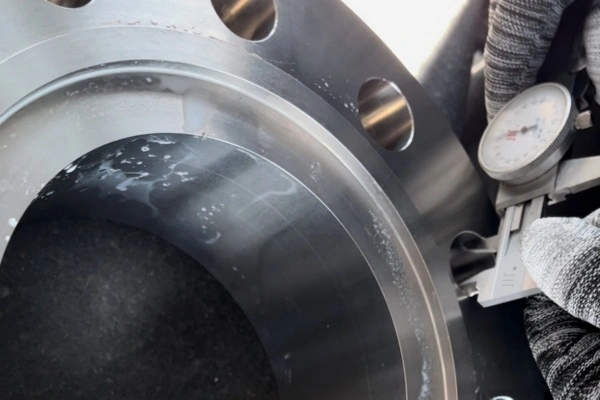
Inner Diameter Measurement
Ultrasonic Testing
CMM Dimensional
Mounting Hole Diameter Measurement
Quality Management System Certification
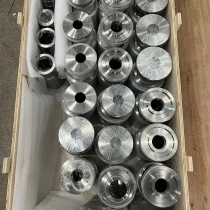
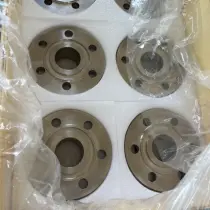
Packaging & Shipping
|
Method
|
Description
|
|
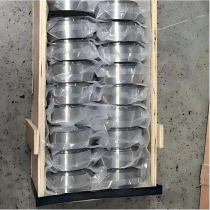
Component Protection
|
Custom foam inserts for precision parts
|
|
Moisture Control
|
Vacuum-sealed bags with desiccants
|
|
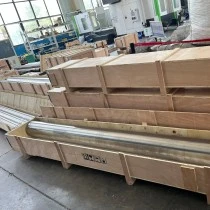
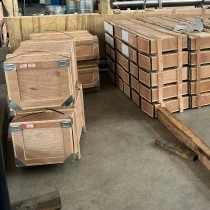
Bulk Shipment
|
Sturdy wooden crates
|
|
Documentation
|
Detailed labels, inspection records, material certificates
|
|
Shipping Options
|
Air freight (urgent orders) / Sea freight (bulk, cost-effective)
|
FAQ
Q: Why does titanium machining cost more than stainless steel?
A:Because titanium conducts heat poorly, the heat stays in the cutting tool instead of the chip, which causes the tool to wear out quicker. Slower speeds, special carbide tools and high pressure coolant all contribute to processing time and cost – but the material performance justifies the expense for performance applications.
Q: How can galling be avoided in titanium fasteners?
A: Titanium threads may be cold welded under friction. Threads of fasteners are professionally processed with PVD or DLC coatings. They also propose installation using anti-seize agents on parts that are regularly removed.
Q: Does the burnt blue finish affect part strength?
A:When achieved through controlled anodizing or laser treatment, it creates a protective oxide layer without affecting the substrate. Uncontrolled torch heating can cause local embrittlement, which is why professional processing with temperature control is critical.
Q: What is the service life of a titanium exhaust versus stainless steel?
A:A titanium exhaust is virtually immune to corrosion from water, salt, and heat cycling — often outlasting the vehicle itself. Standard 304 stainless steel can corrode at welds under repeated thermal stress.
Q: Can you produce products based on my own drawings?
A:Yes. All components are manufactured according to customer-supplied 2D drawings or 3D models. Prototype and small-batch orders are supported for design validation before full production.
Contact Us
Ready to upgrade with precision titanium components like Processing Titanium Alloy Automobile Modification Parts? Contact our team at sherry@hc-titanium.com to discuss your requirements.

_1754554142881.jpg)



Learn about our latest products and discounts through SMS or email