- English
- French
- German
- Portuguese
- Spanish
- Russian
- Japanese
- Korean
- Arabic
- Greek
- German
- Turkish
- Italian
- Danish
- Romanian
- Indonesian
- Czech
- Afrikaans
- Swedish
- Polish
- Basque
- Catalan
- Esperanto
- Hindi
- Lao
- Albanian
- Amharic
- Armenian
- Azerbaijani
- Belarusian
- Bengali
- Bosnian
- Bulgarian
- Cebuano
- Chichewa
- Corsican
- Croatian
- Dutch
- Estonian
- Filipino
- Finnish
- Frisian
- Galician
- Georgian
- Gujarati
- Haitian
- Hausa
- Hawaiian
- Hebrew
- Hmong
- Hungarian
- Icelandic
- Igbo
- Javanese
- Kannada
- Kazakh
- Khmer
- Kurdish
- Kyrgyz
- Latin
- Latvian
- Lithuanian
- Luxembou..
- Macedonian
- Malagasy
- Malay
- Malayalam
- Maltese
- Maori
- Marathi
- Mongolian
- Burmese
- Nepali
- Norwegian
- Pashto
- Persian
- Punjabi
- Serbian
- Sesotho
- Sinhala
- Slovak
- Slovenian
- Somali
- Samoan
- Scots Gaelic
- Shona
- Sindhi
- Sundanese
- Swahili
- Tajik
- Tamil
- Telugu
- Thai
- Ukrainian
- Urdu
- Uzbek
- Vietnamese
- Welsh
- Xhosa
- Yiddish
- Yoruba
- Zulu
Why CNC Machining Delivers Superior Titanium Screws?
To make precision fasteners out of titanium, you need to use controlled production methods that keep the material's integrity and meet certain size tolerances. Titanium screw machined parts can be produced repeatedly using CNC cutting, which offers precise shape, consistent processing, and flexible manufacturing options for tough industrial uses.
Precision Engineering Through Advanced CNC Technology
Unparalleled Dimensional Accuracy and Consistency
CNC machining technology enables the production of titanium screw machined parts with specified tolerances that can reach ±0.02mm on suitable features, depending on geometry, material condition, and inspection requirements. Computer-controlled machining reduces variability associated with manual operations, helping each screw conform to approved specifications across prototypes and production batches. Digital control systems maintain programmed feed rates, cutting speeds, and tool positioning throughout the machining cycle.
This precision is important for aerospace applications where dimensional deviations can affect assembly and component fit. Grade 5 titanium screws with diameters ranging from 1mm to 50mm can be manufactured with controlled concentricity and thread dimensions according to engineering requirements, supporting automated assembly processes in electronics and automotive production environments.
Complex Geometry Capabilities for Custom Applications
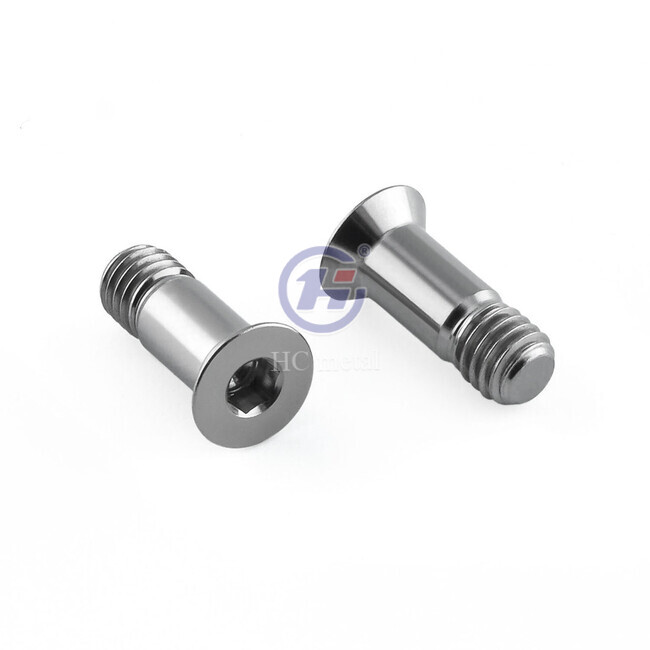
Traditional manufacturing methods may require additional tooling for complex geometries, custom thread profiles, and specialized head configurations. CNC turning and threading operations can produce titanium screw machined parts featuring hex heads, button heads, and countersunk configurations according to specified design requirements. Multi-axis machining centers can produce Metric, UNC, and UNF threads per customer drawings without requiring dedicated tooling for every custom design.
This flexibility allows engineers to optimize fastener designs for weight reduction, stress distribution, or assembly efficiency. Whether producing NPT-threaded components for pipe connections or custom thread profiles for proprietary assemblies, CNC machining can produce components according to engineering requirements while maintaining the specified properties of Grade 2 and Grade 5 titanium alloys.
Repeatability Across Production Batches
Manufacturing consistency across multiple production runs can be challenging with manual or semi-automated processes, particularly when machining difficult materials such as titanium. CNC machining provides repeatable production of titanium screw machined parts when the same approved program, tooling, setup, and process controls are maintained. This repeatability is valuable for maintenance, spare parts inventory, and long-term product support in industries such as medical devices and aerospace where component interchangeability is important.
Digital CNC programs can be archived and recalled for future production, reducing variability associated with manual programming and setup. Mechanical properties such as tensile strength and hardness are primarily determined by alloy grade, material condition, and applicable specifications rather than machining parameters, while controlled machining helps maintain dimensional and surface requirements across production batches.

Superior Material Preservation and Performance
Minimal Material Stress and Deformation
Titanium's metallurgical properties require careful handling during machining to maintain its strength-to-weight ratio and corrosion resistance. CNC machining uses controlled cutting parameters to manage heat generation, tool loading, and mechanical stress, reducing the risk of undesirable surface or dimensional effects. Unlike forming processes that alter material through plastic deformation, CNC turning removes material from a prepared workpiece while retaining the established bulk microstructure of titanium custom parts.
Advanced coolant systems and optimized tool paths help control machining temperatures and tool wear. These practices are important when producing components for applications with demanding material requirements, although final performance depends on the titanium grade, material condition, machining process, and applicable specifications. Titanium also naturally reforms a protective oxide layer on exposed surfaces, supporting its inherent corrosion resistance.
Enhanced Surface Finish Options
Surface quality can affect fastener performance in critical applications, including fatigue behavior, corrosion resistance, friction, and cleanability. CNC machining centers equipped with appropriate tooling can produce titanium screw machined parts with controlled surface finishes, from as-machined conditions to polished surfaces for applications requiring lower roughness. Manufacturers can specify surface roughness according to drawings or service requirements.
Polished finishes can reduce surface roughness and support easier cleaning in pharmaceutical and food processing equipment. Anodized surfaces can provide color-coding options for component identification and may modify surface characteristics depending on the process used. Additional finishing operations may be required after machining, particularly for applications involving special coatings, polishing, or other surface treatments. Dimensional requirements for threaded fasteners should be verified after all specified finishing processes.
Preservation of Material Integrity
Titanium alloys derive their properties from controlled chemical composition, processing history, and microstructure. CNC machining removes material without the bulk thermal exposure associated with hot forming or welding, helping preserve the established material condition when appropriate machining practices are followed. The process does not intentionally change the chemical composition or bulk microstructure established during previous manufacturing stages.
Material quality is controlled through appropriate raw material specifications, certificates, and processing records rather than machining alone. Grade 2 and Grade 5 titanium screws can retain their specified mechanical properties when correctly machined and processed according to applicable requirements. Compliance with standards such as ASTM B348 or AMS 4928 should refer to the relevant titanium material specification and product form, while finished fasteners should also meet applicable drawing and customer requirements.

Optimized Production Efficiency and Quality Control
Reduced Lead Times Through Automated Processing
Modern manufacturing requires efficient response to customer requirements while maintaining quality and dimensional control. CNC machining can reduce setup and tooling requirements for customized titanium screw machined parts, particularly for prototypes and low-to-medium production volumes. Once a validated program and setup are established, machining centers can repeat the process with limited operator intervention, subject to production planning and monitoring.
Complex operations such as turning and threading can sometimes be completed within a single setup for suitable geometries, reducing handling and setup-related variation. Additional operations such as grinding, polishing, heat treatment, or surface treatment may still be required depending on the application. This flexibility is valuable for aerospace, racing, chemical processing, and other industries with demanding specifications and project schedules.
Integrated Quality Verification Systems
Quality assurance is important when manufacturing fasteners for aerospace, medical, marine, and other demanding applications. Modern CNC equipment may incorporate in-process measurement systems that monitor selected dimensions during production, helping identify deviations before final inspection. Coordinate measuring systems can verify critical features such as thread dimensions, diameters, and head geometry against approved tolerances.
In-process verification can reduce the risk of non-conforming parts, but it does not replace final inspection and material verification. Production records can support traceability from raw material identification through machining and final inspection when required. Documentation may include material certificates, dimensional inspection reports, and customer-specific quality records, supporting ISO 9001 quality management practices and applicable industry requirements.

Cost-Effectiveness for Custom and Standard Production
While CNC machining requires investment in equipment and tooling, it can be cost-effective for suitable custom and standard production volumes. Reduced reliance on dedicated tooling makes many short production runs practical, allowing engineers to develop customized fastener designs without extensive tooling investment. Titanium screw machined parts can be produced from prototypes to larger production batches, with pricing determined by material cost, geometry, machining time, finishing, inspection, and quantity.
The flexibility to switch between different part numbers can reduce changeover requirements and support inventory planning. For higher-volume applications in electronics or automotive industries, repeatable CNC production can help maintain consistent dimensional quality. Efficient material utilization is also important when machining high-value titanium alloys such as Grade 5 Ti6Al4V or Grade 23 Ti6Al4V ELI for suitable medical applications.

Conclusion
CNC machining is a flexible manufacturing method for producing titanium screws, offering controlled dimensions, repeatable processing, and design flexibility. The ability to achieve tolerances such as ±0.02mm on specified features depends on component geometry, machining conditions, material state, and inspection requirements. Through controlled processes, quality verification, and appropriate production planning, CNC machining can provide practical solutions for custom and standard titanium screw machined parts used in demanding aerospace, medical, and industrial applications.
Baoji Huacan New Metal Materials Co., Ltd., a China titanium screw machined parts manufacturer, combines CNC machining capabilities with titanium processing expertise. Our facility in China's "Titanium Valley" features over 40 CNC machining centers and ISO 9001 certified quality systems. We serve global B2B customers seeking titanium screw machined parts for aerospace, medical, racing, and industrial applications.
Our technical team supports projects from material selection through final delivery, with production based on customer drawings and technical specifications. Depending on project requirements, available services can include CNC machining, finishing, dimensional inspection, material documentation, and traceability. Contact our team at Joy@hc-titanium.com or Sherry@hc-titanium.com to discuss your titanium fastener requirements and request a quotation.

FAQ
Q: What tolerances can CNC machining achieve for titanium screws?
A: CNC machining can achieve tolerances of ±0.02mm on specified features of titanium screw machined parts, depending on geometry, material condition, machining process, and inspection requirements. Final tolerances should be confirmed against the approved engineering drawing.
Q: Which titanium grades are suitable for CNC machined screws?
A: Grade 2 titanium provides good corrosion resistance for many general applications, while Grade 5 (Ti6Al4V) offers higher mechanical strength for demanding applications. Actual tensile strength and hardness depend on material condition and applicable specifications.
Q: Can CNC machining produce custom thread types?
A: Yes, CNC turning and threading operations can produce Metric, UNC, UNF, NPT, and other thread types according to customer drawings and applicable specifications. Custom thread designs can often be produced without dedicated tooling.
Q: What head styles are available for CNC machined titanium screws?
A: CNC machining can produce various head configurations, including hex, button, and countersunk types, according to assembly and design requirements. Available dimensions depend on the component geometry, diameter, length, thread specification, and customer drawing.
Q: How does surface finishing affect titanium screw performance?
A: CNC processes can produce as-machined or polished surfaces, while anodizing and other treatments may be applied as specified. Polishing can reduce surface roughness and improve cleanability, while anodizing can provide color-coding and modify surface characteristics depending on the process.

References
1. Ezugwu EO, Wang ZM. Titanium Alloys and Their Machinability: A Review. Journal of Materials Processing Technology. 1997.
2. Rahman M, Wang ZG, Wong YS. A Review on High-Speed Machining of Titanium Alloys. JSME International Journal Series C. 2006.
3. Davim JP. Machining of Titanium Alloys. Springer-Verlag Berlin Heidelberg. 2014.
4. Arrazola PJ, Garay A, Iriarte LM, Armendia M, Marya S, Le Maître F. Machinability of Titanium Alloys. Journal of Manufacturing Science and Engineering. 2009.
5. Che-Haron CH, Jawaid A. The Effect of Machining on Surface Integrity of Titanium Alloy Ti-6Al-4V. Journal of Materials Processing Technology. 2005.
_1754640342962.jpg)


Learn about our latest products and discounts through SMS or email