Comparing Common Pure Titanium Grades (1, 2, 7, 12)
When selecting a titanium alloy tube plate, it's essential to consider the various pure titanium grades available. Each grade offers unique properties that make it suitable for specific applications:
Grade 1 Titanium
Grade 1 titanium is the most bendable and mildest of the unalloyed grades. Its great formability makes it perfect for applications requiring profound drawing or complex shaping operations. In any case, its lower quality compared to other grades limits its utilize in high-stress situations. Review 1 titanium amalgam tube plates are regularly utilized in low-temperature, non-critical applications where erosion resistance is the essential concern.
Grade 2 Titanium
Grade 2 titanium is the most broadly utilized unalloyed review for Titanium Alloy Tube Plate. It offers an fabulous adjust of quality, ductility, and erosion resistance. This review is regularly chosen for chemical preparing hardware, warm exchangers, and marine applications due to its predominant resistance to saltwater erosion. Review 2 titanium combination tube plates give great weldability and formability, making them flexible for different fabricating processes.
Grade 7 Titanium
Grade 7 titanium is comparable to Review 2 but with the expansion of little sums of palladium. This alteration essentially upgrades its erosion resistance, especially in decreasing corrosive situations. Titanium combination tube plates made from Review 7 are fabulous choices for chemical handling gear uncovered to profoundly destructive media. Be that as it may, the expansion of palladium increments the fetched, making it less conservative for applications where Review 2 would suffice.
Grade 12 Titanium
Grade 12 titanium is an combination containing little sums of molybdenum and nickel. This composition comes about in progressed quality and erosion resistance compared to immaculate titanium grades. Titanium amalgam tube plates made from Review 12 are especially well-suited for applications including diminishing acids, such as hydrochloric or sulfuric corrosive. Its improved properties make it an fabulous choice for chemical preparing hardware and warm exchangers in forceful environments.
When selecting among these unadulterated titanium grades for your tube sheet application, consider variables such as the working environment, required quality, and budget imperatives. Each review offers a one of a kind set of properties that can be custom-made to particular needs in titanium amalgam tube plate design.

High-Strength Alloys: When Ti-6Al-4V or Beta Alloys are Needed?
While immaculate titanium grades offer great erosion resistance, a few applications require higher quality materials. In such cases, high-strength titanium combinations like Ti-6Al-4V or beta amalgams may be the best choice for your titanium combination tube plate:
Ti-6Al-4V (Grade 5)
Ti-6Al-4V is the most broadly utilized titanium amalgam, bookkeeping for approximately 50% of all titanium amalgam utilization. This alpha-beta combination offers an extraordinary combination of quality, light weight, and erosion resistance. Titanium amalgam tube plates made from Ti-6Al-4V are frequently utilized in aviation applications, where tall strength-to-weight proportion is vital. A few key properties include:
- Excellent strength-to-weight ratio
- Good fatigue and fracture resistance
- Moderate formability and machinability
- Suitable for high-temperature applications up to 400°C (752°F)
When considering Ti-6Al-4V for your Titanium Flange tube plate, keep in mind that it may be overkill for applications where pure titanium grades would suffice. The higher cost and more challenging machinability of Ti-6Al-4V should be weighed against the performance benefits for your specific application.
Beta Titanium Alloys
Beta titanium alloys offer even higher strength than Ti-6Al-4V, along with excellent formability and heat treatability. These alloys contain elements such as molybdenum, vanadium, and chromium, which stabilize the beta phase of titanium. Some common beta alloys used in titanium alloy tube plates include:
- Ti-15V-3Cr-3Al-3Sn
- Ti-3Al-8V-6Cr-4Mo-4Zr (Beta C)
- Ti-15Mo-5Zr-3Al
Beta titanium alloys are particularly useful for titanium alloy tube plates in applications requiring high strength, good fatigue resistance, and excellent formability. They are often used in aerospace components, high-performance automotive parts, and specialized chemical processing equipment. However, beta alloys are generally more expensive and may have lower corrosion resistance compared to alpha or alpha-beta alloys.
When selecting a high-strength titanium alloy for your tube sheet application, consider the following factors:
- Required strength and stiffness
- Operating temperature range
- Corrosion resistance needs
- Formability and machinability requirements
- Cost constraints
By carefully evaluating these factors, you can determine whether Ti-6Al-4V or a beta titanium alloy is the best choice for your titanium alloy tube plate design. Remember that while these high-strength alloys offer superior mechanical properties, they may not always be necessary for less demanding applications where pure titanium grades can provide adequate performance at a lower cost.

Joint Performance: Matching Grade to Attachment Method
The performance of joints in titanium alloy tube plates is critical for the overall integrity and reliability of the system. Different attachment methods require specific considerations when selecting the appropriate titanium grade. Let's explore how to match titanium grades to common joining techniques:
Welding Considerations
Welding is a common method for joining titanium alloy tube plates to other components. When selecting a grade for welded applications, consider the following:
- Weldability: Pure titanium grades (1, 2, 7, 12) are generally easier to weld than alloyed grades.
- Strength: If high joint strength is required, Ti-6Al-4V or beta alloys may be preferred.
- Post-weld heat treatment: Some alloys may require heat treatment after welding to restore properties.
For titanium alloy tube plates that will be welded, Grade 2 titanium is often a good choice due to its excellent weldability and corrosion resistance. If higher strength is needed, Ti-6Al-4V can be welded with proper techniques and precautions.
Mechanical Fastening
When using mechanical fasteners to join titanium alloy tube plates, consider these factors:
- Strength: Higher strength alloys may be needed to withstand clamping forces.
- Galling resistance: Some titanium alloys are prone to galling when in contact with certain fastener materials.
- Galvanic corrosion: Ensure compatibility between the titanium grade and fastener material to prevent galvanic effects.
For mechanically affixed joints, Ti-6Al-4V is frequently favored due to its higher quality and great resistance to bothering. In any case, if erosion resistance is the essential concern, Review 7 titanium may be a superior choice for your titanium amalgam tube plate.

Adhesive Bonding
Adhesive bonding can be an effective joining method for Titanium Flange tube plates, especially in applications where welding or mechanical fastening is not feasible. Consider these aspects:
- Surface preparation: Proper surface treatment is crucial for strong adhesive bonds.
- Thermal expansion: Choose an adhesive that can accommodate the thermal expansion of the chosen titanium grade.
- Environmental resistance: Ensure the adhesive is compatible with the operating environment.
For cement holding, the choice of titanium review is less basic than the surface planning and cement determination. Both immaculate titanium grades and amalgams like Ti-6Al-4V can be viably reinforced with legitimate techniques.
Brazing and Soldering
Brazing and soldering can be used to join titanium alloy tube plates in certain applications. Consider these factors:
- Temperature limitations: Choose a grade that can withstand the brazing or soldering temperature without property degradation.
- Filler metal compatibility: Ensure the filler metal is compatible with the chosen titanium grade.
- Joint design: Proper joint design is crucial for effective brazing or soldering of titanium.
For brazing applications, immaculate titanium grades are regularly favored due to their lower dissolving focuses and less difficult metallurgy. Be that as it may, specialized brazing methods and filler metals may permit the utilize of titanium amalgams like Ti-6Al-4V in certain cases. When selecting a titanium review for your tube sheet application, carefully consider the connection strategy and its necessities.
The right combination of titanium amalgam tube plate fabric and joining procedure will guarantee ideal execution and life span of your framework. Counseling with materials specialists and conducting careful testing can offer assistance approve your choice for particular applications.
Conclusion
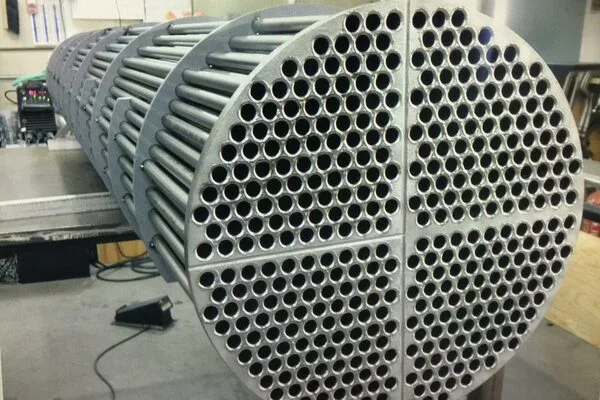
Selecting the right titanium grade for tube sheet applications is a critical decision that impacts performance, longevity, and cost-effectiveness. By understanding the properties of various titanium grades and considering factors such as corrosion resistance, strength requirements, and joining methods, engineers can make informed choices for their specific applications. Whether opting for pure titanium grades like Grade 2 or high-strength alloys like Ti-6Al-4V, careful consideration of operating conditions and design requirements will lead to optimal titanium alloy tube plate selection.
FAQ
What is the most common titanium grade used for tube sheets?
Grade 2 titanium is often the most commonly used grade for tube sheets due to its excellent balance of corrosion resistance, strength, and cost-effectiveness.
Can titanium tube sheets be used in seawater applications?
Yes, titanium tube sheets, particularly those made from Grade 2 or Grade 7, are excellent choices for seawater applications due to their outstanding corrosion resistance.
How does the cost of titanium tube sheets compare to other materials?
While titanium tube sheets may have a higher initial cost compared to some other materials, their long-term durability and corrosion resistance often result in lower lifecycle costs.
Expert Titanium Alloy Tube Plate Manufacturing Solutions
At Baoji Huacan New Metal Materials Co., Ltd., we specialize in manufacturing high-quality titanium alloy tube plates for diverse industrial applications. Our ISO 9001 certified facility ensures top-notch quality control throughout the production process. With advanced melting capabilities and a comprehensive range of titanium grades, we can meet your specific tube sheet requirements. For expert guidance on selecting the right titanium alloy for your project or to request a quote, contact our experienced team at Joy@hc-titanium.com or Sherry@hc-titanium.com.
_1760073085975.jpg)