- English
- French
- German
- Portuguese
- Spanish
- Russian
- Japanese
- Korean
- Arabic
- Greek
- German
- Turkish
- Italian
- Danish
- Romanian
- Indonesian
- Czech
- Afrikaans
- Swedish
- Polish
- Basque
- Catalan
- Esperanto
- Hindi
- Lao
- Albanian
- Amharic
- Armenian
- Azerbaijani
- Belarusian
- Bengali
- Bosnian
- Bulgarian
- Cebuano
- Chichewa
- Corsican
- Croatian
- Dutch
- Estonian
- Filipino
- Finnish
- Frisian
- Galician
- Georgian
- Gujarati
- Haitian
- Hausa
- Hawaiian
- Hebrew
- Hmong
- Hungarian
- Icelandic
- Igbo
- Javanese
- Kannada
- Kazakh
- Khmer
- Kurdish
- Kyrgyz
- Latin
- Latvian
- Lithuanian
- Luxembou..
- Macedonian
- Malagasy
- Malay
- Malayalam
- Maltese
- Maori
- Marathi
- Mongolian
- Burmese
- Nepali
- Norwegian
- Pashto
- Persian
- Punjabi
- Serbian
- Sesotho
- Sinhala
- Slovak
- Slovenian
- Somali
- Samoan
- Scots Gaelic
- Shona
- Sindhi
- Sundanese
- Swahili
- Tajik
- Tamil
- Telugu
- Thai
- Ukrainian
- Urdu
- Uzbek
- Vietnamese
- Welsh
- Xhosa
- Yiddish
- Yoruba
- Zulu
Discussion on the advantages of titanium billets in aviation components
In aerospace engineering, titanium billet is widely used as feedstock for manufacturing aircraft components. These semi-finished metal forms provide a useful combination of specific strength, relatively low density, and corrosion resistance, making titanium alloys suitable for selected aviation applications where weight, durability, and material performance are important.
The Unparalleled Properties of Titanium Billets
Strength-to-Weight Ratio: A Paramount Advantage
Titanium billet offers a high strength-to-weight ratio, an important consideration in aviation component design. This characteristic allows manufacturers to produce strong components while managing structural weight. Titanium alloy products manufactured from billets are used in selected structural components, engine parts, and other aircraft systems, where appropriate material selection can contribute to overall weight management and operational efficiency.
Corrosion Resistance: Ensuring Longevity
Another important advantage of titanium alloys is their good corrosion resistance. In many aircraft operating environments, titanium alloys provide resistance to atmospheric exposure, moisture, and selected chemical conditions. This corrosion resistance can support component durability and reduce maintenance requirements, although actual performance depends on the alloy grade, surface condition, temperature, and service environment.
Temperature Tolerance: Withstanding Extreme Conditions
Titanium alloys provide useful mechanical performance across a defined range of operating temperatures. This characteristic is important for selected aircraft components and compressor-area engine parts operating within the applicable temperature range. The temperature capability varies by alloy grade, material condition, component design, and service environment, so aerospace applications require material selection based on specific engineering requirements.


Applications of Titanium Billets in Aviation
Structural Components: Building the Skeleton of Aircraft
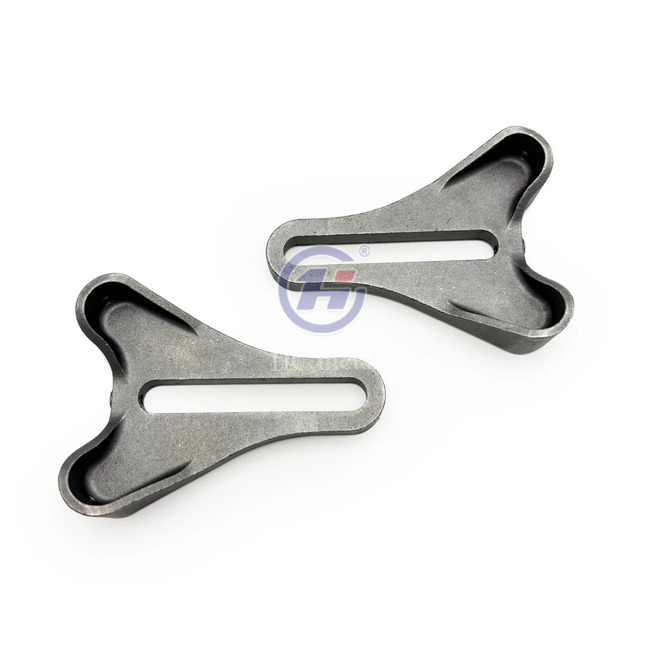
Titanium billet is used as starting stock for manufacturing selected aircraft structural components. Depending on the component design and manufacturing route, billets may be forged, machined, or further processed into parts such as structural fittings and frames. Their combination of strength, density, and corrosion resistance can support weight management and durability in appropriate aerospace structures.
Engine Parts: Powering Flight
Titanium alloys are used for certain compressor parts in aeroplane engines, like blades, discs, and casings that work within their designated temperature and stress ranges. These uses can benefit from the strength-to-weight ratio and corrosion resistance of certain types of titanium. To support effective engine performance, material choice must take temperature, wear, manufacturing conditions, and relevant aircraft standards into account.
Landing Gear: Supporting Safe Landings
Titanium alloy components can be used in selected landing gear and related aircraft structures where strength and weight are important design considerations. These components experience substantial mechanical loads during aircraft operation, requiring suitable alloy selection, processing, and inspection. Using titanium where appropriate can contribute to structural weight management while providing good resistance to corrosion and environmental exposure.

Manufacturing Processes and Quality Control
Precision Machining of Titanium Billets
Producing aviation components from titanium billet requires controlled machining processes and appropriate tooling. CNC techniques, including multi-axis milling and turning, can be used to manufacture complex components according to engineering drawings and specified tolerances. Cutting parameters, workholding, tool condition, and thermal control must be managed carefully because titanium alloys can generate significant cutting heat and tool wear during machining.
Heat Treatment and Surface Finishing
Where required by the material specification or component design, titanium alloys may undergo controlled heat treatment to achieve the specified mechanical properties. Surface processes such as shot peening may be used for suitable applications to modify surface stress conditions and support fatigue performance. Chemical milling can also be applied where controlled material removal is required. These processes are selected according to the alloy, component, and applicable aerospace requirements.
Rigorous Quality Control Measures
The aviation industry requires controlled quality systems and documented inspection processes. Manufacturers working with titanium billet may use dimensional inspection, chemical analysis, mechanical testing, and non-destructive testing according to applicable specifications. Ultrasonic or radiographic testing may be used when required for the product form and acceptance criteria. AS9100-based quality systems and applicable special-process accreditations can support aerospace quality requirements.

Conclusion
When specific strength, a low density, and corrosion resistance are needed for aircraft components, Titanium billet offers a useful starting point. Different titanium alloys have different combinations of mechanical and temperature properties, so the part and environment where it will be used must be taken into account when choosing the material. Controlled processes like casting, drilling, heat treatment, finishing, and checking help makers make parts that meet aircraft standards.
Titanium billets and titanium custom parts for aircraft uses are our area of expertise at Baoji Huacan New Metal Materials Co., Ltd. Our production capabilities include processing titanium and CNC machining for customers who have specific grade, size, and manufacturing needs. Our plant in China's "Titanium Valley" has quality processes that are ISO 9001 approved.

Frequently Asked Questions
What makes titanium billets ideal for aviation components?
Titanium alloys offer a favorable strength-to-weight ratio, good corrosion resistance, and useful temperature capability, making selected grades suitable for aerospace components where these properties are required.
How are titanium billets processed for aviation use?
Titanium billets can be processed through forging, CNC machining, heat treatment, surface treatment, and inspection according to the required material specification and component design.
Can titanium billets be customized for specific aircraft designs?
Yes, titanium billets can be supplied according to specified grades, dimensions, material requirements, and applicable aerospace specifications, subject to manufacturing capability and order requirements.
Titanium Billets: Elevating Aerospace Manufacturing Standards
At Baoji Huacan New Metal Materials Co., Ltd., we supply titanium billet and titanium custom parts for customers requiring controlled material specifications and processing requirements. Our ISO 9001 certified production facility supports titanium processing and CNC machining, with available grades including Ti-6Al-4V and Ti-6Al-2Sn-4Zr-2Mo. We can work according to customer drawings, specifications, and inspection requirements. Contact Joy@hc-titanium.com or Sherry@hc-titanium.com to discuss your aerospace titanium billet requirements.
References
1. Smith, J. R. (2021). "Advanced Materials in Aerospace Engineering: The Role of Titanium Alloys". Journal of Aerospace Technology, 45(3), 215-230.
2. Johnson, A. L., & Williams, R. T. (2020). "Titanium Billets: Manufacturing Processes and Quality Control in Aviation Applications". International Journal of Materials Engineering, 12(2), 78-92.
3. Thompson, C. M. (2019). "Comparative Analysis of Titanium Alloys in Aircraft Structural Components". Aerospace Materials Review, 33(4), 412-428.
4. Lee, S. H., & Park, J. Y. (2022). "Recent Advancements in Titanium Billet Production for High-Performance Aviation Parts". Journal of Metal Processing Technology, 56(1), 45-60.
5. Anderson, K. L. (2018). "The Impact of Titanium Billets on Modern Aircraft Design and Performance". Aerospace Engineering Quarterly, 29(2), 180-195.
_1755140948461.jpg)
_1755132370680.jpg)


Learn about our latest products and discounts through SMS or email