- English
- French
- German
- Portuguese
- Spanish
- Russian
- Japanese
- Korean
- Arabic
- Greek
- German
- Turkish
- Italian
- Danish
- Romanian
- Indonesian
- Czech
- Afrikaans
- Swedish
- Polish
- Basque
- Catalan
- Esperanto
- Hindi
- Lao
- Albanian
- Amharic
- Armenian
- Azerbaijani
- Belarusian
- Bengali
- Bosnian
- Bulgarian
- Cebuano
- Chichewa
- Corsican
- Croatian
- Dutch
- Estonian
- Filipino
- Finnish
- Frisian
- Galician
- Georgian
- Gujarati
- Haitian
- Hausa
- Hawaiian
- Hebrew
- Hmong
- Hungarian
- Icelandic
- Igbo
- Javanese
- Kannada
- Kazakh
- Khmer
- Kurdish
- Kyrgyz
- Latin
- Latvian
- Lithuanian
- Luxembou..
- Macedonian
- Malagasy
- Malay
- Malayalam
- Maltese
- Maori
- Marathi
- Mongolian
- Burmese
- Nepali
- Norwegian
- Pashto
- Persian
- Punjabi
- Serbian
- Sesotho
- Sinhala
- Slovak
- Slovenian
- Somali
- Samoan
- Scots Gaelic
- Shona
- Sindhi
- Sundanese
- Swahili
- Tajik
- Tamil
- Telugu
- Thai
- Ukrainian
- Urdu
- Uzbek
- Vietnamese
- Welsh
- Xhosa
- Yiddish
- Yoruba
- Zulu
Ti89 titanium target
Uniform Density: Ensures stable sputtering rates and consistent thin film quality.
Excellent Thermal Stability: Performs reliably under high sputtering temperatures.
Good Electrical Conductivity: Supports efficient sputtering and coating processes.
Precise Dimensions: Customizable in diameter, length, width, and thickness.
Strong Bonding Options: Compatible with backing plates (Cu, Mo, SS).
Low Impurity Levels: Reduces contamination for high-tech applications.
Wide Compatibility: Suitable for PVD, CVD, and vacuum coating systems.
Consistent Performance: Provides uniform coating thickness and high deposition efficiency.
Application Versatility: Used in optics, electronics, solar, decorative, and semiconductor fields.
Product Introduction
Ti89 Titanium Target for PVD Sputtering — High Purity, Uniform Density & Custom Dimensions
The ti89 titanium target is a precision-engineered sputtering source material designed for magnetron sputtering and vacuum arc deposition systems. Manufactured by Baoji Huacan New Metal Materials Co., Ltd., it gives purity from 99.5% to 99.995%, relative density more than 99.7% of theoretical value and regulated grain size below 100µm. These characteristics make possible consistent deposition rates, homogenous thin-film thickness and minimum coating flaws. It is compatible with PVD, CVD and vacuum coating techniques and fits the stringent needs of the semiconductor, optical, solar and ornamental coating sectors.
Product Features
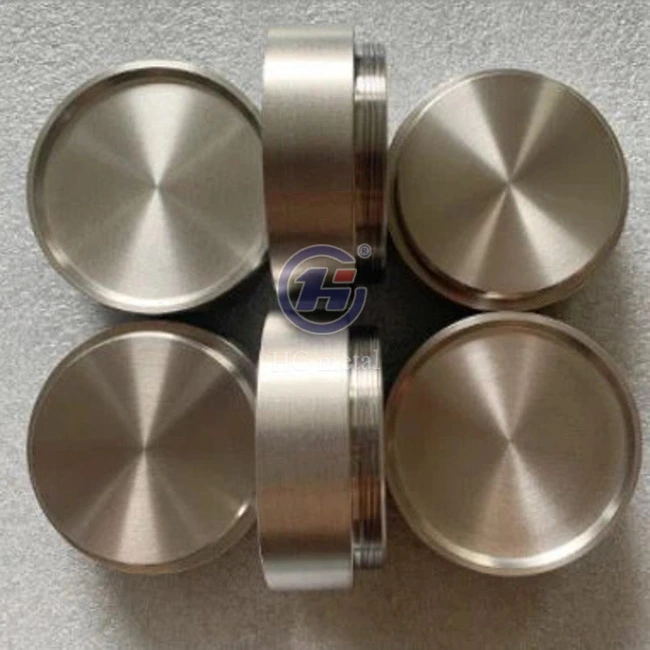
The product addresses common industry pain points including target poisoning, excessive arcing, and low utilization caused by uneven magnetic field erosion.
Its fine, homogenized grain structure minimizes particle generation on substrate surfaces, reducing nodule formation during deposition. Optimized crystallographic orientation enhances deposition uniformity across the entire erosion zone.
Excellent thermal conductivity allows the target to withstand high power densities without warping or debonding from the backing plate — critical for high-volume production runs.
Product Specification & OEM Customization
|
| |
|---|---|
|
Parameter
|
Value / Description
|
|
Material Grade
|
Pure Titanium (Grade 1, Grade 2) or customized alloy
|
|
Purity
|
99.5% – 99.995% (2N5 to 4N5)
|
|
Relative Density
|
≥ 99.7% theoretical density (>4.5 g/cm³)
|
|
Grain Size
|
< 100μm (< 50μm available for semiconductor use)
|
|
Melting Point
|
~1668°C
|
|
Dimensions (Diameter/Length/Thickness)
|
Customized per customer drawings
|
|
Backing Plate Compatibility
|
Cu, Mo, SS (optional bonding)
|
|
Surface Finish
|
Machined, polished, or as specified
|
|
Applicable Standards
|
ASTM, AMS, ISO (on request)
|
|
Sputtering Compatibility
|
PVD, CVD, magnetron sputtering, vacuum arc
|
Product Application
Solutions One
01
Solutions One
02
Solutions One
03
Solutions One

04
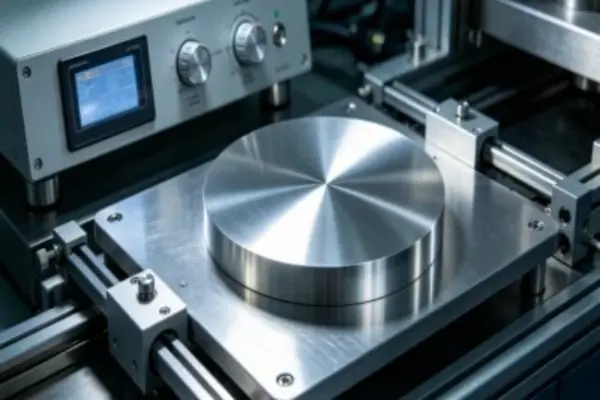
Semiconductor & Microelectronics: Depositing barrier layers and contact metallization on 300mm wafers. The target's low resistivity and purity prevent copper diffusion in integrated circuits.
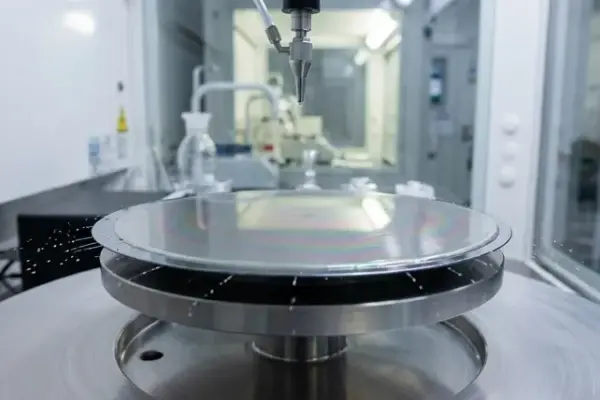
Architectural Glass Coating: Development of lasting adhesive layers for Low-E glass These layers provide optical clarity, weathering resistance and energy efficiency via intense temperature cycling.
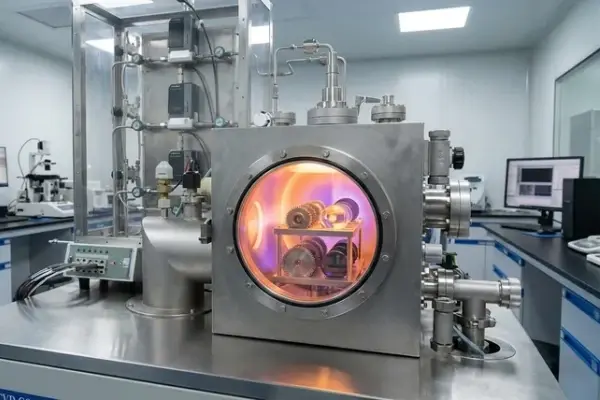
Hard Coatings & Tooling: Reactive sputtering for the deposition of TiN or TiCN on cutting tools and automotive parts. This results in a hardness of over 2000HV, considerably increasing the life of the tool.
Other fields: Surface treatments for medical devices, ornamental coatings, solar cells, optics.
Factory Show
Why Choose Our Ti89 Titanium Target
Your coating quality and production efficiency will be directly affected by the appropriate choice of sputtering target. Why is our product different?
l Ultra high purity : Purity grades from 99.5% to 99.995% with O, N, H and C levels closely regulated
l Fine microstructure: Average grain size less than 100μm, frequently less than 50μm for semiconductor applications
l Optimized crystallographic texture: Designed for precise sputtering orientations, enhancing deposition rate and film homogeneity
l Flexible bonding: Compatible with Cu, Mo and stainless steel backing plates via diffusion bonding or indium soldering.
l Full customization: Diameter, thickness, length and breadth all customizable to your designs or specs
 |
 |
 |
Manufacturing Process
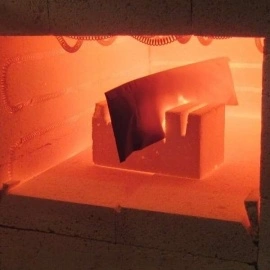
Baoji Huacan uses vacuum arc remelting (VAR) and plasma arc melting (PAM) to produce high-purity titanium ingots with excellent chemical homogeneity and low impurity content.
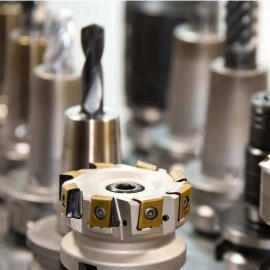
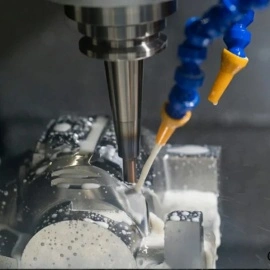
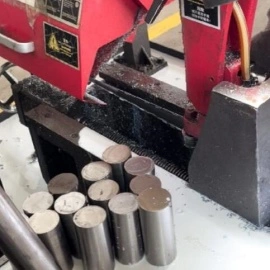
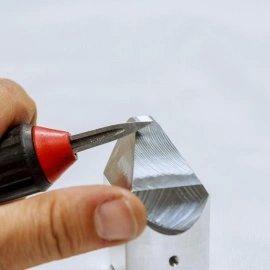
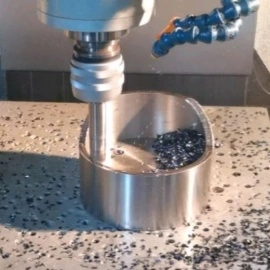
The ingots are then processed through precision forging and rolling to achieve uniform grain refinement throughout the target blank. Advanced CNC machining centers — including gantry systems — complete the final shaping with tight dimensional tolerances.
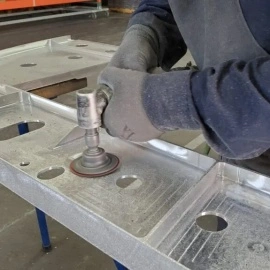
Each target undergoes surface grinding, polishing, and cleaning before bonding or packaging. This end-to-end process ensures consistent microstructural quality and reliable sputtering performance.

Manufacturing Capability
Baoji Huacan has more than 40 high-precision CNC machines and an annual output of more than 1,000 tons of completed titanium items. We melt around 5,000 tons per year, which means that we can always provide huge quantities.
With more than a decade of titanium machining expertise and more over 100 clients throughout the world, we know the stringent expectations of our target purchasers around the globe.
 |
 |
 |
 |
 |
| melting | melting | forging | forging | rolling |
Quality Control
Our multi-stage inspection covers:
· Raw material verification: Spectrometer analysis for chemical composition
· In-process control: Dimensional checks at each manufacturing stage
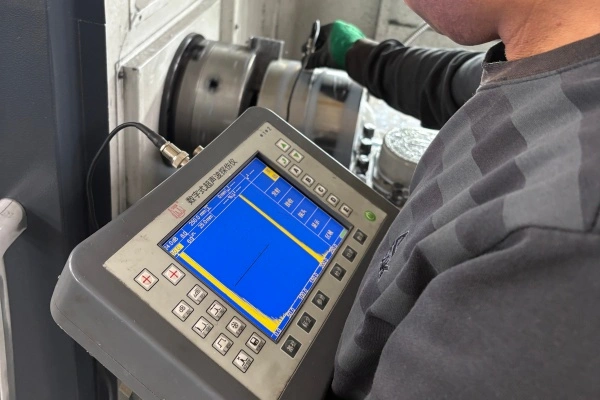
· Non-destructive testing: Ultrasonic testing for internal defects
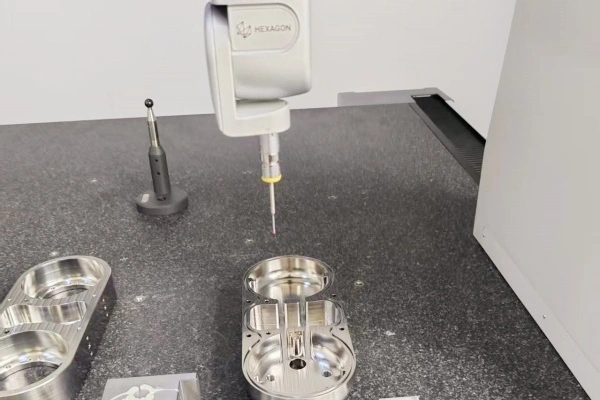
· Final inspection: CMM-based dimensional verification, surface roughness testing
· Documentation: Full material traceability records and inspection reports per batch
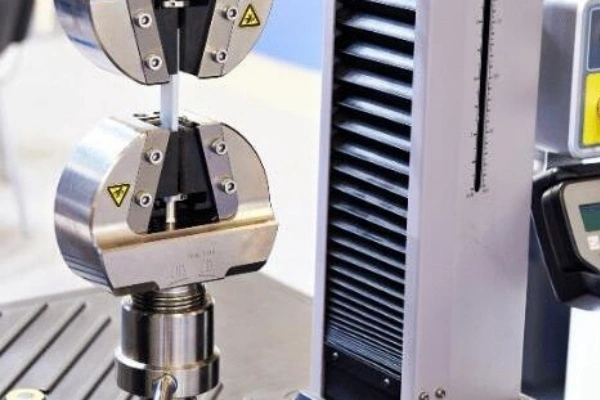
Mechanical Properties Testing
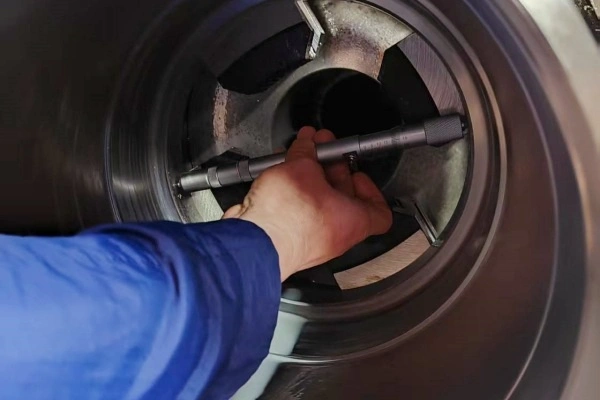
Inner Diameter Measurement
Ultrasonic Testing
CMM Dimensional
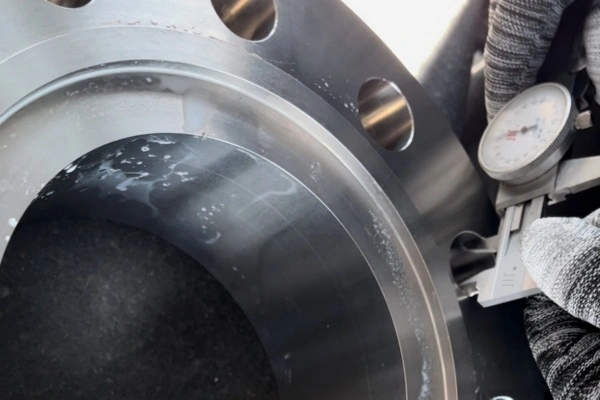
Mounting Hole Diameter Measurement
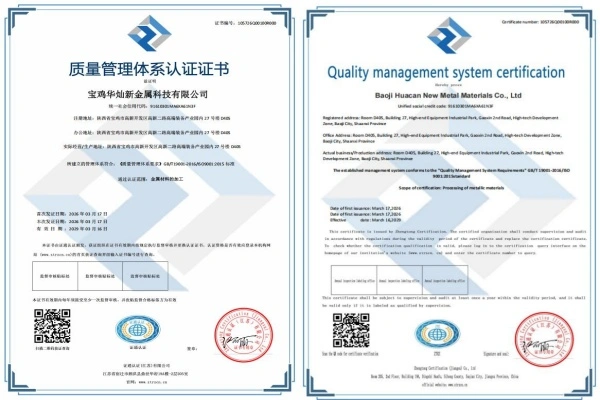
Quality Management System Certification
Packaging & Shipping
|
Method
|
Description
|
|
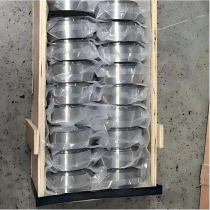
Inner Protection
|
Vacuum-sealed bags with desiccants
|
|
Cushioning
|
Custom foam inserts for fragile geometries
|
|
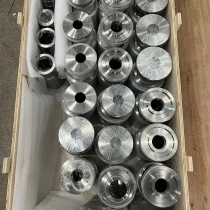
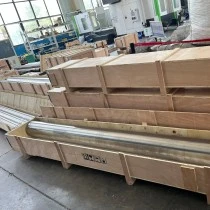
Outer Packaging
|
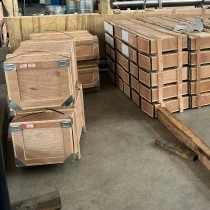
Wooden crates for bulk or oversized targets
|
|
Documentation
|
MTC, CoC, inspection reports, labeling
|
|
Shipping Options
|
Air freight (urgent) / Sea freight (bulk)
|
Proper vacuum sealing prevents surface oxidation during transit and storage, preserving target quality before installation.

FAQ
Q: What bonding method is recommended for high-power applications?
A:Diffusion bonding or explosion bonding is preferred over indium soldering when operating at high power densities — it handles greater thermal loads without interface failure.
Q: How does grain size affect coating results?
A:Finer grain sizes (below 40μm) deliver faster, more uniform sputtering and reduce nodule formation on the substrate, improving final film quality.
Q: Can spent targets be recycled?
A:Yes. Titanium is a high-value scrap material. Spent targets can be reclaimed through vacuum melting once safely separated from the backing plate.
Q: What causes arcing during sputtering?
A:Arcing typically results from dielectric buildup (target poisoning) or surface contamination. A finer surface finish and pulsed DC power supplies help reduce this risk.
Q: How should targets be stored before use?
A:Vacuum-sealed packaging in a controlled environment provides indefinite shelf life. Surface cleaning is recommended before installation regardless of storage duration.
Contact Us
Ready to source a reliable, high-purity sputtering target like ti89 titanium target? Contact us at sherry@hc-titanium.com and our team will respond promptly.





Learn about our latest products and discounts through SMS or email