- English
- French
- German
- Portuguese
- Spanish
- Russian
- Japanese
- Korean
- Arabic
- Greek
- German
- Turkish
- Italian
- Danish
- Romanian
- Indonesian
- Czech
- Afrikaans
- Swedish
- Polish
- Basque
- Catalan
- Esperanto
- Hindi
- Lao
- Albanian
- Amharic
- Armenian
- Azerbaijani
- Belarusian
- Bengali
- Bosnian
- Bulgarian
- Cebuano
- Chichewa
- Corsican
- Croatian
- Dutch
- Estonian
- Filipino
- Finnish
- Frisian
- Galician
- Georgian
- Gujarati
- Haitian
- Hausa
- Hawaiian
- Hebrew
- Hmong
- Hungarian
- Icelandic
- Igbo
- Javanese
- Kannada
- Kazakh
- Khmer
- Kurdish
- Kyrgyz
- Latin
- Latvian
- Lithuanian
- Luxembou..
- Macedonian
- Malagasy
- Malay
- Malayalam
- Maltese
- Maori
- Marathi
- Mongolian
- Burmese
- Nepali
- Norwegian
- Pashto
- Persian
- Punjabi
- Serbian
- Sesotho
- Sinhala
- Slovak
- Slovenian
- Somali
- Samoan
- Scots Gaelic
- Shona
- Sindhi
- Sundanese
- Swahili
- Tajik
- Tamil
- Telugu
- Thai
- Ukrainian
- Urdu
- Uzbek
- Vietnamese
- Welsh
- Xhosa
- Yiddish
- Yoruba
- Zulu
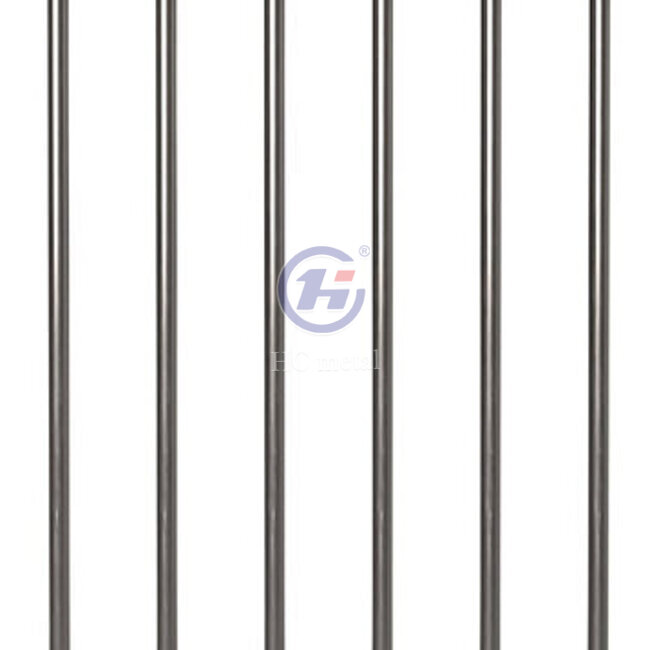
6al4v titanium rod
Diameter: 3mm to 250mm
Length: Up to 6000mm
Surface: Polished or mill finish
Standard: ASTM B348, AMS 4928
High strength and toughness
Used in aerospace and medical
Excellent corrosion resistance
Product Introduction

6Al4V Titanium Rod for Aerospace & Medical Applications — High Strength, Custom Sizes Available
Ti-6Al-4V Grade 5 is the most used titanium alloy worldwide and accounts for more than 50% of total global titanium usage. The 6al4v titanium rod is an alpha-beta alloy with two phases, containing 6% aluminium and 4% vanadium, and has a density of only 4.43 g/cm3 and an Ultimate Tensile Strength (UTS) of 895–1000 MPa. These rods are produced by Baoji Huacan, from 3mm to 250mm in diameter and up to 6000mm in length in accordance with ASTM B348 and AMS 4928.
Why Choose Our 6Al4V Titanium Rod
Our rods are created in Baoji - China's "Titanium Valley" - with 10+ years of titanium machining expertise and 1,000+ tonnes of yearly manufacturing capability.
We run over 40 high precision CNC machines, guaranteeing tight dimensional tolerances and constant surface finishes. All rods are multi-stage inspected before shipping so you get parts that work in sensitive conditions.
OEM/ODM orders welcome, customisation based on drawings, small-batch and bulk manufacturing. We know what B2B buyers require from 100+ worldwide client engagements.
Techinical Specifications
| Parameter | Details |
|---|---|
| Material Grade | Grade 5 Titanium (Ti-6Al-4V, UNS R56400) |
| Material Standards | ASTM B348 / AMS 4928 / DIN Standards |
| Available Grades | Grade 2, Grade 5, Grade 7, Grade 9, Grade 23 (Ti-6Al-4V ELI) |
| Diameter Range | Ø3mm – Ø250mm (custom sizes available) |
| Length | Up to 6000mm (customized according to requirements) |
| Surface Finish | Bright Polished / Ground / Mill Finish |
| Density | 4.43 g/cm³ (0.160 lb/in³) |
| Ultimate Tensile Strength | 895–1000 MPa (Grade 5 typical) |
| Yield Strength (0.2% Offset) | ≥828 MPa |
| Modulus of Elasticity | Approximately 114 GPa |
| Typical Service Temperature | Up to 400°C (depending on application conditions) |
| Dimensional Tolerance | h6–h9 or customized according to drawings |
| Straightness | Customized requirements available |
| Inspection Documents | Material Test Certificate (MTC) / EN 10204 3.1 available |
| Production Capability | Prototype, Small Batch, and Mass Production |
Product Features
- High Strength-to-Weight Ratio — UTS 895–1000 MPa with a density of just 4.43 g/cm³, almost 40% lighter than steels of equivalent strength.
- Excellent corrosion resistance — A passive oxide coating develops spontaneously on the surface, giving excellent resistance to saltwater, petroleum compounds and chloride conditions.
- Heat-Treatable Alloy — Unlike the grades of CP titanium, Ti-6Al-4V may be solution treated and aged. This produces an increase in tensile strength of up to 20% for demanding structural applications.
- Low Modulus of Elasticity – At ~114 GPa, 50% that of steel. This reduces stress shielding in orthopaedic implants and structures next to bone.
- Biocompatibility – The material is non-toxic and compatible with human tissue, making it perfect for machining medical implants.


Product Application
Aerospace & Defense — Structural components, fastener systems, and turbine parts operating between -210°C and 400°C require materials that resist fatigue and creep. The Ti-6Al-4V rod delivers exactly that.
Medical Implants — ELI-grade rods (ASTM F136) are machined into orthopedic implants, intramedullary nails, and dental fixtures. The ~114 GPa elastic modulus closely mimics bone, reducing the stress shielding effect.
Oil & Gas Downhole — Valve stems and drilling tool components in HPHT environments with H2S and chloride exposure rely on Ti-6Al-4V's resistance to sulfide stress cracking.


Manufacturing Capability
Our facility in Baoji operates with 40+ CNC lathes, machining centers, and gantry systems. Annual melting capacity exceeds 5,000 tons and forging capacity exceeds 3,000 tons.
We handle everything from prototype development to mass production. Drawing-based orders are welcome, and our engineering team can advise on dimensional feasibility and material optimization.
 |
 |
 |
| Vacuum Melting | Breakdown Forging | Forging & Rolling |
Quality Control
We follow a multi-stage inspection protocol at every production stage:
· Raw Material Verification — Spectrometer-based chemical composition analysis, supplier certification checks
· Ultrasonic Testing (UT) — Per AMS 2631, detecting internal voids, Beta Flecks, and inclusions
· Dimensional Inspection — CMM, micrometers, calipers, and surface roughness gauges
· Mechanical Testing — Tensile strength, yield strength, and hardness per ASTM, AMS, and DIN standards
· Hydrogen Verification — Strict control of H content (<0.015%) to prevent embrittlement

Material Testing & Analysis

Ultrasonic Testing & NDT Inspection

ISO 9001 Quality Management System
FAQ
Q: What is the difference between Grade 5 and Grade 23 Ti-6Al-4V?
A: Grade 23 (ELI) contains lower levels of oxygen, nitrogen and iron which improve ductility and fracture toughness. This is the benchmark for medical implants whereas Grade 5 is favoured for structural strength in aerospace.
Q: Is the product weldable?
A:Yes, with strict inert gas shielding (argon/helium) to prevent oxidation. Friction welding and electron beam welding are commonly preferred in industrial settings.
Q: What surface finishes are available?
A:We offer mill finish and polished finish as standard. Anodized and custom surface treatments are available upon request.
Q: Can heat treatment improve mechanical properties?
A:Yes. Solution Treatment and Aging (STA) can increase tensile strength by up to 20%, particularly effective on smaller cross-section rods.
Q: What is the maximum operating temperature?
A:The service temperature limit is generally 400°C (750°F). Beyond this, surface oxidation becomes significant and alternative alloys should be considered.
Packaging & Shipping
Each order is carefully packaged to protect rod surfaces and dimensional integrity during transit.
· Custom foam inserts for precision-machined components
· Vacuum-sealed bags with desiccants for moisture protection
· Sturdy wooden crates for bulk rod shipments
· Detailed labeling and documentation for traceability
For urgent orders we can provide air freight and for economical bulk shipments we can offer sea freight. Flexible alternatives to suit your delivery timeframe.


Contact Us
Ready to source your next project's 6al4v titanium rod? Contact us at sherry@hc-titanium.com — custom sizes and OEM orders welcome.


Learn about our latest products and discounts through SMS or email