- English
- French
- German
- Portuguese
- Spanish
- Russian
- Japanese
- Korean
- Arabic
- Greek
- German
- Turkish
- Italian
- Danish
- Romanian
- Indonesian
- Czech
- Afrikaans
- Swedish
- Polish
- Basque
- Catalan
- Esperanto
- Hindi
- Lao
- Albanian
- Amharic
- Armenian
- Azerbaijani
- Belarusian
- Bengali
- Bosnian
- Bulgarian
- Cebuano
- Chichewa
- Corsican
- Croatian
- Dutch
- Estonian
- Filipino
- Finnish
- Frisian
- Galician
- Georgian
- Gujarati
- Haitian
- Hausa
- Hawaiian
- Hebrew
- Hmong
- Hungarian
- Icelandic
- Igbo
- Javanese
- Kannada
- Kazakh
- Khmer
- Kurdish
- Kyrgyz
- Latin
- Latvian
- Lithuanian
- Luxembou..
- Macedonian
- Malagasy
- Malay
- Malayalam
- Maltese
- Maori
- Marathi
- Mongolian
- Burmese
- Nepali
- Norwegian
- Pashto
- Persian
- Punjabi
- Serbian
- Sesotho
- Sinhala
- Slovak
- Slovenian
- Somali
- Samoan
- Scots Gaelic
- Shona
- Sindhi
- Sundanese
- Swahili
- Tajik
- Tamil
- Telugu
- Thai
- Ukrainian
- Urdu
- Uzbek
- Vietnamese
- Welsh
- Xhosa
- Yiddish
- Yoruba
- Zulu
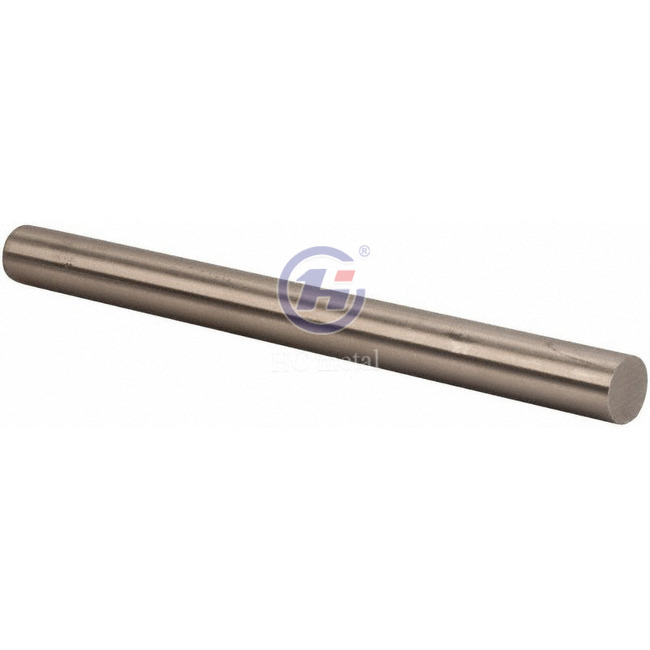
Customized titanium target
Uniform Density: Ensures stable sputtering rates and consistent thin film quality.
Excellent Thermal Stability: Performs reliably under high sputtering temperatures.
Good Electrical Conductivity: Supports efficient sputtering and coating processes.
Precise Dimensions: Customizable in diameter, length, width, and thickness.
Strong Bonding Options: Compatible with backing plates (Cu, Mo, SS).
Low Impurity Levels: Reduces contamination for high-tech applications.
Wide Compatibility: Suitable for PVD, CVD, and vacuum coating systems.
Consistent Performance: Provides uniform coating thickness and high deposition efficiency.
Application Versatility: Used in optics, electronics, solar, decorative, and semiconductor fields.
Product Introduction
Customized Titanium Target for PVD Sputtering — High-Purity, Precision-Engineered Solutions
Baoji Huacan's customized titanium target is engineered for demanding PVD sputtering applications, offering purity grades from 99.5% to 99.995%. Each target delivers uniform density exceeding 99.7% of theoretical density, ensuring stable sputtering rates and consistent thin film quality. With fine equiaxed grain sizes often below 30µm and dimensional tolerances within ±0.1mm, these targets are built to perform in semiconductor, optics, solar, and decorative coating environments.
 |
 |
 |
Product Specification & OEM Customization
| Parameter | Details |
|---|---|
| Material Grade | Grade 1 / Grade 2 (Commercially Pure Titanium), Grade 5 (Ti-6Al-4V), Grade 7, Grade 9, Grade 23 (Ti-6Al-4V ELI) |
| Material Purity | Up to 99.995% (5N) for high-purity titanium targets |
| Density Ratio | ≥99.7% of theoretical density |
| Grain Structure | Fine and uniform grain structure; average grain size <30 μm |
| Chemical Composition | Controlled composition with full material traceability available |
| Surface Roughness (Ra) | ≤0.8 μm or customized according to sputtering requirements |
| Dimensional Tolerance | ±0.1 mm or according to customer drawings and equipment requirements |
| Target Shape | Planar targets, Rotatable targets, Step targets, Convex targets, and custom geometries |
| Target Dimensions | Customized diameter, length, width, thickness, and mounting configurations |
| Backing Plate Options | Copper (Cu), Molybdenum (Mo), Stainless Steel, or customized materials |
| Bonding Methods | Indium bonding, Elastomer bonding, Diffusion bonding, and other customized solutions |
| Material Standards | ASTM, AMS, DIN, ISO, or customer-specific specifications |
| Surface Finish | Machined finish, polished finish, or customized surface treatment |
| Inspection & Quality Control | Dimensional inspection, material analysis, density testing, surface inspection, and traceability documentation |

Product Material Advantages

High Purity, Low Contamination
Purity ranges from 99.5% to 99.995%, with oxygen content strictly below 500 ppm. This minimizes chamber contamination and supports high-yield semiconductor and optics processes.
Controlled Grain Structure
Fine equiaxed grains below 30µm with optimized crystallographic texture enhance sputtering yield and ensure film thickness uniformity across the substrate.
Excellent Thermal Stability
Targets perform reliably under continuous high-power sputtering conditions without deformation or bonding failure, especially when diffusion bonding is selected for high-throughput lines.
Wide Process Compatibility
Compatible with PVD, CVD, magnetron sputtering, and cathodic arc evaporation systems for customized titanium target. Suitable for both planar and rotatable configurations.
Product Comparison
| Feature | Customized Titanium Target | Standard Off-the-Shelf Target |
|---|---|---|
| Target Geometry | Planar, Rotatable, Step, Convex, and other custom geometries | Mainly standard planar or fixed configurations |
| Purity Options | Customized purity levels available from 99.5% to 99.995% depending on application requirements | Standard purity grades with limited selection |
| Grain Structure Control | Fine and uniform grain structure with controlled grain size (e.g. <30 μm) | Based on standard production specifications |
| Bonding Options | Indium bonding, Elastomer bonding, Diffusion bonding, and customized solutions | Limited bonding options depending on supplier capability |
| Dimensional Accuracy | Manufactured according to customer drawings with precision tolerances (e.g. ±0.1 mm) | Standard dimensions and tolerances |
| OEM / Custom Manufacturing | Full OEM support for customized designs, dimensions, and mounting requirements | Usually limited to catalog specifications |
| Material Options | Pure titanium, Ti-Al alloys, Ti-6Al-4V, and other titanium alloys available | Mainly standard pure titanium grades |
| Application Adaptability | Optimized for semiconductor, coating, optical, and specialized sputtering applications | Suitable for general sputtering applications |
Product Application
Semiconductor Interconnects

01
Architectural Low-E Glass Coating
02
Solar & Optics

03
Semiconductor Interconnects
5N purity titanium targets deposit ultra-thin Ti adhesion and barrier layers in IC fabrication. Grain alignment ensures uniform step coverage in high-aspect-ratio vias, preventing electromigration in advanced microchips.
Architectural Low-E Glass Coating
Large-format rotatable targets deposit TiO₂ layers across wide glass panels. Custom tube lengths exceeding 3 meters ensure consistent optical properties for energy-efficient architectural glass.
Wear-Resistant Tool Coatings
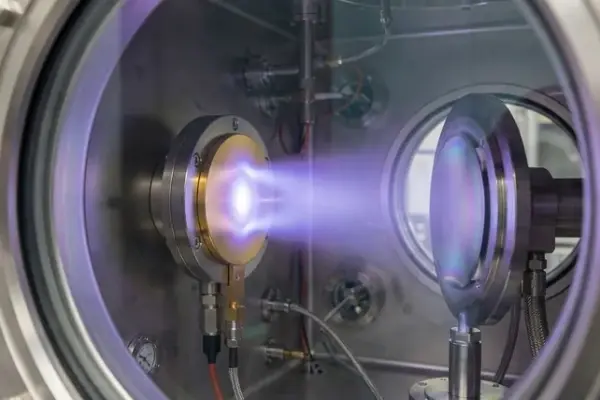
Titanium targets — including alloy compositions such as TiAl — are used to form TiN and TiAlN hard coatings on cutting tools and molds, significantly extending service life under high-power cathodic arc or magnetron sputtering.
Solar & Optics
Used in anti-reflection and transparent conductive oxide coatings for photovoltaic panels and precision optical lenses.
Why Choose Us
Standard off-the-shelf targets often cause low target utilization rates, arc discharging, and uneven film thickness. Our titanium targets are tailored to your specific vacuum chamber geometry, film requirements, and process parameters.
You get full control over purity, bonding method, grain structure, and dimensions — all backed by 10+ years of titanium machining experience and 1,000+ tons of annual production capacity.
 |
 |
 |
Manufacturing Process
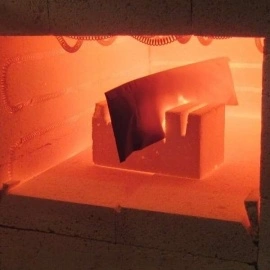
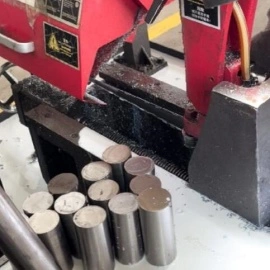
Production begins with high-purity titanium ingot preparation using vacuum arc remelting (VAR) and plasma arc melting (PAM) to achieve low impurity levels and excellent chemical homogeneity.
Ingots are then processed through precision forging and rolling. This refines the grain structure and achieves the fine, equiaxed microstructure critical for uniform sputtering performance.
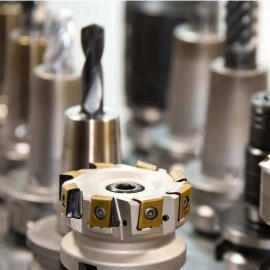
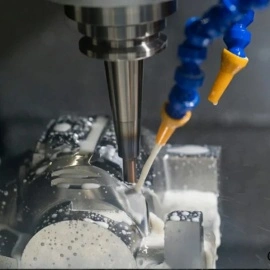
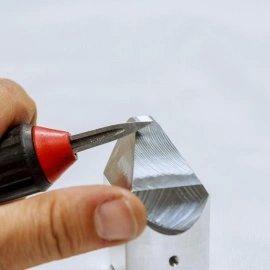
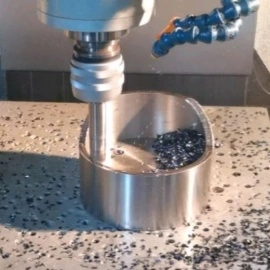
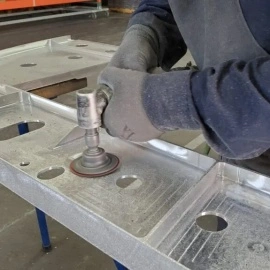
CNC precision machining is the final shaping stage. Using 40+ advanced CNC machining centers, each target is machined to your exact dimensional drawing, with flatness, concentricity, and surface roughness tightly controlled.
Bonding to the backing plate — Cu, Mo, or stainless steel — is performed using your specified bonding method, whether Indium, Elastomer, or Diffusion bonding, to match your equipment's thermal and power density requirements.

Manufacturing Capability
| Capability | Details |
|---|---|
| Annual Production Capacity | 1,000+ tons of titanium products and precision components annually |
| CNC Machining Capability | 40+ CNC machines, including lathes, machining centers, and gantry machining systems for complex titanium parts |
| Melting Capability | 5,000+ tons/year capacity with VAR (Vacuum Arc Remelting) and PAM (Plasma Arc Melting) technologies |
| Forging Capability | 3,000+ tons/year titanium forging capacity with large-scale forging equipment |
| Manufacturing Flexibility | Prototype development, small batch production, and high-volume manufacturing |
| Global Customer Experience | 100+ international customer collaborations across multiple industries |
| Quality & Traceability | Material traceability, dimensional inspection, and quality documentation available for customer requirements |
 |
 |
 |
 |
 |
| melting | melting | forging | forging | rolling |
Quality Control
Every customized titanium target passes a structured multi-stage inspection before shipment.
Chemical Composition — Verified using GDMS or ICP-OES, confirming purity and controlling trace impurities including O, N, C, H, and Fe down to ppm levels.
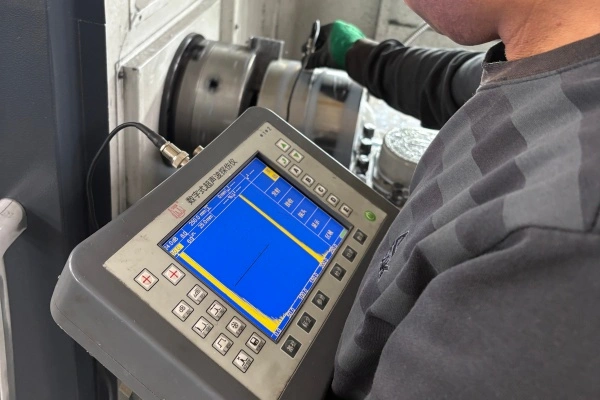
Ultrasonic C-Scan Testing — Confirms bonding integrity between target and backing plate, achieving bonding ratios >95%, with Class A requirements reaching >98%.
Metallographic Examination — Grain size measured per ASTM E112, ensuring a recrystallized, defect-free microstructure.
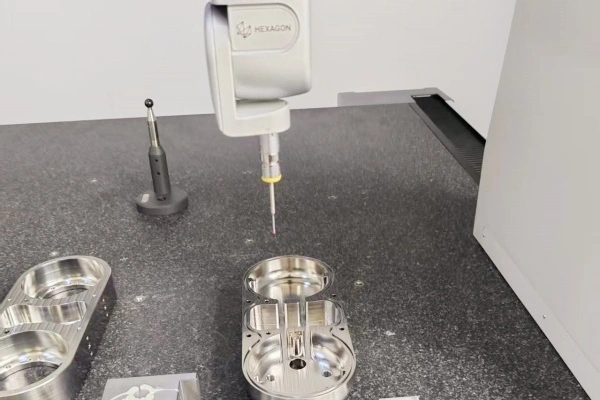
Dimensional Inspection — CMM verification of flatness, concentricity, and all critical tolerances per your drawing.
Surface Cleanliness — Oil-free and fingerprint-free surfaces confirmed before vacuum packaging.
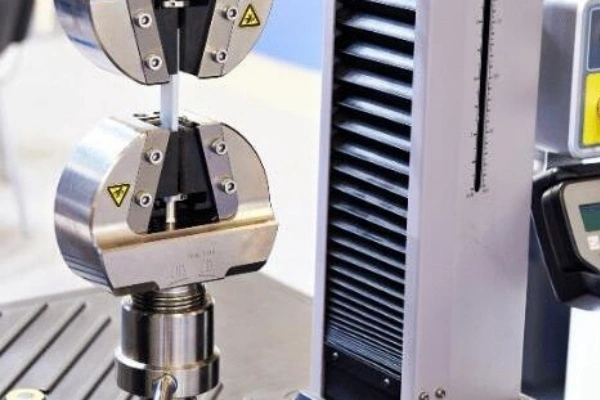
Mechanical Properties Testing
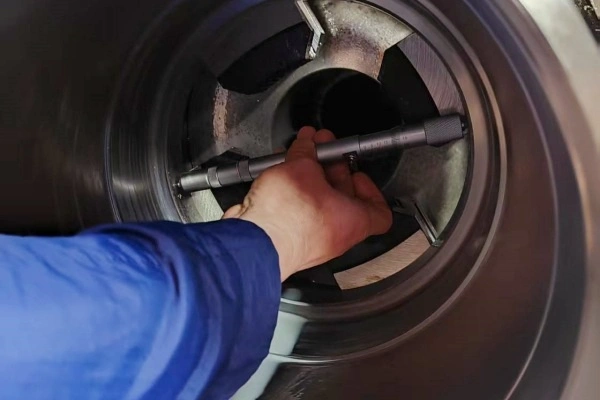
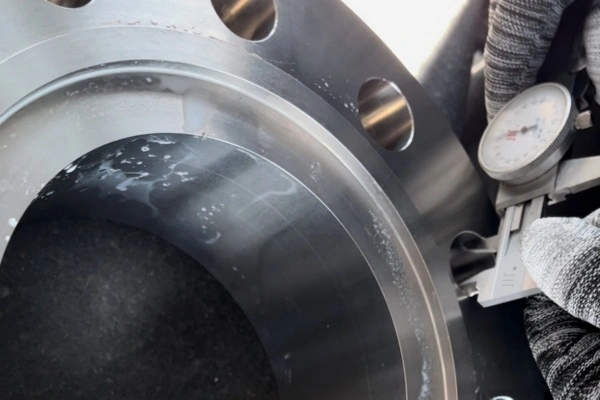
Inner Diameter Measurement
Ultrasonic Testing
CMM Dimensional
Mounting Hole Diameter Measurement
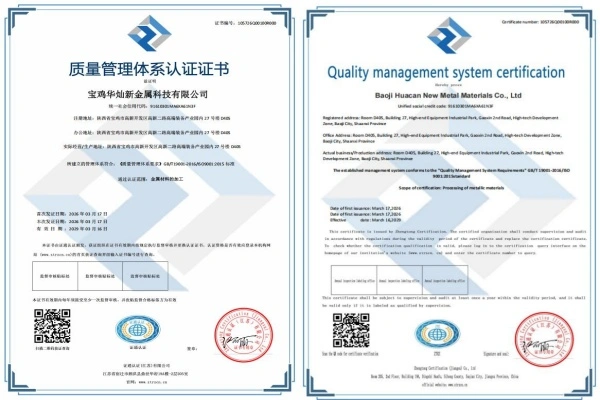
Quality Management System Certification
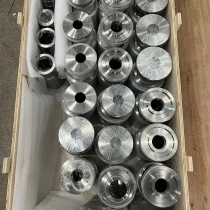
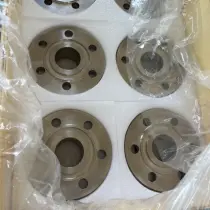
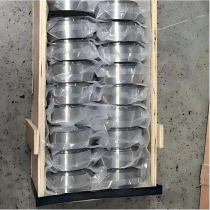
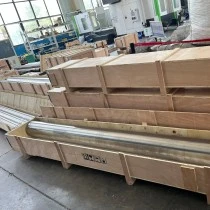
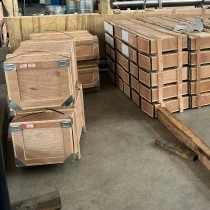
Packaging & Shipping
|
Method |
Details |
|
Primary Protection |
Vacuum-sealed bags with desiccants |
|
Cushioning |
Custom foam inserts for fragile or precision assemblies |
|
Outer Packaging |
Sturdy wooden crates for bulk or international shipment |
|
Documentation |
Full labeling, MTC, inspection reports, traceability records |
|
Shipping Options |
Air freight (urgent orders), sea freight (bulk cost-effective) |
FAQ
Q: What data do I need to submit a custom order?
A:Please provide your equipment model, target geometry, purity grade, dimensional drawing, bonding method preference, and end application. This allows us to optimize the microstructure and bonding for your process.
Q: How does grain size affect sputtering performance?
A:Finer, uniform grains below 30µm produce consistent sputtering rates across the target surface, directly improving film thickness uniformity and reducing deposition variance.
Q: Can you produce alloy titanium targets such as TiAl?
A:Yes. Alloy targets like TiAl 50:50 at% are produced via powder metallurgy or vacuum melting to ensure homogeneous element distribution and prevent segregation-related coating defects.
Q: What is the difference between Indium and Diffusion bonding?
A:Indium bonding suits lower power densities and allows rebonding below 150°C. Diffusion bonding forms a strong metallurgical bond for high-power, high-throughput manufacturing lines requiring reliable heat dissipation.
Q: How do you prevent nodule formation on the target surface?
A:Our targets undergo high-density densification and strict microstructure optimization to minimize uneven erosion, significantly reducing nodule growth and particulate contamination during sputtering.
Contact Us
Ready to source your customized titanium target? Email sherry@hc-titanium.com with your drawing or specifications — fast response guaranteed.

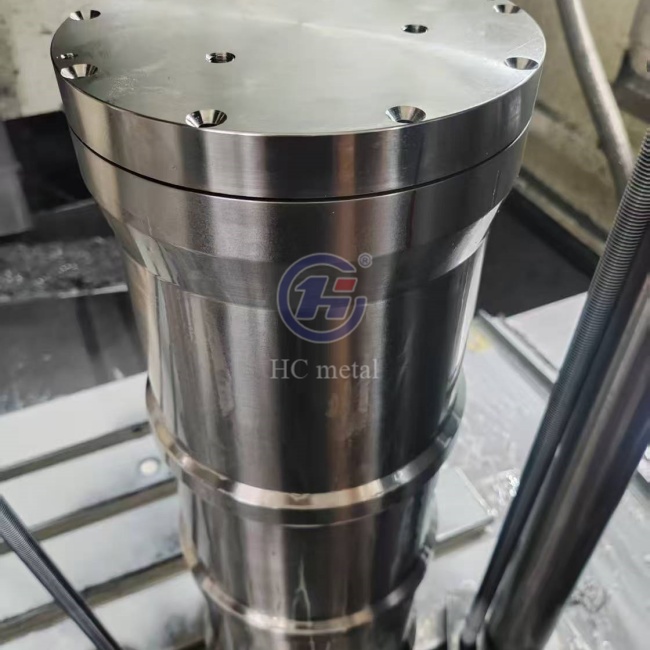



Learn about our latest products and discounts through SMS or email