- English
- French
- German
- Portuguese
- Spanish
- Russian
- Japanese
- Korean
- Arabic
- Greek
- German
- Turkish
- Italian
- Danish
- Romanian
- Indonesian
- Czech
- Afrikaans
- Swedish
- Polish
- Basque
- Catalan
- Esperanto
- Hindi
- Lao
- Albanian
- Amharic
- Armenian
- Azerbaijani
- Belarusian
- Bengali
- Bosnian
- Bulgarian
- Cebuano
- Chichewa
- Corsican
- Croatian
- Dutch
- Estonian
- Filipino
- Finnish
- Frisian
- Galician
- Georgian
- Gujarati
- Haitian
- Hausa
- Hawaiian
- Hebrew
- Hmong
- Hungarian
- Icelandic
- Igbo
- Javanese
- Kannada
- Kazakh
- Khmer
- Kurdish
- Kyrgyz
- Latin
- Latvian
- Lithuanian
- Luxembou..
- Macedonian
- Malagasy
- Malay
- Malayalam
- Maltese
- Maori
- Marathi
- Mongolian
- Burmese
- Nepali
- Norwegian
- Pashto
- Persian
- Punjabi
- Serbian
- Sesotho
- Sinhala
- Slovak
- Slovenian
- Somali
- Samoan
- Scots Gaelic
- Shona
- Sindhi
- Sundanese
- Swahili
- Tajik
- Tamil
- Telugu
- Thai
- Ukrainian
- Urdu
- Uzbek
- Vietnamese
- Welsh
- Xhosa
- Yiddish
- Yoruba
- Zulu
High-Performance Ultrasonic Titanium Horn
Amplitude 60 μm high efficiency
Titanium alloy Gr5 strength ≥950 MPa
Energy conversion efficiency ≥95%
Dynamic balance deviation ≤1 g·mm
Machining precision ±0.008 mm
Service life ≥12 million cycles
Heat resistance ≤320°C
Product Introduction
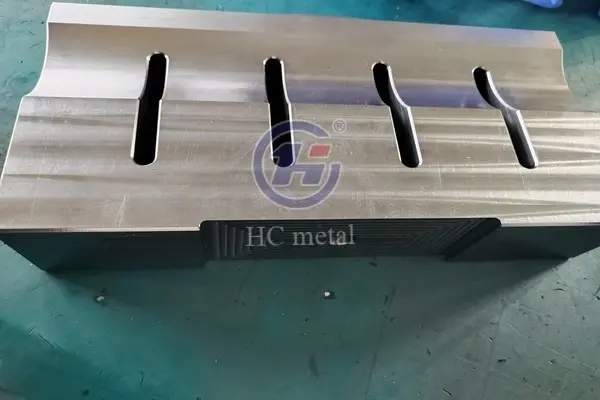
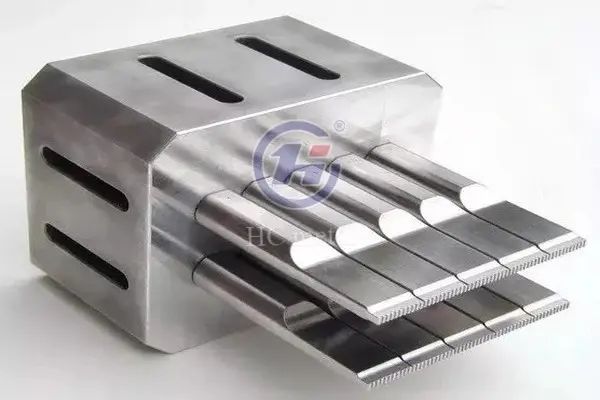
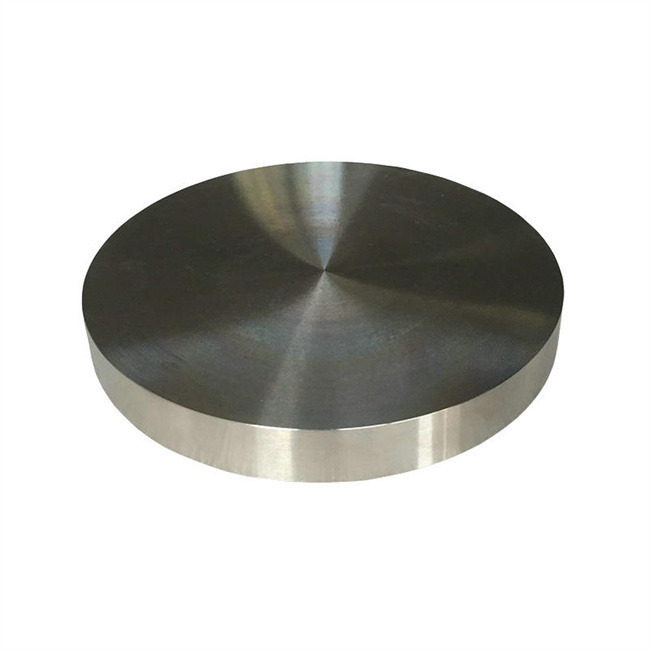
A High-Performance Ultrasonic Titanium Horn — also known as a sonotrode — is a precision acoustic component that transmits mechanical oscillation from an ultrasonic transducer directly to a workpiece. Made from aerospace-grade Ti-6Al-4V (Grade 5), it offers energy conversion efficiency > 95%, amplitude up to 60 μm, and can withstand over 12 million cycles at heat resistance up to 320°C. This part removes the frequency drift, fatigue failures of aluminum or steel alternatives, with machining accuracy of ±0.008 mm, dynamic balance deviation ≤1 g·mm.
Product Specification & OEM Customization
|
Parameter
|
Specification
|
|---|---|
|
Operating Frequency
|
15–40 kHz
|
|
Maximum Amplitude
|
Up to 60 μm
|
|
Available Material Grades
|
Grade 2, Grade 5 (Ti-6Al-4V), Grade 9, Grade 23
|
|
Tensile Strength (Grade 5)
|
≥950 MPa
|
|
Acoustic Velocity
|
Approximately 6,100 m/s
|
|
Machining Tolerance
|
±0.008 mm
|
|
Dimensions, Threads and Weight
|
Customized according to drawings and application requirements
|
Product Features
- High acoustic gain: Achieves higher amplitude ratios than steel without fracturing
- Cavitation resistance: Withstands intense erosion in liquid processing environments
- Biocompatibility: Chemically inert, suitable for medical and food contact applications
- Thermal stability: Maintains resonance integrity up to 320°C under continuous operation
- FEA-validated design: Finite Element Analysis confirms nodal point accuracy and uniform stress distribution
- Fatigue life: Engineered to exceed 12 million cycles in high-duty industrial environments
Product Application
Automotive Manufacturing

01
Robotics and Automation

02
Medical Device & Healthcare

03
Medical Device Assembly: Hermetic sealing for surgical masks, IV catheters, and biosensors. Titanium is the only safe option for delicate polymer welding, since it inhibits aluminum oxide contamination.
Ultrasonic Food Portioning Used in automatic slicers for cheese, cakes and food bars. The undulating surface decreases friction and adhesion. Titanium's chemical resistance supports aggressive CIP wash-down protocols without corrosion.
Sonochemical Liquid Processing: Applied in nano-emulsification, cell disruption, and dispersion flow cells. These are situations where there is strong cavitation erosion along with corrosive chemical exposure; circumstances where titanium will survive for far longer than any alternative.
Plastics Welding & Cutting: For automotive, electronics and packaging applications where constant amplitude and high service life are needed for the High-Performance Ultrasonic Titanium Horns in continuous-duty ultrasonic welding lines.
Why Choose Us
Titanium is around 3x harder than aluminum horns and has far better fatigue resistance. Aluminum horns tend to fatigue fracture very quickly at high amplitudes. Steel horns, by contrast, experience thermal expansion under continuous duty, causing frequency drift and inconsistent output.
Our titanium sonotrodes solve both problems. You get stable, repeatable amplitude delivery across demanding welding, cutting, and liquid processing cycles — reducing downtime and improving process quality.
Baoji Huacan has more than 10 years of expertise in titanium machining and more than 100 worldwide customers. We can produce components to your requirements.
 |
 |
 |
 |
 |
 |
 |
 |
Manufacturing Process
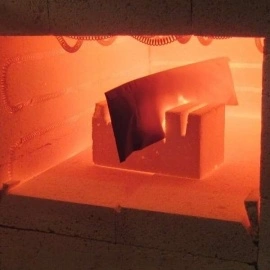
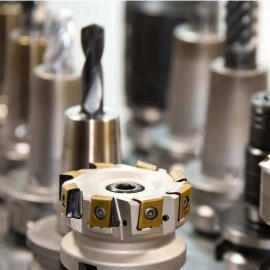
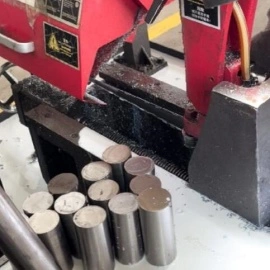
Each sonotrode begins with certified titanium bar stock verified through chemical composition analysis and supplier certification checks. We choose the material grades you need, such as Ti-6Al-4V, Grade 2, Grade 9, Grade 23, according on your application needs.
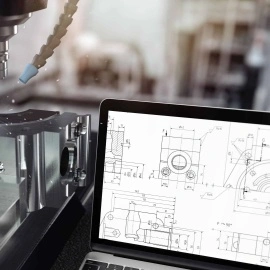
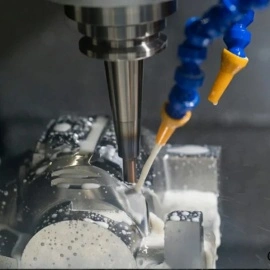
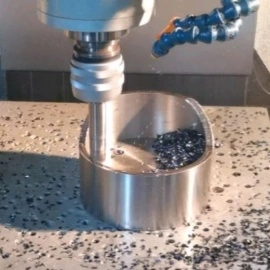
We do CNC turning, milling, drilling, and 5-axis CNC machining for complicated geometries, internal channels, threaded features, and precise sealing surfaces. Keeping critical dimensions to ±0.008 mm in manufacturing.
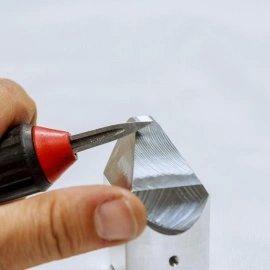
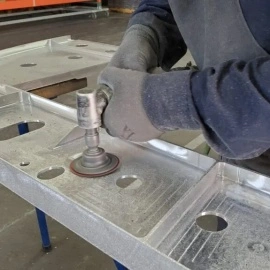
Secondary Operations include deburring, surface finishing and preparation for assembly. Each step is monitored in real time to preserve tolerances within restricted process windows.
Packaging & Shipping
|
Method
|
Description
|
|---|---|
|
Component Protection
|
Custom foam inserts for precision parts
|
|
Moisture Control
|
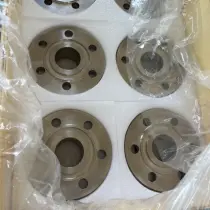
Vacuum-sealed bags with desiccants
|
|
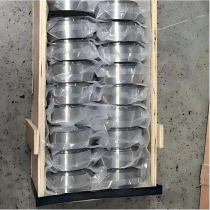
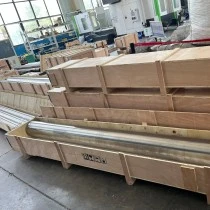
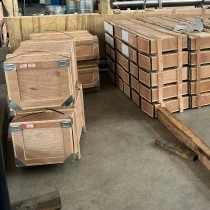
Bulk Shipment
|
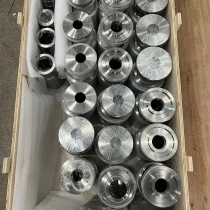
Sturdy wooden crates
|
|
Documentation
|
Labeling, certificates, and traceability records
|
Air freight is available for urgent orders. Sea freight supports cost-effective bulk deliveries.
FAQ
Q: Why choose titanium over aluminum for a sonotrode?
A:Aluminum is cheaper but has low fatigue strength. Titanium offers ~3x the hardness, sustains higher amplitudes, and lasts significantly longer in continuous-duty cycles.
Q: Can a worn sonotrode be refaced?
A:Yes. The output face can be machined down 1–2 mm to remove wear. However, this changes the resonant frequency, so system re-tuning via the generator is required.
Q: What causes overheating during operation?
A:Overheating usually signals a frequency mismatch, loose coupling studs, internal micro-fractures, or excessive clamping force dampening vibration.
Q: Is a surface coating necessary?
A:For standard plastics welding, bare titanium performs well. For abrasive materials like glass-filled nylon, TiN or carbide hard coatings extend surface life considerably.
Q: What is the expected service life?
A:In liquid processing applications, titanium horns can operate for years. In abrasive contact applications, they typically outlast steel horns by 30–50% at high amplitudes.
Contact Us
Need a precision-engineered High-Performance Ultrasonic Titanium Horn built to your drawings? Contact us at Joy@hc-titanium.com — fast response guaranteed.



Learn about our latest products and discounts through SMS or email